Highlight

Successful together – our valantic Team.
Meet the people who bring passion and accountability to driving success at valantic.
Get to know usvalantic waySuite
In practice, looking at project milestones and production capacity in isolation inevitably creates friction and inefficiencies. The valantic APS waySuite closes this gap. As a central software for integrated project and production planning, it connects your project planning directly with your production control. This means you can identify resource bottlenecks early, manage complex orders realistically, and ensure reliable on-time delivery.














Production Planners, SCM and IT Directors, and Executives
Synchronizing project-driven order processing with actual production presents specific challenges across different areas of the company:
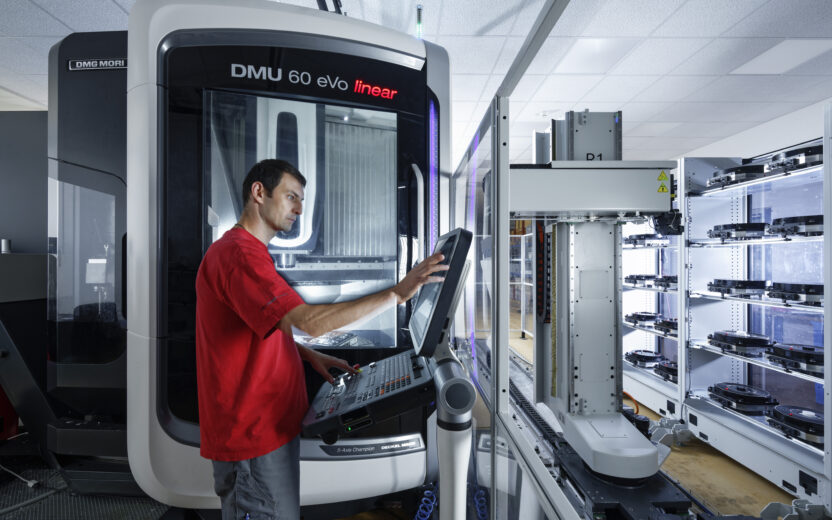
The Production Planner's Perspective
Managing Complex Dependencies
The Production Planner's Perspective
Planning managers often struggle with a lack of visibility. When project milestones shift, there’s no immediate feedback into production capacity. The result: last-minute rescheduling, inefficient setup times, and overloaded machines or staff.
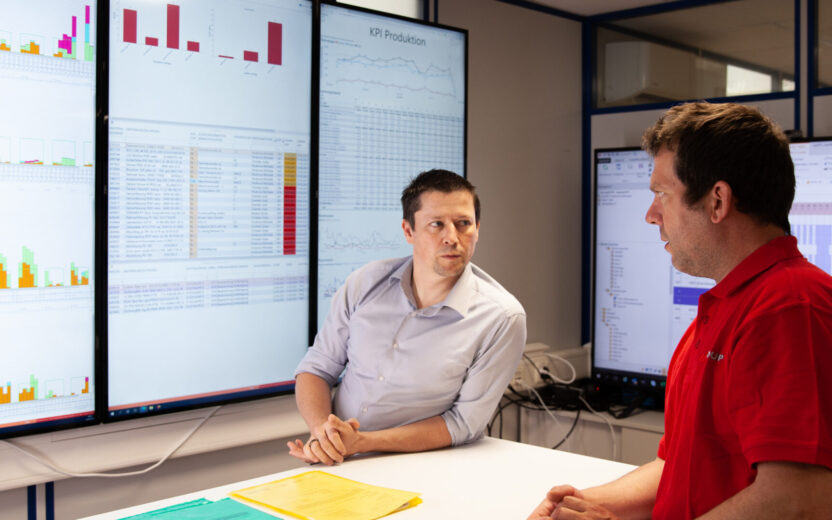
The SCM and IT Director's Perspective
Overcoming System Silos
The SCM and IT Director's Perspective
A legacy IT infrastructure that has grown over time often leads to data silos. Project management tools and ERP or MES systems don’t communicate in real time. The SCM director faces the problem of fragmented supply chains, while IT has to shoulder the high maintenance and integration overhead of decentralized, siloed solutions.

The Executive Perspective
Ensuring Profitability and On-Time Delivery
The Executive Perspective
For executives, what matters most are reliable commitments to the end customer. Opaque planning processes tie up unnecessary capital in the form of buffer stock and risk contractual penalties from late deliveries. The lack of connection between project and production progress makes well-informed, strategic decisions harder to reach.
To understand integrated control, it’s essential to clearly distinguish between the planning levels — and the valantic waySuite connects both worlds:
Production Planning (Macro Level)
This involves medium- to long-term rough-cut planning. Demand is determined, material availability is checked, and rough capacities (e.g., at the weekly or monthly level) are allocated to projects.
Detailed Scheduling (Micro Level)
This is the short-term, precise sequencing of orders. It covers minute-by-minute scheduling of individual machines, the optimization of setup sequences, and the immediate response to disruptions (e.g., machine breakdowns).
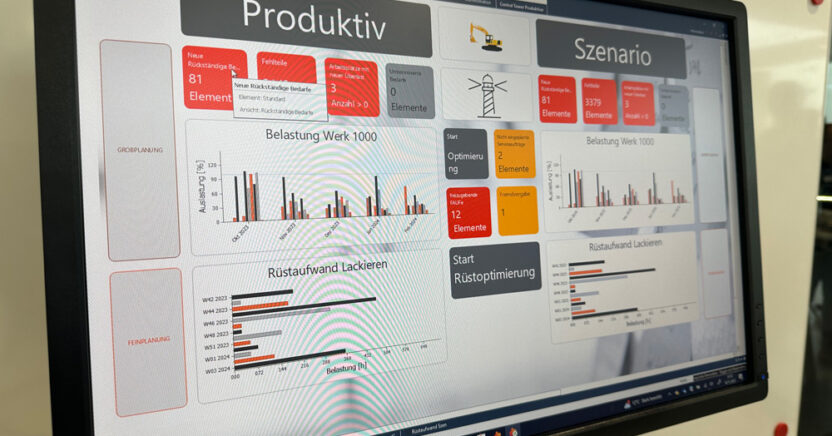
The integration within waySuite ensures that strategic project and production planning sets the parameters, which are then immediately checked for technical feasibility in detailed production scheduling. Conflicts at the micro level (detailed scheduling) feed back in real time to the macro level (production planning / project planning), so that realistic delivery dates can be calculated.
How waySuite Synchronizes Your Processes
Integrated project and production control means that the work breakdown structure (WBS) is physically and logically linked to the production orders. The valantic waySuite acts as an intelligent Advanced Planning and Scheduling (APS) system, delivering clear business and operational improvements:
Realistic commitments to customers through synchronized scheduling.
Fewer manual meetings and email chains between project management and shop floor control.
Project managers and production planners access the same data. If a bill of materials changes or a supplied part is delayed, the impact on the final project milestone becomes immediately visible. Real-time status on project progress and capacity utilization is available at any time.
The system continuously matches project demand against actual capacity in production control. Resource bottlenecks involving machines or critical staff are identified before they occur. In the event of supply chain disruptions or machine breakdowns, scenarios are recalculated automatically.
Avoiding idle time and reducing lead times through optimized scheduling plans.
By eliminating manual Excel spreadsheets and digitalizing the planning steps, you create a continuous, error-resistant flow of information across the entire value chain.

Whitepaper: Agile Production Planning for a Changing World
Discover in our whitepaper how you can future-proof your production processes using real-time data, intelligent automation, and flexible planning tools. We’ll show you how leading companies are optimizing their production…
With valantic APS waySuite, you plan projects and production together in a single software suite — for early bottleneck detection, realistic orders, and reliable on-time delivery.
Learn More+25%
On-Time Delivery Improved

waySuite
Reliable Deadlines
Customer commitments are based on synchronized project and production dates — not on estimates.

waySuite
Ready to Act the Moment Things Change
If a machine breaks down or the supply chain stalls, valantic waySuite automatically calculates new scenarios. This is made possible by the ongoing comparison between project demand and actually available capacity — looming bottlenecks at machines or with key personnel become visible before they put the plan at risk.
-25%
Lead Times Reduced
-30%
Inventory Reduced
-90%
Planning Effort Reduced
360 °
Transparency across All Processes
waySuite
On-Time Delivery & Minimal Inventory
Realistic delivery dates that are met. Optimized inventory instead of tied-up capital — calculated automatically.


Die Grenzebach Gruppe ist ein auf Anlagenbau und Automatisierungstechnik spezialisiertes, international operierendes Familienunternehmen.
The Grenzebach Group is an internationally operating family business specializing in plant engineering and automation technology. Together with valantic, the company implemented a cross-site, cross-functional planning solution for connected control of all its value-creation processes. Built on valantic waySuite, the solution improves planning reliability and control for every business unit and site involved. More about the project: Grenzebach plant und steuert Supply Chain Prozesse mit der waySuite
We are very happy to have chosen valantic as an experienced project partner. Together with valantic, we largely achieved all the goals we set for this project
Moritz Ückert, Vice President Supply Chain at Grenzebach
Who Plans with waySuite?


WeberHaus: Project Planning and Scheduling with APS waySuite

APS waySuite at Everllence: Production planning AI-optimized


APS Advanced Planning Tool wayRTS improves delivery reliability at motan

TGW: Transparent planning with APS software wayRTS waySuite

Grenzebach plans and controls supply chain processes with valantic’s waySuite

KNAPP AG optimizes supply chain with aps system wayRTS


HOHNER and SONOR optimize Supply Chain Management with wayRTS

Production Planning and Project Planning at Waldner

valantic Optimizes Supply Chain Management at Seepex

Multi-plant planning with waySuite at BBC Cellpack Technology AG
In a short demo, see how valantic waySuite automatically resolves capacity conflicts in your production. In a personalized demo, we’ll show you how valantic waySuite addresses your specific planning requirements — hands-on, with no generic slides. Leave your contact details and we’ll get back to you within one business day.

Meta-Study
Planning Makes the Difference: How Industrial Companies Break Out of Crisis Mode
17.-18.11.2026
Supply Chain Excellence Days
The Matrix of the Future-Proof Supply Chain

01.-04.09.2026
valantic goes SMM
SMM is the world's leading maritime industry trade fair and takes place in early September in Hamburg.

Learn More about the waySuite Team
The Team behind waySuite
Projects and Production, Interlocked — Tailored to Your Industry
Where project business meets manufacturing, every industry plays by its own rules — from batch size one in special-purpose machinery manufacturing to large-scale projects in shipbuilding. valantic waySuite doesn’t respond to this with a one-size-fits-all solution, but with proven modules, industry-specific expertise, and the flexibility to adapt to your processes.

1/5
From Planning to Production: Efficient Processes in Machinery and Plant Engineering
Custom systems such as supply and disposal technology, conveyor systems, production machinery, filling lines, energy systems, process engineering equipment, and special-purpose vehicles — all of these are engineered individually to customer specifications. This made-to-order manufacturing drives up the complexity of production planning enormously. Learn how valantic waySuite plans and controls your supply chain efficiently. waySuite for Machinery and Plant Engineering

2/5
Agile Project and Production Planning in the Defense Sector
Defense contractors face growing challenges that are becoming increasingly tangible as demand rises. Defense projects are characterized by extremely long timelines, highly complex supply chains, and extended product life cycles including maintenance contracts. The orders are usually highly customer-specific with substantial engineering effort (engineer-to-order). Agile Project and Production Planning in the Defense Sector
3/5
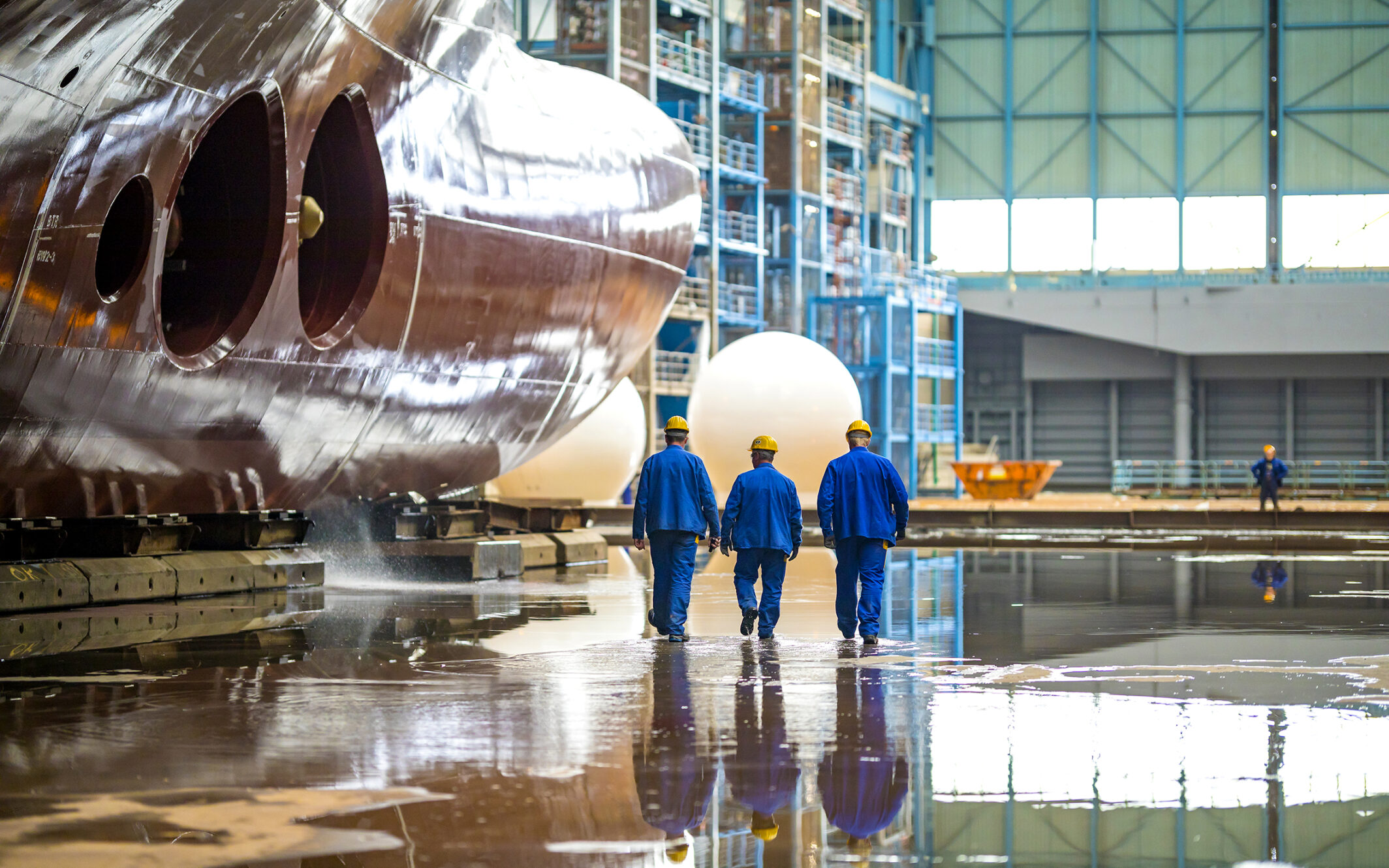
Project Planning in the Maritime Sector
The maritime industry grapples with projects involving 10,000 network activities, thousands of dependency relationships, and resource conflicts — all typical of cruise ship construction and the high complexity of its project management. This calls for transparent multi-project control with integrated capacity and resource planning. Agile Project and Production Planning in the Maritime Industry
4/5
Efficient Production Planning in the Medical Technology Sector
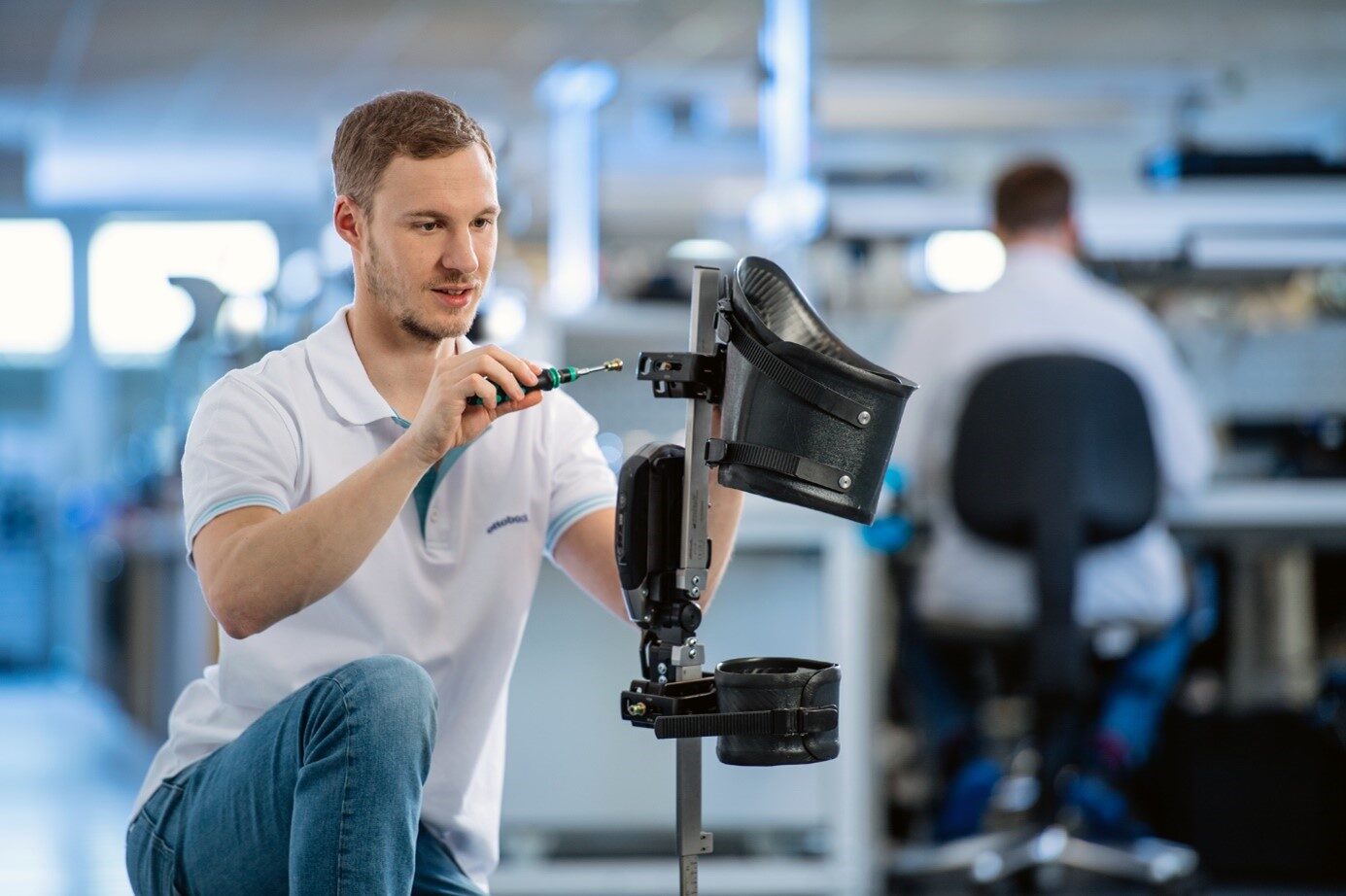
High regulatory requirements, strict quality guidelines, and constantly changing demand call for maximum flexibility and precision. Planning has to account for a wide range of variables: from the availability of critical raw materials, to ensuring smooth supply chains, to the scalability of production capacity.

5/5
Highest Standards, Maximum Efficiency: Production Planning for Life Schiences & Pharmaceutical Companies
The pharmaceutical and life sciences industry faces a wide range of challenges in production planning: strict regulatory requirements demand detailed documentation and complex approval processes. Short product life cycles increase the need for flexibility and fast time-to-market. At the same time, complex supply chains make it harder to ensure material availability and synchronization. Throughout all of this, the highest quality standards are indispensable for ensuring patient safety.
Whitepaper: Agile Production Planning
Real-time data, automation, flexible planning tools: the whitepaper shows how future-proof production planning works in practice — and where leading companies are already cutting inventory costs.
Integrated project and production control digitally links work breakdown structures and milestones with the capacity and orders on the shop floor. It ensures that project-driven deadlines are aligned with what’s actually feasible in the plant.
Production planning covers the medium- to long-term rough-cut planning of capacity and materials. Detailed production scheduling, on the other hand, manages the short-term, machine-level sequencing (micro level) and optimizes setup times and sequences directly on the shop floor.
Conventional ERP systems usually plan with unlimited capacity (infinite planning) and fixed lead times. An APS system like valantic waySuite accounts for real, finite resources (machines, staff, material) in real time and dynamically calculates the best possible execution.
The software visualizes workload across all projects. If a capacity bottleneck looms, the system warns you early and offers alternative planning paths through integrated simulations (what-if scenarios).
Yes, valantic waySuite is designed to manage multiple parallel projects. It calculates dependencies and priorities across all ongoing projects and allocates production capacity in line with your strategic priorities.
Integrated planning is especially well suited for machinery and plant engineering, discrete manufacturing, the automotive supplier industry, and companies with high-variant series or one-off production.