Highlight

Successful together – our valantic Team.
Meet the people who bring passion and accountability to driving success at valantic.
Get to know usIntegrated. Cloud-based. AI-powered.
SAP SuccessFactors enables companies to streamline HR processes from recruiting to offboarding and build a globally scalable, AI-powered cloud platform for future-ready HCM. valantic supports clients throughout their HR transformation – from strategy and implementation to ongoing application management.

Key Takeaways
SAP SuccessFactors is the leading cloud suite for efficient HCM (Human Capital Management) and data-driven HR decisions. It digitizes all core HR processes in midsize companies, large enterprises, and international corporations. As an SAP Gold Partner, valantic supports customers in establishing a long-term, successful HR management system.

André Bättig
CIO of Variosystems
”With SmartRecruiters, we were able to roll out a modern, international recruiting platform in a very short time. The pragmatic approach and close collaboration with valantic played a key role in enabling us to successfully meet our ambitious go-live deadline.“

Christine Peter
Chief Human Resources Officer at Variosystems
”SmartRecruiters has made our recruiting workflows significantly more efficient: Thanks to automated synchronization with SAP SuccessFactors, we no longer have to manually maintain applicant data. In addition, our candidates experience a modern, streamlined application process, which strengthens our position in the international competition for skilled workers. With the integrated AI features, we also see great potential for further optimizations in human resources. Our partner, valantic, gives us the confidence that we will successfully implement the next phases of expansion as well.“
We use the transformation approach that best suits you
Every company has different requirements for its HR transformation. When implementation and operations align with those requirements, SAP SuccessFactors can reach its full potential.

Mid-Size Enterprises
For small and medium-sized businesses, the key is to digitize and automate Excel-based processes. A target architecture with a roadmap is needed to transition to a scalable HCM system that focuses on a transparent database, time tracking, and payroll.

Large Enterprises
Large companies with complex HR IT landscapes need to harmonize, standardize, and integrate their systems and processes. This transformation must take place while maintaining stable day-to-day operations.
It doesn’t always have to be a large-scale transformation project. With our customized, self-contained service packages, we offer our clients a manageable starting point for the end-to-end optimization and future-proofing of their HR landscape. This enables companies to tackle forward-looking topics such as the use of artificial intelligence and address key requirements.

HR AI Discovery
We help you understand and identify the potential of AI.

HR Landscape Health Review
Use our assessment to uncover risks, identify quick wins, and pave the way for a unified, AI-enabled data foundation.

HR Integration & Data Management
Achieve transparency and future-proof your business through data integration.

HR Harmony Consulting
We streamline your HR processes and IT systems.
End of support for SAP ECC HCM
Standard support for SAP ECC HCM will expire at the end of 2027. Companies must act promptly and
Sensitivity of Payroll & Time
Payroll and time tracking are sensitive and complex processes that are prone to errors when handled manually. This leads to
Lack of integration & transparency
Organically developed system landscapes are heterogeneous and fragmented. This leads to
Manual processes
In many companies, core human resources processes are still carried out manually or using Excel. This has its drawbacks:
International complexity
Internationally operating companies with varying labor law and compliance requirements struggle with
Skilled labor shortage
There is a shortage of qualified professionals for HR tasks and IT operations. The consequences:
Thanks to the modular design of SAP SuccessFactors, you have a choice: You can use individual solutions or the entire suite.
The heart of every SAP SuccessFactors implementation: As a central master data platform, SAP SuccessFactors Employee Central consolidates all HR-related data in one place and keeps it up-to-date and accessible at all times. Employees, employment relationships, and positions are managed consistently and form the foundation for all other HR processes.
Benefits:
SAP SuccessFactors Employee Central Payroll (ECP) and SAP SuccessFactors Time Tracking are fully integrated solutions for payroll and time management. Automated processes, built-in compliance checks, and direct data exchange with Employee Central minimize sources of error and reduce administrative overhead.
Benefits:
SmartRecruiters for SAP SuccessFactors digitizes and automates the entire recruiting process—from job postings to applicant management to hiring. Thanks to seamless integration with Employee Central, new employees are transferred directly into the HR systems.
Benefits:
The Onboarding & Offboarding modules support a structured onboarding and offboarding process and create a seamless employee journey. Digital workflows, to-do lists, and self-service tools facilitate collaboration between employees, managers, and HR—from the first day on the job to the last.
Benefits:
Talent Management
The Performance & Goals, Succession & Development, Compensation, and Variable Pay modules support transparent performance management as well as the targeted development and retention of employees. Standardized processes lay the foundation for well-informed HR decisions and sustainable succession planning.
Benefits:
Learning
With SAP SuccessFactors Learning, companies can centrally manage training, e-learning, and skill development programs. Personalized learning paths and automated learning processes promote continuous professional development and help ensure compliance with regulatory requirements.
Benefits:
SAP SuccessFactors People Analytics delivers insightful HR dashboards and reports at the click of a button—from turnover and headcount to compensation analyses and workforce planning. Through intuitive self-service tools, employees and managers can handle their own matters directly, from vacation requests and data maintenance to certification inquiries.
Benefits:
With valantic’s digital personnel file—which integrates seamlessly with SAP—companies can automate the management of their HR documents in compliance with audit and data protection requirements, whether in a public or private cloud. In addition, our HCM suite offers smart solutions for various HR tasks.
Benefits:

Matthias Koch
Head of the Midsize Enterprise Business Unit at valantic
”With SAP SuccessFactors, midsize companies are investing in the future of human capital management—integrated, cloud-based, and end-to-end, from master data through payroll and time management to human resources management.“

Christina Hierl
Delivery Lead Business Unit Large Enterprises at valantic
”Our strength lies in approaching HR transformation from more than just a technological perspective. We consider processes, systems, data, compliance, and acceptance as a whole—and use this integrated approach to create actionable pathways for our clients toward a stable and modern HR landscape.“

Stefan Heins
Managing Director at valantic
”With valantic workdocs HR, we offer a cloud-based personnel file system built on the proven foundation of SAP SuccessFactors. The solution is ready to use right away and helps companies streamline their HR processes. This saves time, simplifies workflows, and creates room to focus on what matters most.“



valantic expertise on HR Management with SAP

Case Study
The electronics service provider Variosystems has taken its international recruiting processes to a new level with valantic in just seven weeks. The cloud-based platform SmartRecruiters for SAP SuccessFactors streamlines cross-border recruitment, provides integrated AI capabilities, and paves the way for consistent, intelligent HR digitization.
Learn more Variosystems: A new era of recruiting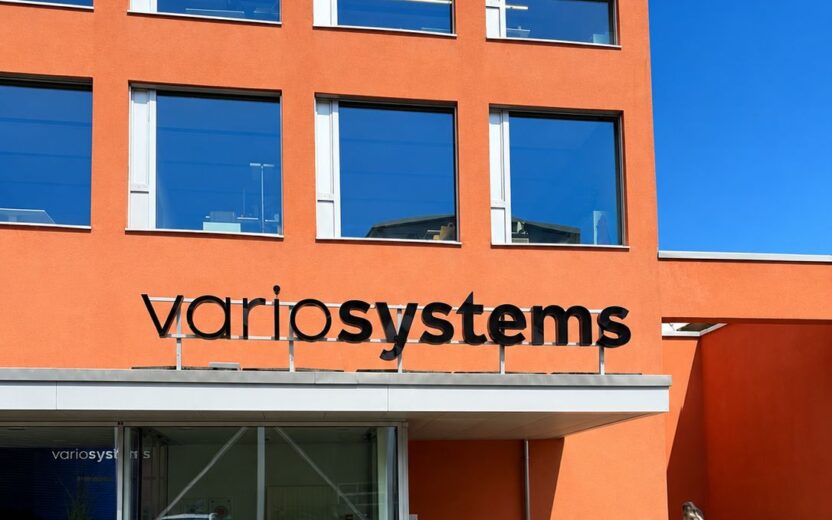
Customer success video


Product sheet
Key facts about SAP SuccessFactors at a glance
SAP SuccessFactors covers the entire employee lifecycle – from recruiting to offboarding.
Integrated, cloud-based, AI-enabled processes provide transparency and ensure compliance across global operations.
valantic supports customers with a holistic approach to their HCM transformation.
We’ll show you how to quickly realize added value with SAP SuccessFactors and valantic HR add-ons
SAP SuccessFactors is a cloud-based HR suite that helps companies manage all HR processes digitally and efficiently—across the entire employee lifecycle.
From recruitment to onboarding, personnel administration, talent development, and continuing education, all the way to compensation, time tracking, payroll, and HR analytics, all processes integrate seamlessly. This ensures that employees, managers, and HR staff always work from a shared database.
As a cloud solution, SAP SuccessFactors is continuously developed and automatically updated. Companies thus benefit from modern HR processes, innovative features, and a high level of investment protection—without the hassle of managing their own system updates.
Typical use cases include:
SAP SuccessFactors consists of the following modules:
Companies can implement individual modules or use the entire suite. Most customers start with Employee Central as their data foundation and gradually implement additional modules.
The licensing costs for SAP SuccessFactors are based on the number of employees, the selected modules, and the contract term. SAP does not publish list prices; terms are negotiated on a case-by-case basis.
As a general guideline: Medium-sized and owner-managed companies headquartered in German-speaking countries—ranging from national organizations to internationally active corporate groups—can expect annual licensing costs in the five- to six-figure euro range, depending on the scope of the modules. Enterprise agreements are standard for large corporations.
In addition, there areimplementation costs, which typically amount to 1 to 2 times the annual license fee—depending on complexity, integrations, and data migration. An experienced implementation partner can significantly reduce costs and risks through standardized methodologies.
Total costs should always be considered in relation to the ROI: Automated HR processes, reduced error rates, and faster hiring times typically pay back the investment within two to three years.
Both systems are among the leading cloud-based HCM solutions. The differences lie in the details:
For companies that already use SAP systems, SuccessFactors is generally the first choice.
Mid-sized companies benefit particularly from three strengths:
Scalability:The solution grows with the company. A company with 300 employees today can continue to use the same platform even when it reaches 3,000—without having to switch systems.
Standardization without IT resources:Since SuccessFactors is operated as a SaaS solution, there’s no need to manage server infrastructure, patches, or updates. This significantly reduces the workload on small IT teams.
Compliance and GDPR:Internationally active SMBs in particular benefit from integrated support for local labor law requirements in over 100 countries.
Initial projects for midsize companies often start with Employee Central and Recruiting—two modules that deliver immediate, measurable efficiency gains. Depending on the scope, an implementation can go live in 3–6 months.
For multinational companies, SAP SuccessFactors is one of the few HR solutions that enables both global standardization and local compliance.
Larger implementations typically follow a global template strategy: a unified core model that is rolled out step-by-step in individual countries (the “Core & Edge” approach).
The implementation time depends heavily on the scope, the number of modules, and the complexity of the system landscape. The following are general guidelines:
Key factors influencing project duration include: the quality of legacy data, the number of interfaces to third-party systems (e.g., Payroll, Active Directory), the availability of internal resources, and the experience of the implementation partner. Proven approaches to accelerating the process include: an iterative, phased rollout, the use of preconfigured project methodologies, and early involvement of business units.
SAP SuccessFactors supports GDPR requirements at the platform level—however, the implementing company is responsible for ensuring that the configuration complies with data protection regulations.
Relevant features for GDPR compliance:
A carefully designed authorization model and a Data Protection Impact Assessment (DPIA) at the start of the project are best practices.
SAP SuccessFactors can be integrated via standardized interfaces. Depending on the target system, there are various approaches:
Integration projects should be started early in the implementation project—experience has shown that interface definition and data mapping are time-consuming and have a significant impact on the go-live date.
Choosing the right implementation partner is one of the most important factors for success—regardless of the software’s quality.
Key criteria:
After go-live, the critical phase begins: the system must run stably, users need support, and SAP provides regular updates.
Typical support models include: