Highlight

Successful together – our valantic Team.
Meet the people who bring passion and accountability to driving success at valantic.
Get to know usvalantic waySuite
In machinery and plant engineering, shipbuilding, and custom machinery manufacturing, projects rarely run one at a time. More often, multiple projects compete for the same design engineers, the same manufacturing capacity, and the same components. valantic waySuite brings single-project and multi-project planning together – and can tie both directly into production planning.













As a project and production planner – as an IT or site manager – as a managing director
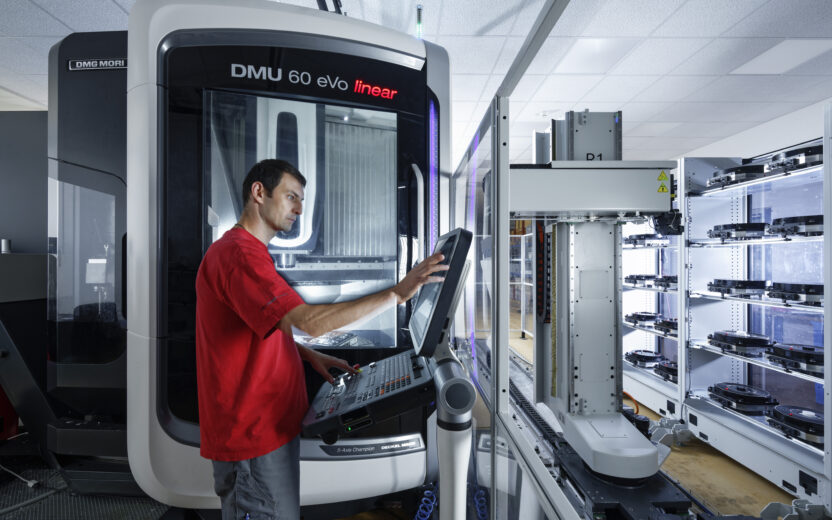
Are these your daily challenges as a production planner?
When multiple projects draw on the same machines, skilled workers, or components at the same time, conflicts often only become visible once a deadline is already at risk.
Typical challenges for production planners
Does this sound familiar?
When multiple projects draw on the same machines, skilled workers, or components at the same time, conflicts often only become visible once a deadline is already at risk. Without a cross-project view, it’s nearly impossible to assess how severely a delay affects each project – or which sequence actually makes the most sense.
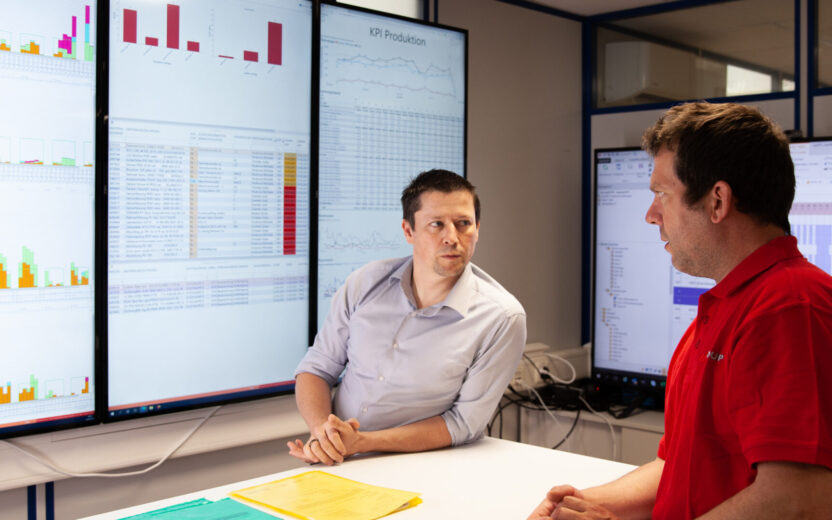
Are you facing these challenges as an IT, SCM, or site manager?
Project management tools, the ERP system, and production planning often run side by side instead of working together.
Typical challenges for IT and site managers
Does this sound familiar?
Project management tools, the ERP system, and production planning often run side by side instead of working together. Deadlines in the project plan don’t automatically reflect the actual capacity situation on the shop floor – coordination happens manually, via Excel or follow-up queries, and is correspondingly delayed.

Are you facing these challenges as a managing director?
Where are bottlenecks looming before they become a problem?
Typical challenges for managing directors
Does this sound familiar?
At the portfolio level, a reliable answer to a simple question is often missing: Where are bottlenecks looming before they become a problem? When this transparency emerges too late, decisions are made reactively rather than proactively.
The two terms are often used interchangeably in the SCM and manufacturing environment, but they describe different things.
Project planning refers to the scheduling, resource allocation, and management within a single project – from creating the project network and defining task dependencies to assigning capacity for the individual work packages.
Multi-project planning (also known as multi-project management) is the overarching planning, coordination, and management of multiple projects running in parallel. It focuses on tasks that individual projects cannot solve on their own: balancing shared resource pools, setting priorities when deadlines compete, and identifying dependencies between projects early on.
valantic waySuite maps both levels in a single software solution. Individual projects are planned using classic network scheduling techniques; at the same time, SCM departments gain cross-project planning visibility across all projects. When multiple projects draw on the same resources, waySuite reveals the dependencies and automatically identifies scheduling and capacity conflicts.
Cross-Project Planning Visibility
All projects are stored centrally in waySuite and processed in real time. Every planner works with the same up-to-date data – whether they are focused on a single project or the entire portfolio. Depending on their role, the planning is displayed at different hierarchy levels: management sees aggregated overviews of selected or all projects, sorted by the most important phases; sub-project leads see their own tasks and the dependencies between them.
Connection to Production Planning
The multi-project planning module in waySuite works as a standalone solution, but it can also be coupled with the production planning module whenever the scheduling of purchased and manufactured parts becomes relevant alongside the project business. This way, the project manager can also see whether the components needed for a project phase will be available on time – alert functions flag conflicts here as well.
SAP Integration and Communication
waySuite can be synchronized with SAP PS via a certified SAP standard interface; project network data is transferred at regular intervals, reconciling the planning results with the SAP system. For sharing schedules with external partners who still work with MS Project, a corresponding export of the project networks is available.
Benefits for Your Project Planning
Visualization and visibility in multi-project planning
Simple, user-friendly application
Coordination across projects and systems
A single data foundation with bidirectional SAP integration
Connection to production and procurement
Real-time communication and reporting
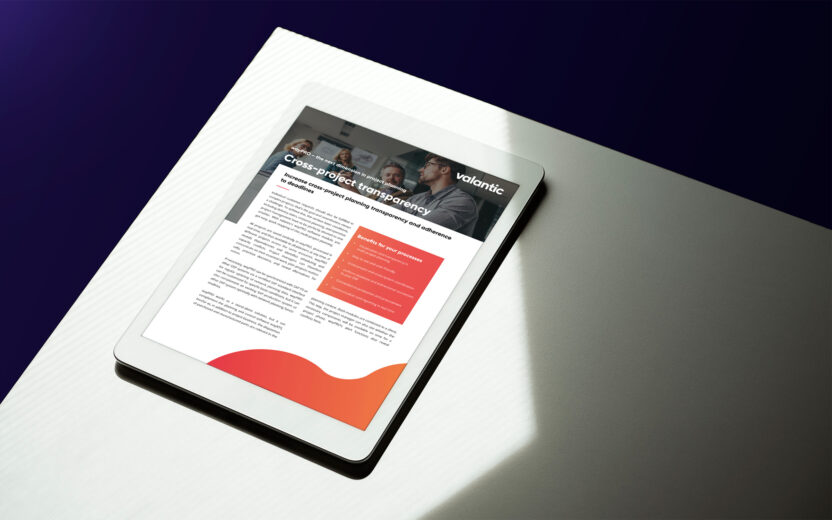
Want to know more? The product sheet has all the details
Learn in the product sheet how waySuite gets parallel projects, shared resources, and critical deadlines under control.
With the valantic APS waySuite, you plan projects and production in a single integrated software suite – for early bottleneck detection, realistic orders, and reliable on-time delivery.
Explore the solutionwaySuite’s functionality is based on classic network scheduling techniques. Tasks can be scheduled forward or backward, individual tasks can be fixed in place, or aligned with the entire network based on their precedence relationships. Results – such as a project’s critical path – are available instantly thanks to real-time processing, as are the effects on other projects involving the same resources.
Unlike many traditional planning tools, when one user edits a project network, the plan is not locked for others. Only changed elements are updated; each user can integrate other users’ changes into their own project network and assess their impact.
Before alternative planning scenarios are permanently adopted, they can be tested in the Scenario Center: planning states are copied from the production system and reviewed before being published.
Planners familiar with Microsoft tools will find the planning interface intuitive right away – within just a few days, they can independently set up projects in waySuite, identify conflicts, and create realistic plans. Among other features, the module includes preconfigured and customizable views and lists that can also be shared with colleagues, and it always keeps the displayed data up to date.
Depending on role and requirements, the planning is displayed at different hierarchy levels. Management sees aggregated overviews of selected or all projects, sorted by the most important phases. Those responsible for individual phases, in turn, see only their own tasks and the corresponding dependencies in waySuite.


What we especially like is that valantic not only makes our complex project management easier to keep track of, but that the software also allows us to map our planning processes in one integrated project plan, including capacity and resource planning.
Christoph Nolting
Head of Central Planning, MEYER WERFT
valantic proved that the concept presented at the start of the project works. The collaboration within the team was outstanding. We can be proud of our own contributions as well. All in all, we achieved a very good result, and I can feel the enthusiasm among the colleagues who work with the system."
Gerd Manßhardt
Managing Director at WeberHaus GmbH & Co. KG


WeberHaus: Project Planning and Scheduling with APS waySuite

APS waySuite at Everllence: Production planning AI-optimized


Grenzebach plans and controls supply chain processes with valantic’s waySuite


KNAPP AG optimizes supply chain with aps system wayRTS

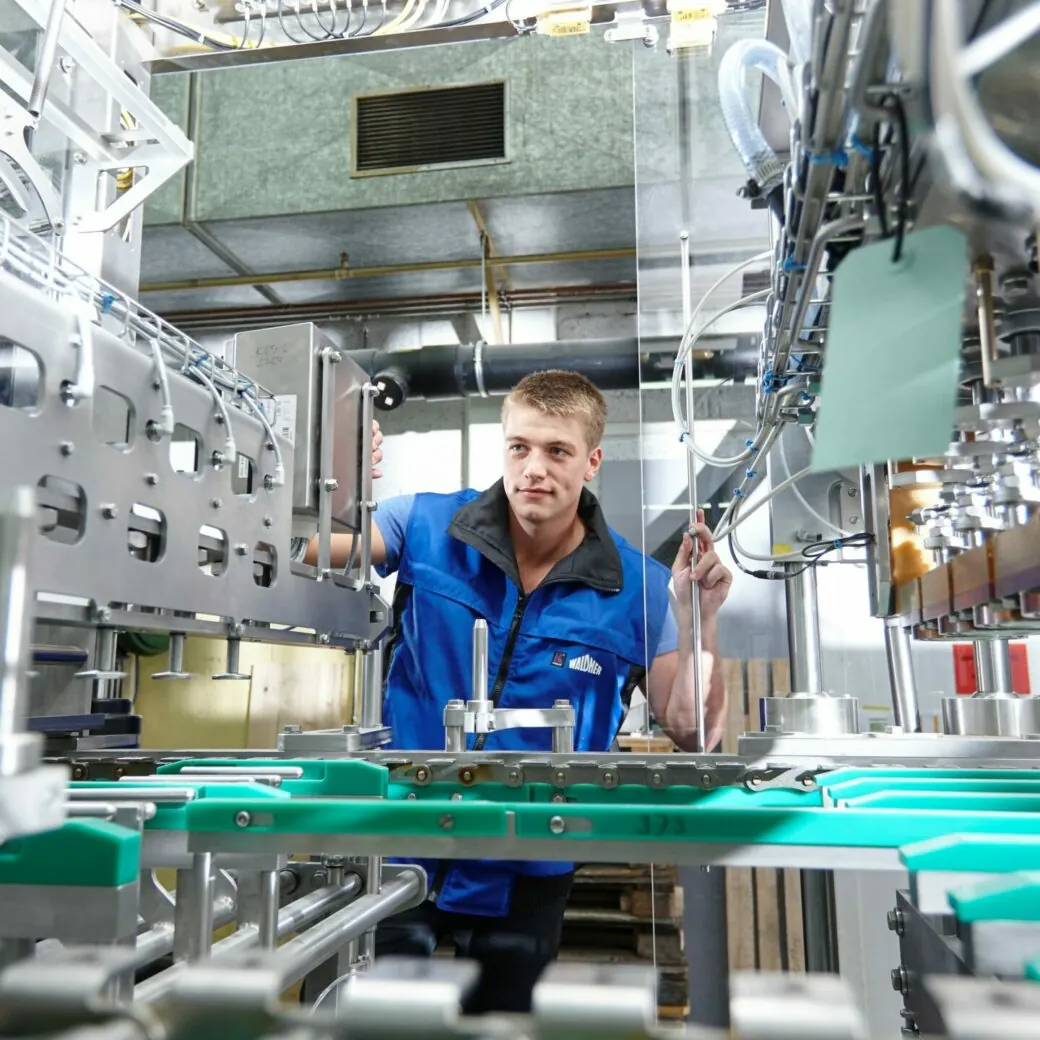
Production Planning and Project Planning at Waldner

At the end of September 2026 (30/09/2026), support for Microsoft Project Server Online will end. For many companies, this creates an urgent need to establish a new, robust solution. Migration pressure is increasing – now is the time to switch to a future-proof platform.

Combined with our ROI analysis, you receive a clear assessment of how quickly your investment in waySuite pays for itself – for example, through optimized processes, lower inventory costs, and improved on-time delivery.
These valuable insights help you make well-founded decisions for the future of your production planning.

Product Flyer: Project Management / Multi-Project Management
All project and multi-project planning features of waySuite at a glance – download the product sheet now.
Multi-project planning that understands your project business
Parallel large-scale projects, shared resources, critical milestones: How projects are planned and prioritized differs from industry to industry – shipbuilding follows different rules than machinery and plant engineering. waySuite brings industry-proven planning logic and experience from real large-scale projects, and integrates flexibly into your established project landscape.

1/5
From Planning to Production: Efficient Processes in Machinery and Plant Engineering
Custom systems such as supply and disposal technology, conveyor systems, production machinery, filling lines, energy systems, process engineering equipment, and special-purpose vehicles — all of these are engineered individually to customer specifications. This made-to-order manufacturing drives up the complexity of production planning enormously. Learn how valantic waySuite plans and controls your supply chain efficiently. waySuite for Machinery and Plant Engineering

2/5
Agile Project and Production Planning in the Defense Sector
Defense contractors face growing challenges that are becoming increasingly tangible as demand rises. Defense projects are characterized by extremely long timelines, highly complex supply chains, and extended product life cycles including maintenance contracts. The orders are usually highly customer-specific with substantial engineering effort (engineer-to-order). Agile Project and Production Planning in the Defense Sector
3/5
Project Planning in the Maritime Sector
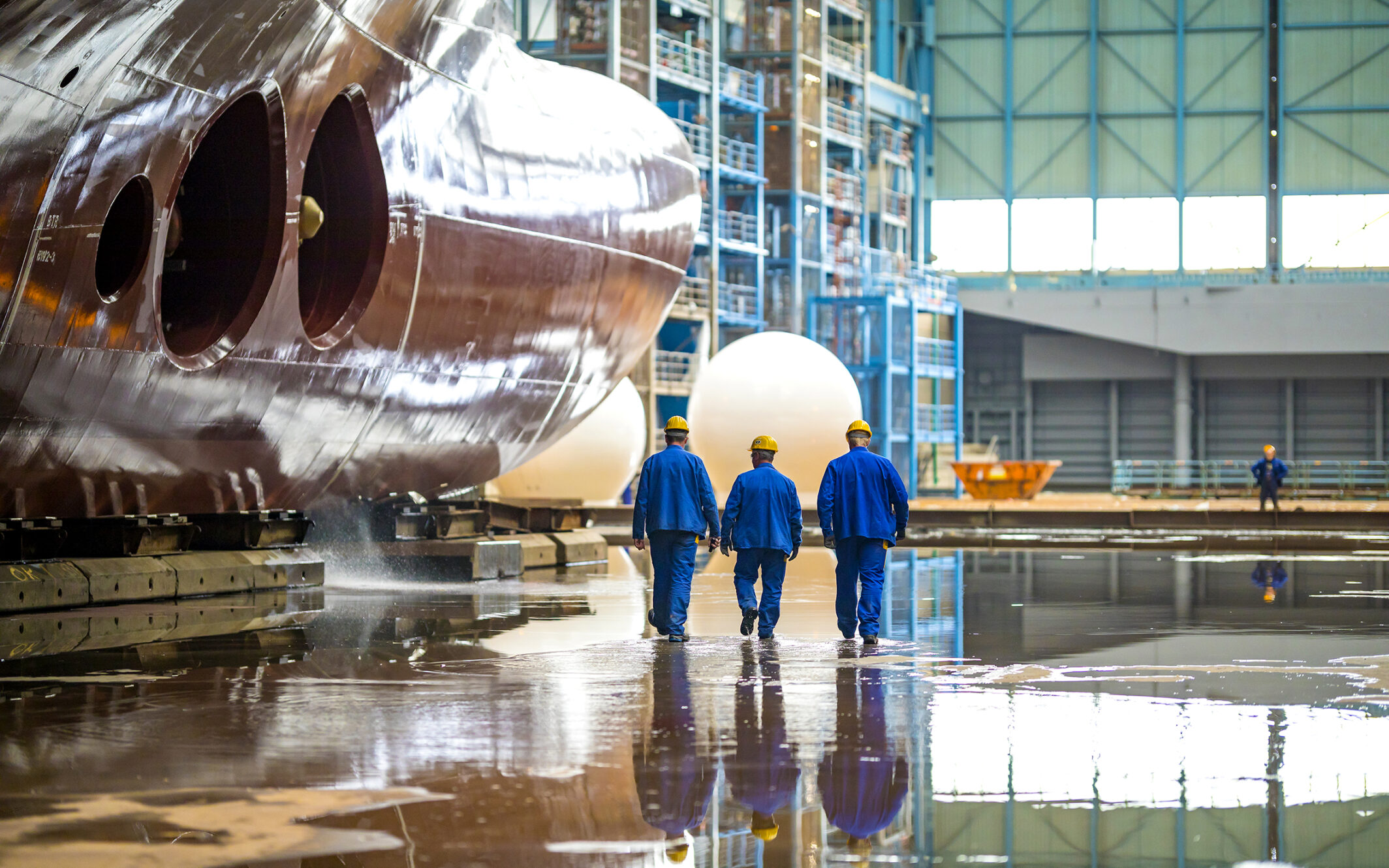
The maritime industry grapples with projects involving 10,000 network activities, thousands of dependency relationships, and resource conflicts — all typical of cruise ship construction and the high complexity of its project management. This calls for transparent multi-project control with integrated capacity and resource planning. Agile Project and Production Planning in the Maritime Industry

4/5
Efficient Production Planning in the Life Sciences and Medical Technology Sector
High regulatory requirements, strict quality guidelines, and constantly changing demand call for maximum flexibility and precision. Planning has to account for a wide range of variables: from the availability of critical raw materials, to ensuring smooth supply chains, to the scalability of production capacity.

5/5
Highest Standards, Maximum Efficiency: Production Planning for Pharmaceutical Companies
The pharmaceutical industry faces a wide range of challenges in production planning: strict regulatory requirements demand detailed documentation and complex approval processes. Short product life cycles increase the need for flexibility and fast time-to-market. At the same time, complex supply chains make it harder to ensure material availability and synchronization. Throughout all of this, the highest quality standards are indispensable for ensuring patient safety.
Conventional tools often only manage deadlines and dependencies while neglecting the actual capacity situation on the shop floor. Project planning within waySuite, by contrast, links strategic project planning directly with operational resource availability. You don’t just plan when something should be finished – you know immediately whether machines and personnel are actually available at that point in time.
valantic waySuite was specifically designed to communicate seamlessly with common ERP systems such as SAP. Data is synchronized via certified standard interfaces – without fundamentally changing your existing system architecture.
Yes, this is a core feature. Before committing to a new order, you can load it into your existing multi-project landscape as a simulation project. waySuite immediately shows you the impact on all ongoing projects and identifies potential bottlenecks in critical resources. This way, you make decisions based on facts rather than gut feeling.
The project planning module in waySuite is designed as an integration solution. Master data and transaction data (such as work plans, inventory levels, and production confirmations) are synchronized via standardized interfaces. For IT, this means a stable, low-maintenance system that meaningfully complements your existing architecture – instead of encouraging isolated solutions and error-prone Excel lists.
The measurable benefits include significantly higher on-time delivery rates (up to 95%+), shorter lead times through optimized sequencing, and a massive reduction in costly rush actions and overtime. In addition, work-in-progress (WIP) inventory decreases, as material and capacity are only committed when they are actually needed in the course of the project.
Absolutely. The multi-project planning module in waySuite is built for complex environments. It enables planning and managing resources across departments, plants, and sites. This way, you always maintain full visibility of overall capacity and critical paths – even with globally distributed project teams.
When multiple projects draw on the same resources, waySuite directly reveals the resulting dependencies and identifies scheduling and capacity conflicts – including their impact on the critical path of the affected projects.
Yes, the module also works as a standalone solution for project planning and multi-project planning. Linking it to production planning makes sense as soon as the scheduling of purchased and manufactured parts becomes relevant in your planning context.
It is particularly relevant for companies with project-based make-to-order or small-batch manufacturing and customer orders running in parallel – for example, in machinery and plant engineering or shipbuilding. These are industries in which multiple projects regularly compete for the same resources.