Highlight

Successful together – our valantic Team.
Meet the people who bring passion and accountability to driving success at valantic.
Get to know usDeploy your workforce with precision – aligned with capacity, working time models, labor law requirements, and qualifications. Matching resources and capacity correctly is critical to success in production planning.





As a project and production planner – as an IT or SCM manager – as a CEO
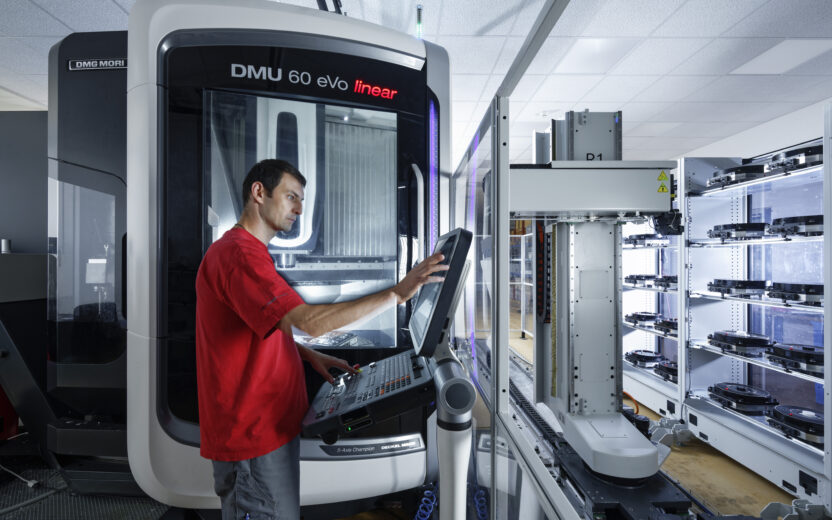
Are these your daily challenges as a production planner?
Staffing requirements aren't linked to workstation capacity requirements – machines are scheduled, but their operation isn't secured.
Challenges for production planners
Does this sound familiar?
Are you facing these challenges as an IT, SCM, or plant manager?
Employee scheduling runs as an isolated solution alongside production planning – data is maintained twice.
Challenges for IT and SCM managers
Does this sound familiar?

Are you facing these challenges as a CEO?
Labor shortages and skills gaps have a direct impact on delivery performance and utilization.
Challenges for CEOs
Does this sound familiar?
Workforce Management
In production and logistics, on-time delivery doesn’t depend on machine availability alone – it also depends on whether the right people are at the right workstation at the right time. And this is exactly where things get complex: Different skills, shift models, overtime accounts, labor law requirements, vacation, training, and sick calls make allocating personnel capacity a demanding task. If the shift schedule is managed in Excel or other isolated standalone systems, it’s often obsolete by the time it’s finished.
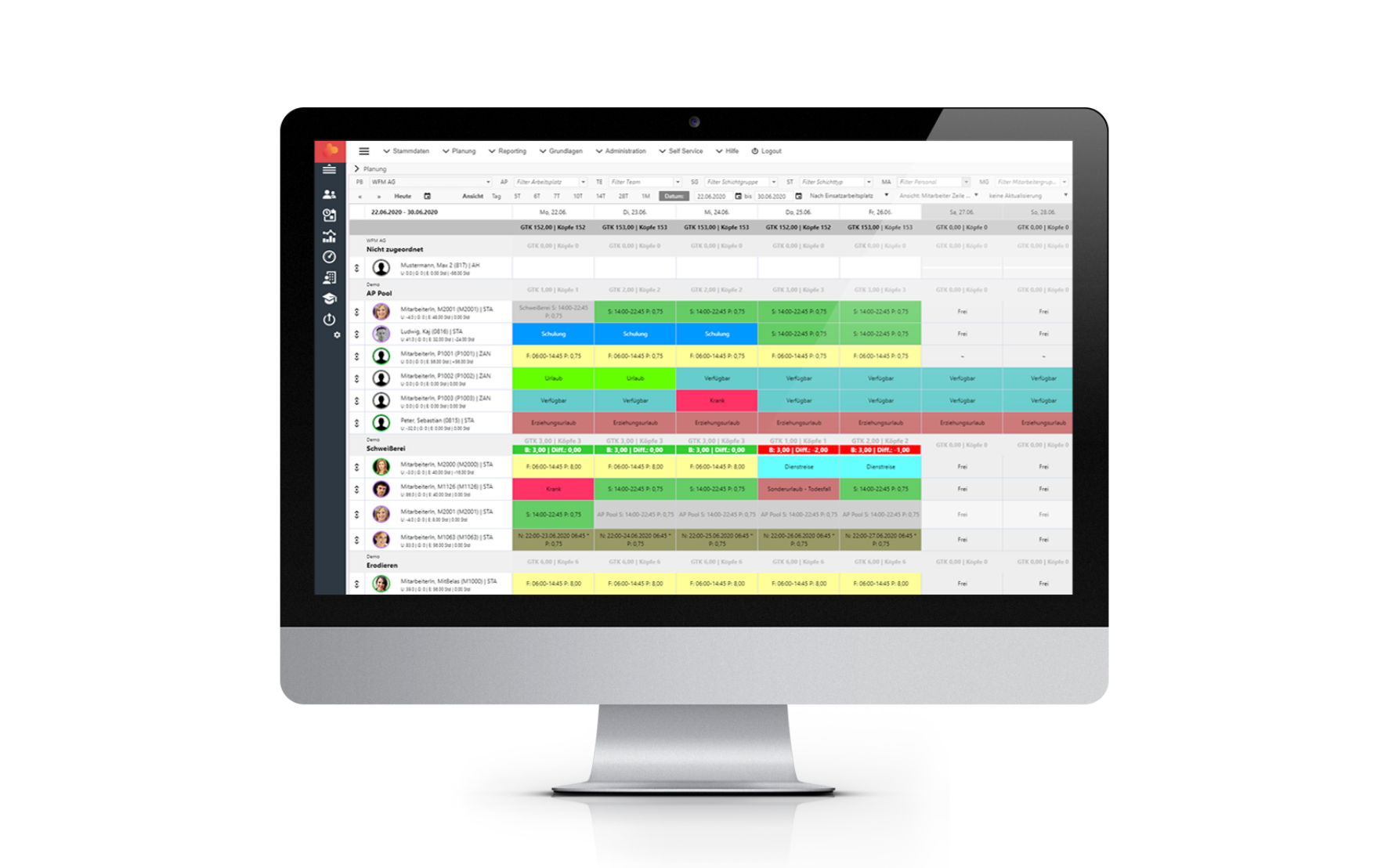
Workforce management with the valantic waySuite links employee scheduling directly to production and capacity planning. The result is a realistic, skills-based schedule built on actual capacity requirements – generated automatically and refined manually where needed.
Workforce management in production refers to the strategic and operational planning, scheduling, and optimization of workforce deployment, taking into account machine capacity, employee skills, shift models, and legal requirements.
In the context of an APS system like the valantic waySuite, this means that personnel is not treated as an isolated, static factor. Instead, workforce management with waySuite turns your workforce into a dynamic resource directly linked to production planning and to project and production scheduling. If the order backlog changes or an employee is out, the system calculates the impact on completion dates in real time.
Traditional approaches often remain stuck in standalone systems. Modern manufacturing, however, demands bringing together material, machines, and people.
| Planning aspect | Traditional shift scheduling (silo / Excel) | Integrated workforce management (valantic waySuite) |
|---|---|---|
| Data foundation | Static, isolated in the supervisor's office | Dynamic, directly linked to waySuite |
| Skills matching | Mostly informal or based on manual lists | System-supported matching against the skills matrix |
| Response to absences | Reactive (phone calls, manual rescheduling) | Proactive (simulating the impact on delivery dates) |
| Process scope | Attendance tracking only | End-to-end integration with production planning |
Introducing integrated workforce management software in production aims to stabilize processes. By bringing the planning levels together, the following results can be achieved:
Transparent, connected planning of personnel and machines
Automated shift schedules – and less planning effort as a result
Short- and long-term optimization of workforce deployment
Lower costs through better use of standard working hours
Reduced idle time
Higher employee motivation through transparent planning
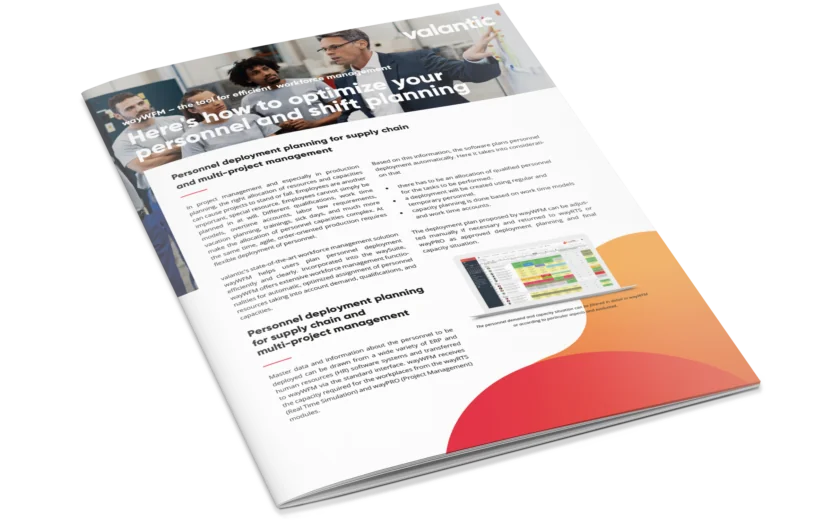
Product Flyer: Workforce Management with valantic waySuite
Clear workforce management that takes demand, skills, and capacity into account – efficient with valantic waySuite.
Deploy your workforce with precision – based on capacity, shift models, skills, and labor law requirements. The right resource planning is a decisive success factor.
Learn more40%
Faster response to short-notice changes in production
+25%
Higher productivity per employee through precisely matched scheduling

waySuite
Real-time visibility
All orders, capacity, and materials at a glance. No more thousands of hours of backlog in the system – you see immediately where each order stands.

waySuite
Who can do what? Skills under control
Up-to-date employee information, skills management, links between skills and workstations, and mapping of coverage rules.
-30%
Lower overtime costs
-80%
Manual planning effort reduced
waySuite
Functional benefits
Users rely on the workforce management module to minimize sources of error in planning, respond more agilely to change, and continuously optimize their planning based on analytics. Employee scheduling becomes clearer and more data- and fact-based. At the same time, automation reduces planning effort.
waySuite ensures that workforce constraints flow directly into the optimization of production planning:
Personnel capacity is calculated against machine allocation in real time. If the system detects a bottleneck for a specific skill, project and production scheduling flags a conflict before it leads to downtime.
waySuite and its workforce management module are built on a modern, modular platform that maps entire production networks. The solution integrates seamlessly into existing ERP, MES, and HR systems and provides all relevant data in real time. Intuitive user interfaces let planners easily map and simulate shifts, skills, and capacity. AI-powered algorithms support automated scheduling and optimize workforce assignments, taking into account production orders, legal requirements, and individual resources.
Employee scheduling is embedded directly in valantic waySuite as a browser-based component. The system derives capacity requirements from production scheduling and shop floor control. Once released, the finalized schedule flows seamlessly back into these areas as the definitive capacity situation. This automatic data exchange within waySuite keeps production and workforce planning fully consistent at all times.
For holistic workforce management, waySuite provides interfaces to common ERP and human resources (HR) systems. Master data and reliable information about the personnel to be scheduled are drawn from these systems. As a result, shift scheduling is based on always up-to-date employee information rather than on error-prone, separately maintained lists. Centralized absence workflows, along with system-based management of skills and coverage rules, round out the functional picture.
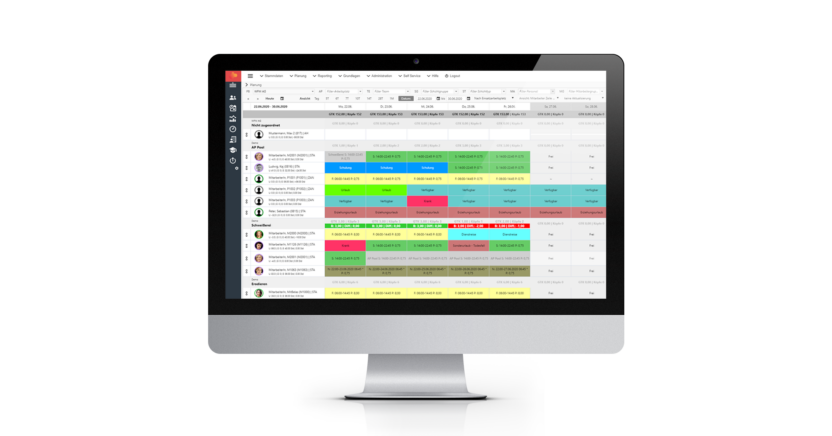
Within waySuite, the demand and capacity situation per workstation and shift can be grasped at a glance – as a quick overview, in full detail, or filtered to your needs, including all recorded absences. Planners use these integrated dashboards and analytics to minimize sources of error in shift staffing, respond faster to short-notice changes, and continuously optimize employee scheduling on a data-driven basis.


ABB is a leading global technology company with solutions in electrification, motion, and robotics and automation.
To put it bluntly, our scheduling used to be outdated the moment it was created. Far too often, we had to reschedule at short notice to keep customers satisfied. Today, our operations planning in waySuite is driven by real-time information on available and required capacity and resources. We spot potential delays early, and we have ideal production sequences for every manufacturing step at every workstation.
Patrick Strickler
Value Chain Engineering, ABB Schweiz


APS waySuite at Everllence: Production planning AI-optimized


KNAPP AG optimizes supply chain with aps system wayRTS

ABB Switzerland: Efficient production planning and capacity planning with waySuite
Employee scheduling that fits your industry, too
Whether it’s three-shift operations in manufacturing, seasonal workload peaks, or highly skill-critical special tasks: Every industry places its own demands on workforce and shift scheduling. waySuite answers them with proven industry solutions instead of one-size-fits-all software – adaptable to your individual processes.

1/5
From Planning to Production: Efficient Processes in Machinery and Plant Engineering
Custom systems such as supply and disposal technology, conveyor systems, production machinery, filling lines, energy systems, process engineering equipment, and special-purpose vehicles — all of these are engineered individually to customer specifications. This made-to-order manufacturing drives up the complexity of production planning enormously. Learn how valantic waySuite plans and controls your supply chain efficiently. waySuite for Machinery and Plant Engineering

2/5
Agile Project and Production Planning in the Defense Sector
Defense contractors face growing challenges that are becoming increasingly tangible as demand rises. Defense projects are characterized by extremely long timelines, highly complex supply chains, and extended product life cycles including maintenance contracts. The orders are usually highly customer-specific with substantial engineering effort (engineer-to-order). Agile Project and Production Planning in the Defense Sector

3/5
Project Planning in the Maritime Sector
The maritime industry grapples with projects involving 10,000 network activities, thousands of dependency relationships, and resource conflicts — all typical of cruise ship construction and the high complexity of its project management. This calls for transparent multi-project control with integrated capacity and resource planning. Agile Project and Production Planning in the Maritime Industry

4/5
Efficient Production Planning in the Life Sciences and Medical Technology Sector
High regulatory requirements, strict quality guidelines, and constantly changing demand call for maximum flexibility and precision. Planning has to account for a wide range of variables: from the availability of critical raw materials, to ensuring smooth supply chains, to the scalability of production capacity.

5/5
Highest Standards, Maximum Efficiency: Production Planning for Pharmaceutical Companies
The pharmaceutical industry faces a wide range of challenges in production planning: strict regulatory requirements demand detailed documentation and complex approval processes. Short product life cycles increase the need for flexibility and fast time-to-market. At the same time, complex supply chains make it harder to ensure material availability and synchronization. Throughout all of this, the highest quality standards are indispensable for ensuring patient safety.
Combined with our ROI analysis, you receive a clear assessment of how quickly your investment in waySuite pays for itself – for example, through optimized processes, lower inventory costs, and improved on-time delivery.
These valuable insights help you make informed decisions for the future of your production planning.

Product Flyer: waySuite Workforce Management
Clear employee scheduling that takes staffing requirements, skills, and capacity into account: efficient workforce management with valantic waySuite.
Workforce management in production is the software-supported planning and scheduling of all workforce deployment, taking into account machine capacity, skills, and shift models. It ensures that personnel resources are precisely aligned with the requirements of industrial production control.
Employee scheduling is the specific assignment of employees to particular shifts, workstations, or machines within a defined time period. The goal is to cover staffing requirements – in both headcount and skills – as they arise from current production planning.
Workforce management with valantic waySuite offers the advantage that staff availability is directly linked to production scheduling. In the event of short-notice absences, the system immediately simulates the impact on delivery dates and enables fast, skills-based rescheduling within the same system.
Workforce management connects to third-party systems via standardized interfaces (APIs). This allows master data and working hours from ERP systems (e.g., SAP) and actual data from MES systems to be seamlessly synchronized with waySuite’s planning software, avoiding data silos.
The software matches the staffing requirements of a production order directly against a digital skills matrix. When labor is short, the system automatically suggests available employees who have the exact skills for the machine in question, preventing incorrect assignments and downtime.
waySuite immediately shows the impact of planning changes on shift staffing and order flow. Simulations make it possible to evaluate scenarios and validate decisions in real time.
Yes. valantic waySuite integrates fully with ERP systems such as SAP and Microsoft Dynamics – without breaks in the data flow.
Through transparent planning and data-driven forecasts, waySuite increases productivity, lowers costs, and lays the foundation for lasting growth.
Yes, waySuite is scalable and supports companies with multiple sites, departments, and production areas – centrally managed or administered locally.