Highlight

Successful together – our valantic Team.
Meet the people who bring passion and accountability to driving success at valantic.
Get to know usDecember 12, 2024

Successful businesses create innovative products and business models that offer practical solutions and inspire their markets. The key to this is to consistently align services and products with customer needs. Neglecting this can increase the risk of a “waterfall” effect, leading to longer product roll-out cycles and soaring development costs. Lean start-up provides a framework for streamlining successful new product development and company foundation.
Lean start-up is an approach that emphasizes early market testing and continuous learning. Much like design thinking, it places users at the core of all considerations. At valantic, we apply proven innovation methods, including user personas, customer journeys, and business model generation, within this framework.
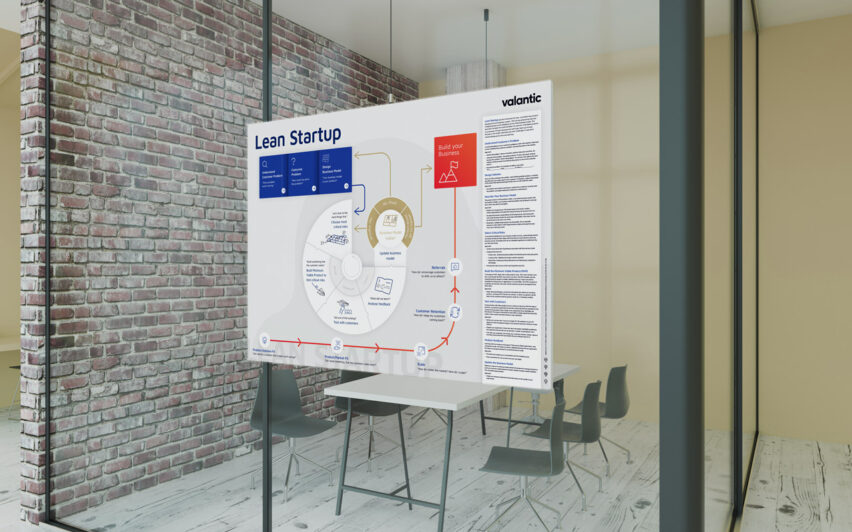
Download valantic Lean Start-up Poster now!
Lean Start-up is a framework for lean, successful new product development and company formation.
Tailored to your unique entrepreneurial challenges, valantic facilitates efficient, customer-centered, and low-risk product development using the lean start-up approach.


Artificial Intelligence October 16, 2026
Autonomous Enterprise Journey: How AI value engineering creates measurable business value
How can the ROI of AI initiatives be reliably assessed and measured? How can companies identify the biggest levers and key processes for AI? Katrin Luft, Senior Expert at valantic and co-developer of the “Autonomous Enterprise Journey,” provides answers and recommendations in a conversation with Darya Basarhina, Vice President of Sales & Marketing and Manufacturing Practice Lead at valantic.
Autonomous Enterprise Journey: How AI value engineering creates measurable business value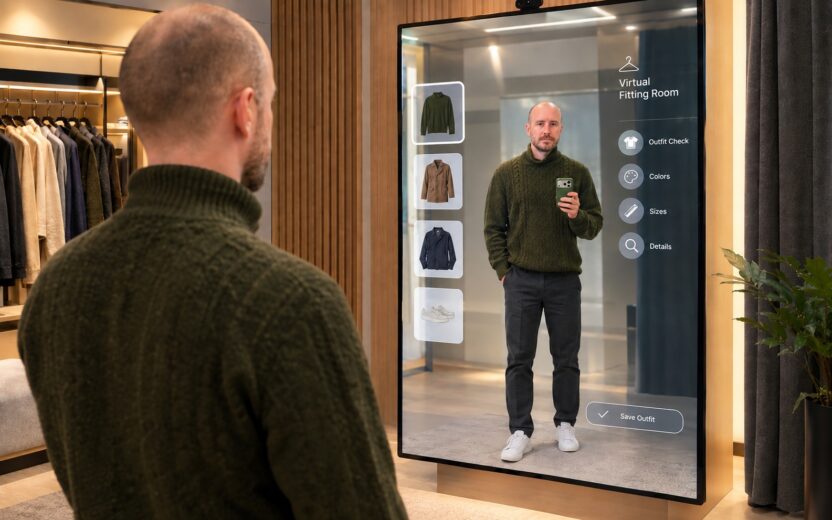
Customer Experience September 18, 2026
From webshop to virtual try-on: how AI is making its way into retail stores
Digital interfaces such as smart mirrors turn AI in the store into a tangible business case. What potential does this hold for the customer experience and in-store personalization? Matthias Vollmer explains how the retail industry can combine the best of both worlds and turn physical touchpoints into an intelligent part of the omnichannel journey.
From webshop to virtual try-on: how AI is making its way into retail stores
Customer Experience August 27, 2026
Interview: How manufacturing stays digitally visible and AI-relevant
In the manufacturing sector, purchasing decisions are increasingly being made before the sales team is even involved. Designers, planners, maintenance technicians, and buyers conduct online research—and are increasingly receiving AI-generated responses. How can marketing teams at manufacturing companies ensure digital visibility and AI relevance? Answers and recommendations from the Manufacturing Practice.
Interview: How manufacturing stays digitally visible and AI-relevantDon't miss a thing.
Subscribe to our latest blog articles.