Highlight

Successful together – our valantic Team.
Meet the people who bring passion and accountability to driving success at valantic.
Get to know usDecember 3, 2024

As you read this, AI is already reshaping the world, and we cannot deny the unquestionable benefits that it brings to our lives and how it elevates our human experience.
Think about Healthcare. AI can support better diagnosis, identify health problems earlier, predict the spread of disease, and accelerate R&D in pharmaceutical advancements.
In Education, each student can benefit from a personal learning assistant. This assistant adapts to each student’s goals, weaknesses, background, strengths, and more, to provide tailored support. AI even helps our planet by figuring out smarter ways to use what we have and predicting weather and climate changes. At this point, you are quite familiar with chatbots and generative AI, which is everywhere! It’s undeniable that it is making us more productive and making us smarter workers and thinkers.
But what about in the field of UX/UI Design? With all the tools available for generating quantitative research, wireframes, mockups, prototypes, and even setting up interviews, you might think AI could replace us. But actually, that’s not the case.
Like any other tech revolution, AI does not hold the power to replace us itself. This is because AI is still in its infancy and has some limitations. It cannot figure out what problems to solve by itself.
It has trouble understanding context and at the time of writing, AI can only solve one task at a time. It is very hard to solve complex problems or systems.
Complex systems such as a user’s:
Only humans can understand this level of complexity when addressing the problems a user struggles with.
To solve a design problem one must understand Interface Design, Psychology, Information Architecture, Accessibility, Design Thinking, Visual Principles and the list goes on!
This is the big difference between us and technology. We can understand and share the feelings of others. We can imagine and attempt to even understand what the other person feels. You can tell when a piece of art is generated by AI because it lacks the magic of human creativity. So we should not see AI as a substitute, but rather as a strong sidekick!

AI will help you work faster, smarter and better, we can use its fast computing to:
AI can process vast amounts of data, find patterns and analyze user feedback efficiently. Imagine how much time you will save. For example, you can use ChatGPT to help you create an interview based on the knowledge you acquired in Market Research and Competitive Analysis.
Let’s try generating an interview for a Pizza Ordering App:
Not only does it provide the full interview process, but it also gives you hints on what the user flow should be if you take a close look at the topics, it certainly will boost your productivity in ideation!
AI can be your brainstorming friend, it can suggest unique ideas and trends, and find patterns. To do this you can use a free plugin in Figma called WireGen.
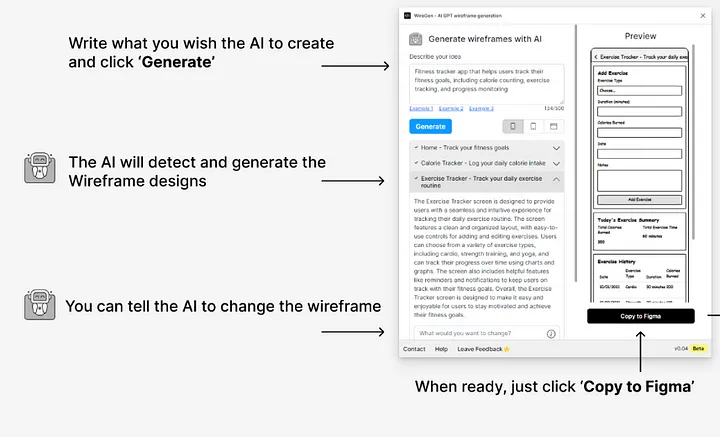
Prompt exactly what you want for the screen, not only will it generate a Wireframe, but it will also provide a detailed description of what the screen needs, which is very helpful for creating User Stories!
Perhaps this is the most feared generative tool because of how powerful it is. But we must see these tools for what they are – tools in our hands to craft rich content for our users. We as UX Designers should avoid “Lorem Ipsum” text, this does not reflect real-world usage. Big teams might have UX Writers who draft the microcopy, but in times of difficulty in coming up with ideas, AI can be your best friend.
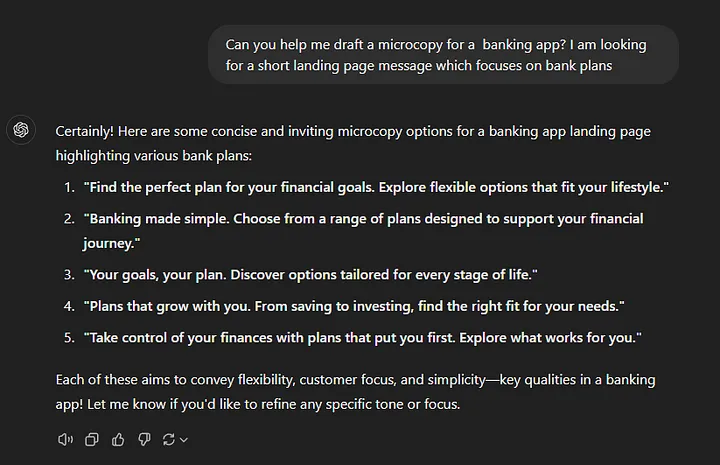
ChatGPT can deliver great suggestions!
In this scenario, we are looking for a text that focuses on finance plans, you can expand this idea by giving more precise information or even change the tone of the message:
AI can help evaluate and optimize your designs before you take them to your users, but take this with a grain of salt, as for now this is very limited. However, there are very interesting apps such as Attention Insight.
Attention Insight predicts where users will look after engaging with your design. It can also help you compare designs.
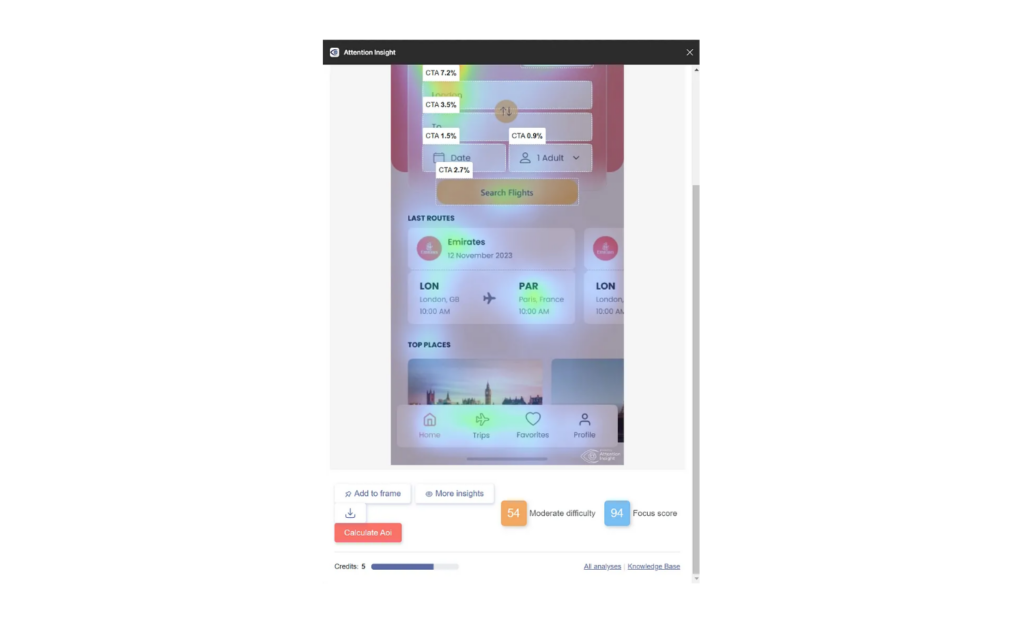
In this case, this screen got a Focus Score of 94 which is a very good result, but it also gave us 54 in Difficulty, which is Moderate. This is a very interesting result in which we can use our critical thinking to understand what we can do to improve our design.
AI can ensure the user experience is comprehensive and inclusive by helping simulate user interaction.
Maze uses machine learning to give you insights into user behavior and spot design flaws. It’s built for easy usability and user testing on websites and apps, with a simple interface for quick, efficient testing.
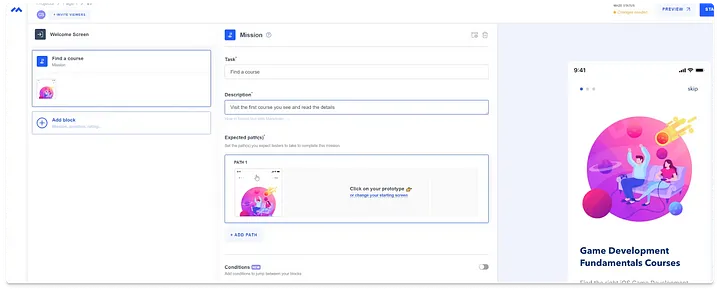
As you can see, AI can assist in major areas of Design and in a fast world where time is important, this tool will help you to better manage your time.
AI will surely be a game changer to help us in our design process, making us not only efficient, but also innovative and user-focused. Keep in mind that by using free tools like ChatGPT you have to be very careful with what information you type, being an open-source tool any sensitive information will not be protected.
Internally we use Vally which secures all information that is provided to the generative AI thereby maintaining confidentiality. We should see AI as our closest professional partner and the sooner we embrace it, the sooner we will become better UX/UI Designers by using this revolutionary technology.

Accomplishing Digital Transformation with Low-Code
Based on the Low-Code development platform OutSystems, valantic offers solutions for customers in diverse areas.


Artificial Intelligence October 16, 2026
Autonomous Enterprise Journey: How AI value engineering creates measurable business value
How can the ROI of AI initiatives be reliably assessed and measured? How can companies identify the biggest levers and key processes for AI? Katrin Luft, Senior Expert at valantic and co-developer of the “Autonomous Enterprise Journey,” provides answers and recommendations in a conversation with Darya Basarhina, Vice President of Sales & Marketing and Manufacturing Practice Lead at valantic.
Autonomous Enterprise Journey: How AI value engineering creates measurable business value
Customer Experience October 8, 2026
Interview: From PIM to Data Spine – How companies prepare their data for AI
AI is changing the requirements for data, governance, and processes. Where should companies start, and what skills do they need? In this interview, Dietmar Rietsch, CEO of Pimcore, and Timo Huguet of valantic discuss the importance of clean data, the concept of the “Data Spine,” and the changing role of humans in the age of agentic AI.
Interview: From PIM to Data Spine – How companies prepare their data for AI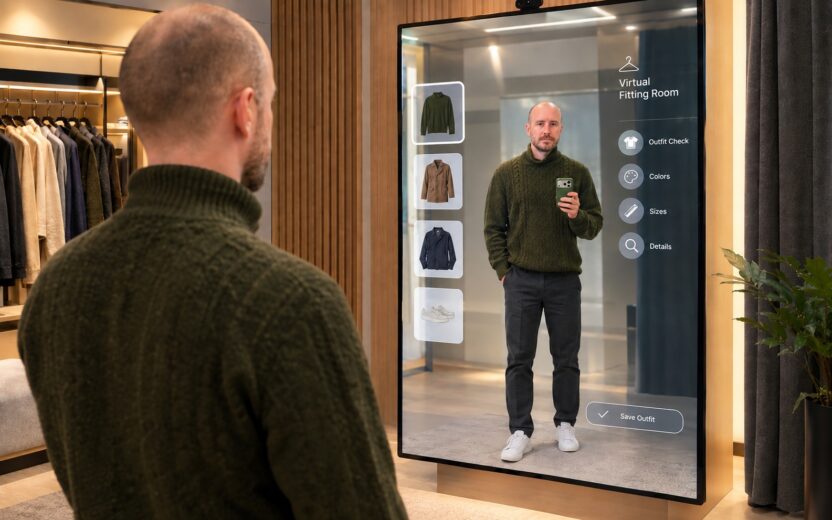
Customer Experience September 18, 2026
From webshop to virtual try-on: how AI is making its way into retail stores
Digital interfaces such as smart mirrors turn AI in the store into a tangible business case. What potential does this hold for the customer experience and in-store personalization? Matthias Vollmer explains how the retail industry can combine the best of both worlds and turn physical touchpoints into an intelligent part of the omnichannel journey.
From webshop to virtual try-on: how AI is making its way into retail storesDon't miss a thing.
Subscribe to our latest blog articles.