Highlight

Successful together – our valantic Team.
Meet the people who bring passion and accountability to driving success at valantic.
Get to know usJune 9, 2026

This is the first part of our series of articles on the Autonomous Enterprise. Click here for Part 2, and here for the Part 3!
Looking back on SAP Sapphire 2026 with some perspective, I’m sorting through my impressions. As Head of SAP AI at valantic, I attend such events with a healthy dose of skepticism. This time I came back surprised. The patchwork of individual AI features has become a strategy. Its name: Autonomous Enterprise.
The most important message was not a product, but a rethink. Until now, AI was seen as a nice assistant: it makes suggestions, humans do the work. SAP is turning this around. In the Autonomous Enterprise, people set the direction, and Joule Assistants orchestrate entire teams of Joule Agents that perform routine work independently across SAP and non-SAP systems.
This is a change in architecture. You simply describe in natural language what you want to achieve – and a coordinated team of agents implements it. For our customers, this means fewer manual handovers, shorter throughput times and processes that optimize themselves.
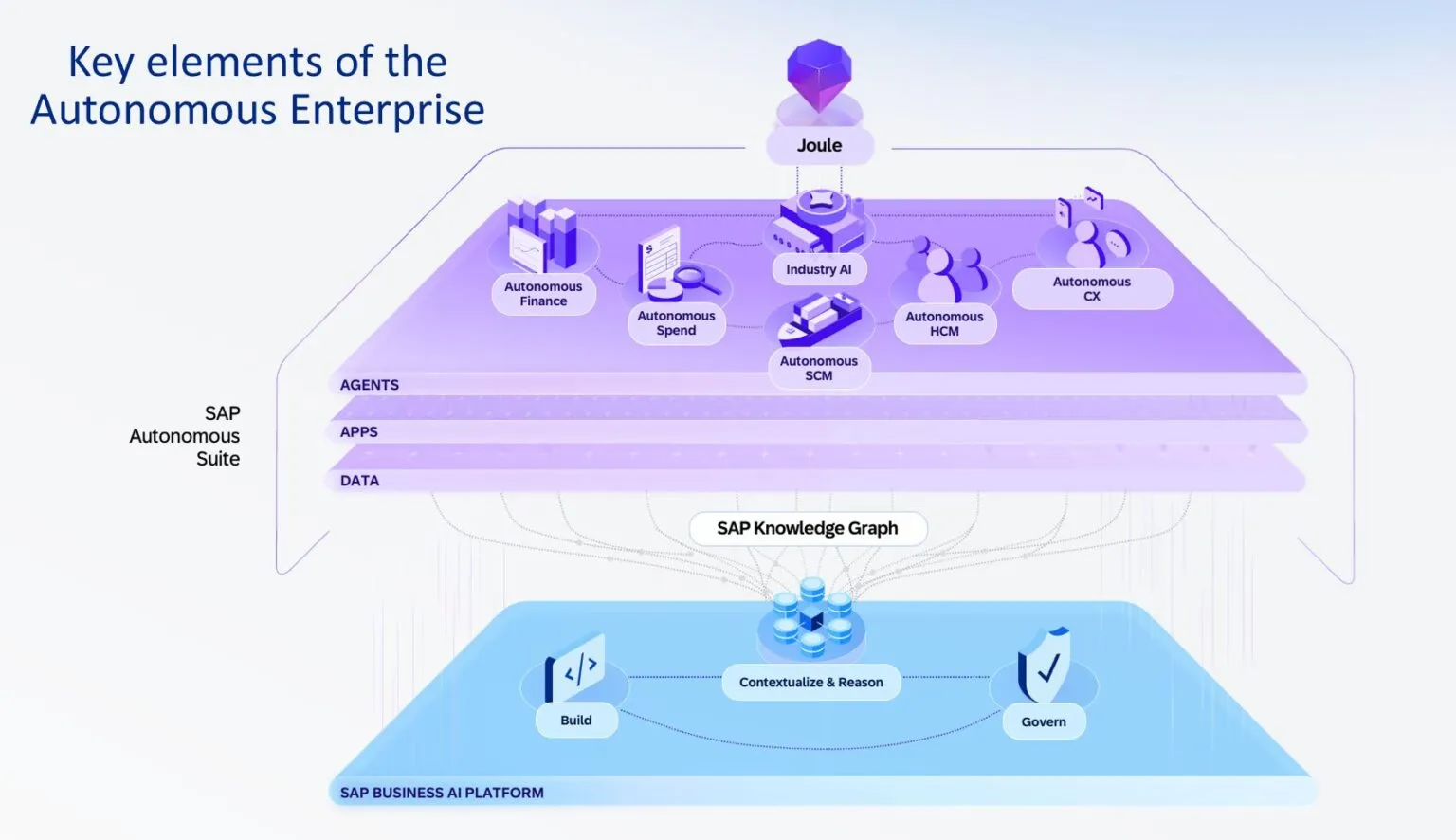
Let’s be honest: Joule has not been a crowd favorite so far. The idea was good, but acceptance and usage fell short of expectations. That’s exactly why I find Joule Work so exciting as an important part of the Autonomous Enterprise – it could be the turning point.
The clever twist are the Spaces: dynamic workspaces that adapt to the user’s intentions in real time instead of sending them through x number of fragmented masks. This is real innovation, not just a new UI. At least as important is the openness: via bidirectional A2A and MCP, external agents can also call up Joule Agents securely – and vice versa. In the Autonomous Enterprise SAP is thus turning Joule from a closed assistant into an open conductor. This is precisely the difference that determines acceptance.
My highlight is the new Joule Studio managed by SAP – the workbench in the Automonous Enterprise where agents, apps, extensions and workflows are created. The best thing about it: development no longer starts with a blank page, but with the business intention.
You describe the goal in natural language, Joule Studio enriches it with the architecture context of the organization – based on SAP Domain Models and the SAP Knowledge Graph – and delivers specifications, code and tests. Developers remain in familiar tools such as VS Code, mix low-code and pro-code and use frameworks such as LangGraph or AutoGen. Thanks to partners such as n8n and NVIDIA, the platform remains open instead of closed.
As impressive as the agents in the Autonomous Enterprise are – without reliable data, they remain a gimmick. That’s why the SAP Business Data Cloud (BDC) is at least as important as the agents.
The most exciting component: the SAP Knowledge Graph. It provides managed ontologies that Joule uses to understand processes, relationships and context in the company. To this end, SAP HANA Cloud is now native to the BDC – as an AI database that brings together vectors, graphs and relational data with business context.
Joule Studio and SAP BDC are based on the SAP Business AI Platform – the foundation that brings together data, models and governance. This is where the SAP Domain Models, the SAP-RPT-1.5 tabular model and the SAP AI Agent Hub run, which can be used to control agents company-wide and across manufacturers.
Particularly exciting from valantic’s point of view: SAP and Anthropic are moving closer together, Claude will be embedded as a central reasoning and agent engine across the SAP portfolio in the future. With sovereignty options such as Mistral and Cohere North, it is clear that governance and freedom of choice in the model are not an afterthought, but a design principle.
The majority of these AI benefits are not available in the on-premise setup – almost all innovations and therefore the Autononous Enterprise are linked to SAP’s cloud products: SAP Cloud ERP, SAP BDC, Business AI Platform. Although SAP has indicated that on-premise customers may also receive selected AI functions under certain circumstances, it remains to be seen what these will be and how many companies will be affected. If you want to leverage the effects today, there is no way around a consistent cloud strategy and rolling out these products.
However, the bottleneck in innovation rarely lies in the technology, but in change management and culture. The same applies to the Autonomous Enterprise. When agents act independently, roles, responsibilities and trust shift. Employees must learn to delegate and monitor instead of doing every click themselves. Without empowerment, transparency and a culture that accepts AI as a teammate, even the best agent setup will remain unused.
However, two retail examples were the most memorable. The clothing retailer H&M presented two productive solutions: a store intelligence agent that uses real-time signals to generate recommendations for store managers, and a customer-facing in-store concierge that recommends a complete outfit live. EssilorLuxottica, a global optical company, went further with wearables: a pair of smart glasses connected to Joule supported a sales assistant during a customer consultation – scanning the customer profile, calling up the order history and voice-controlled reordering of sunglasses, orchestrated by several agents. Not as an experiment, but as day-to-day business – this made the autonomous enterprise tangible.
With the announcement of the Autonomous Enterprise, the direction is clear. What counts now is the implementation: the path to the cloud, a clean data layer in the BDC, a well thought-out governance model for agents – and use cases with real business value instead of AI for AI’s sake.
This is exactly where we at valantic come in: from the cloud and data strategy to the architecture to the productive agent and the people behind it. The mindshift has begun, the path to the autonomous enterprise is open. Now it’s time to get started.
The second part of our article series explores the homework companies should complete on their journey toward becoming an autonomous enterprise.
Part three of our series focuses on Joule Studio 2.0 and the AI agents.
Discover the most important information about the SAP Autonomous Enterprise in the valantic glossary.


Explore the Autonomous Enterprise
The Autonomous Enterprise represents a new vision for how businesses operate: AI agents execute processes autonomously, while people set the direction and maintain control.

Sascha Göpfert
Vice President and Head of SAP AI
valantic
Sascha is Head of SAP AI at valantic and an expert in AI and software development.

Marcel Beckmann
Head of SAP BDC
valantic
Marcel is our expert for the SAP Business Data Cloud and heads the Center of Excellence SAP Data Warehouse at valantic.
Customer Experience September 18, 2026
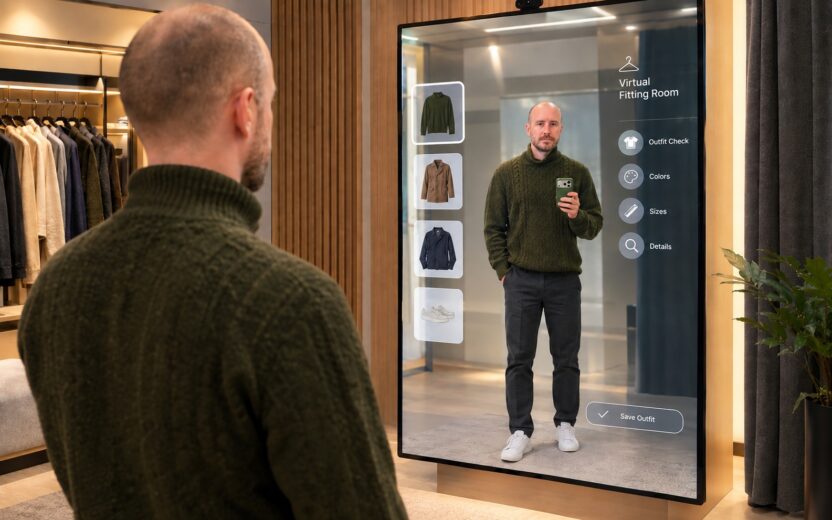
From webshop to virtual try-on: how AI is making its way into retail stores
Digital interfaces such as smart mirrors turn AI in the store into a tangible business case. What potential does this hold for the customer experience and in-store personalization? Matthias Vollmer explains how the retail industry can combine the best of both worlds and turn physical touchpoints into an intelligent part of the omnichannel journey.
From webshop to virtual try-on: how AI is making its way into retail stores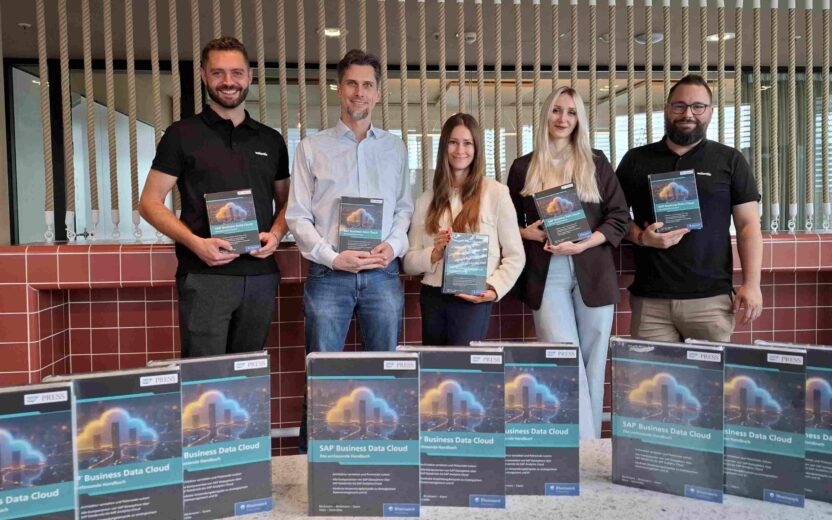
SAP Services September 17, 2026
The SAP BDC handbook: An interview on Business AI and data culture
Five valantic consultants wrote the SAP Business Data Cloud handbook. In this interview, they explain why SAP BDC is the enabler for business AI and why this book is a must-read.
The SAP BDC handbook: An interview on Business AI and data culture
Customer Experience August 27, 2026
Interview: How manufacturing stays digitally visible and AI-relevant
In the manufacturing sector, purchasing decisions are increasingly being made before the sales team is even involved. Designers, planners, maintenance technicians, and buyers conduct online research—and are increasingly receiving AI-generated responses. How can marketing teams at manufacturing companies ensure digital visibility and AI relevance? Answers and recommendations from the Manufacturing Practice.
Interview: How manufacturing stays digitally visible and AI-relevantDon't miss a thing.
Subscribe to our latest blog articles.