Highlight

Successful together – our valantic Team.
Meet the people who bring passion and accountability to driving success at valantic.
Get to know usApril 15, 2024

In modern manufacturing, key maintenance metrics are essential for ensuring the reliability and performance of equipment and production facilities. Efficient resource management plays a crucial role in this.
This article explores how to:
You’ll also discover how strategic resource management can secure the long-term success of your maintenance activities.
Before resources can be managed efficiently, maintenance requirements must be clearly identified. These can range from scheduled maintenance tasks to urgent repairs requiring immediate action. Precisely recording and prioritizing these needs is the first step toward optimal resource utilization.
Effective employee scheduling is key to optimizing maintenance activities. However, the growing shortage of skilled workers presents a significant challenge. That’s why a well-structured human resources strategy is essential. It helps to attract and retain qualified employees in the long term, for instance, with:
In addition, qualification measures play an important role: Your maintenance team must possess the necessary skills to perform tasks efficiently. That’s why transparency in skill levels is crucial. Clearly mapping competencies and enabling targeted skills matching ensures that the right employees are assigned to the right tasks.
During workforce shortages or peak demand, external workers can provide valuable support. However, careful selection and seamless integration into the workflows are essential to ensure the quality of your maintenance activities. Key factors for success include: clear communication of expectations, targeted training and onboarding, as well as precise definition of roles and responsibilities.
These key metrics can help enhance resource management and improve the efficiency of your maintenance activities:
Effective resource management is the key to seamless maintenance. By accurately identifying maintenance needs, optimizing employee scheduling, implementing targeted qualification management, and strategically integrating external resources, businesses can significantly enhance efficiency. But is there potential for further improvement?
Modern technologies are revolutionizing resource management, taking efficiency to the next level. Solutions like SAP Field Service Management (SAP FSM), resource-sharing platforms (SAP RSH), and advanced tools like Divcon dynamic Scheduling enable real-time planning and smarter resource allocation. These systems go beyond simple availability tracking – they consider employee qualifications, workload, and location to optimize scheduling.
By implementing such technologies, companies can precisely control resource deployment and adapt to changes flexibly. Facing an unexpected staff shortage? No problem. These intelligent systems automatically identify the best available resources and efficiently plan their deployment.
Looking ahead, resource management will not only become more efficient but also more flexible and responsive. Companies will be able to elevate their maintenance processes to a whole new level, gaining a decisive competitive edge.
Ultimately, resource management is more than just a necessity – it holds strategic potential to significantly enhance performance and profitability. The integration of modern technologies for real-time resource optimization will be a key factor in driving this transformation.
SAP Services September 17, 2026
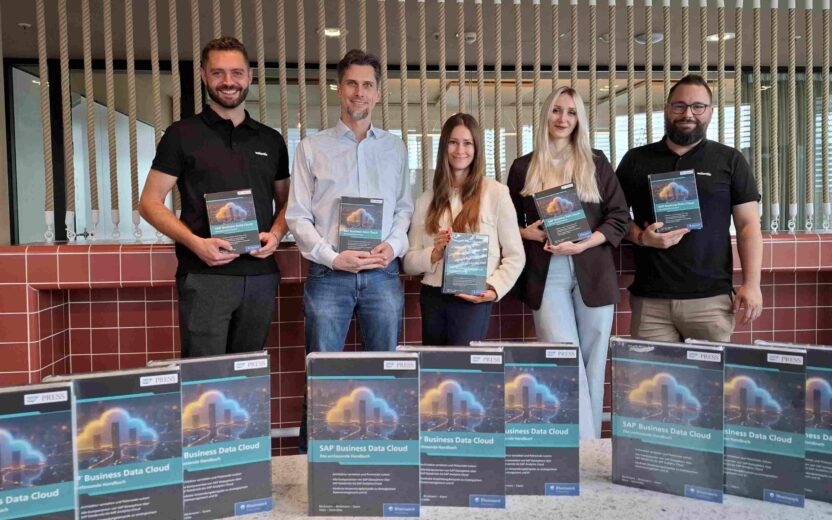
The SAP BDC handbook: An interview on Business AI and data culture
Five valantic consultants wrote the SAP Business Data Cloud handbook. In this interview, they explain why SAP BDC is the enabler for business AI and why this book is a must-read.
The SAP BDC handbook: An interview on Business AI and data culture
Artificial Intelligence August 4, 2026
Joule Studio 2.0: Shaping the Autonomous Enterprise with SAP AI Agents
In the third part of our blog series on the Autonomous Enterprise, we turn our attention to AI agents. With Joule Studio 2.0 and industry-specific Industry AI, SAP enables the transition from AI assistants to autonomously acting AI agents—including open development with n8n and Vercel, as well as integrated governance in the SAP AI Agent Hub.
Joule Studio 2.0: Shaping the Autonomous Enterprise with SAP AI Agents

Artificial Intelligence July 15, 2026
Homework for the Autonomous Enterprise: Architecture, Data, and Processes
SAP Sapphire has refined the vision of the Autonomous Enterprise—now it’s time to put it into practice. Part 2 of our blog series highlights four key building blocks: transparent architecture and agent governance with LeanIX, the path to the cloud, a solid data foundation in the SAP Business Data Cloud, and processes made visible through process mining.
Homework for the Autonomous Enterprise: Architecture, Data, and ProcessesDon't miss a thing.
Subscribe to our latest blog articles.