Highlight

Successful together – our valantic Team.
Meet the people who bring passion and accountability to driving success at valantic.
Get to know usMarch 28, 2025

“In the quest to meet the modern shopper’s expectations, it’s not just about the product anymore; it’s about crafting an experience.” Dietmar Rietsch, CEO of Pimcore, captures the essence of e-commerce with this strong statement. The journey from Product Information Management (PIM) to Product Experience Management (PXM) is more than a shift in operational focus—it’s a complete redefinition of customer engagement and satisfaction.
Pimcore was born from a vision to unify data management and customer experience. This system is an ecosystem that manages any data, adaptable across various industries, delivering content through any channel. It represents the foundational shift from simply managing product information to creating a narrative that customers can experience on a personal level.
PXM goes beyond the traditional scope of PIM by weaving data and experience into a single, cohesive platform. This approach is critical in today’s retail e-commerce space, where customer expectations are higher than ever. PXM ensures that product stories are not only told but are felt and lived by customers across all retail channels, resulting in improved loyalty and conversion rates.
Generative AI is revolutionizing the retail industry by automating content creation and personalization. These advancements are not confined to specific sectors; they are cross-industry powerhouses driving efficiency and relevance in retail and manufacturing alike. With AI, personalization scales to new heights, catering to individual customer personas in real-time, which is crucial for crafting experiences that resonate.
Understanding the customer is at the heart of PXM. Retailers must bridge the gap between online product data and in-store experiences, ensuring consistency and relevancy at every touchpoint. True omnichannel awareness means meeting the customer where they are, with the right information at the right time and improving CX automation —this is the customer-centric model that PXM champions.
Implementing PXM is not without its challenges. Accurate and structured product data is the bedrock upon which customer experiences are built. For a successful PXM strategy, e-commerce managers must facilitate seamless data flow across departments and ensure that the entire organization is aligned with the customer-focused mission.
Innovation in PXM is continuous, with Pimcore at the forefront, preparing for the launch of Pimcore Studio this year. This new user interface is expected to transform the handling of data and experience management by making it more intuitive and editor-friendly, further empowering e-commerce managers to deliver exceptional product experiences.
In our conversation, Dietmar Rietsch emphasized a vital mantra for any retail leader: “Know your f*cking customer.” This straightforward yet profound advice underscores the essence of PXM. By placing the customer at the core of all strategies and truly understanding their needs and desires, companies can effectively navigate the complexities of digital commerce, ensuring that they not only meet but exceed customer expectations in this rapidly evolving marketplace.

Pimcore podcast with CEO Dietmar Rietsch
Discover the origin story of Pimcore in a Salzburg brewery, the innovative visions behind its creation, and how it’s revolutionizing data and experience management.

Elevating the Shopping Experience: From Product Purchase to Personalized Journey
Product Experience Management (PXM) has emerged as a transformative approach in a competitive digital landscape, redefining how businesses interact with customers.Unlike traditional product management, PXM focuses on delivering a cohesive…


Artificial Intelligence October 16, 2026
Autonomous Enterprise Journey: How AI value engineering creates measurable business value
How can the ROI of AI initiatives be reliably assessed and measured? How can companies identify the biggest levers and key processes for AI? Katrin Luft, Senior Expert at valantic and co-developer of the “Autonomous Enterprise Journey,” provides answers and recommendations in a conversation with Darya Basarhina, Vice President of Sales & Marketing and Manufacturing Practice Lead at valantic.
Autonomous Enterprise Journey: How AI value engineering creates measurable business value
Customer Experience October 8, 2026
Interview: From PIM to Data Spine – How companies prepare their data for AI
AI is changing the requirements for data, governance, and processes. Where should companies start, and what skills do they need? In this interview, Dietmar Rietsch, CEO of Pimcore, and Timo Huguet of valantic discuss the importance of clean data, the concept of the “Data Spine,” and the changing role of humans in the age of agentic AI.
Interview: From PIM to Data Spine – How companies prepare their data for AI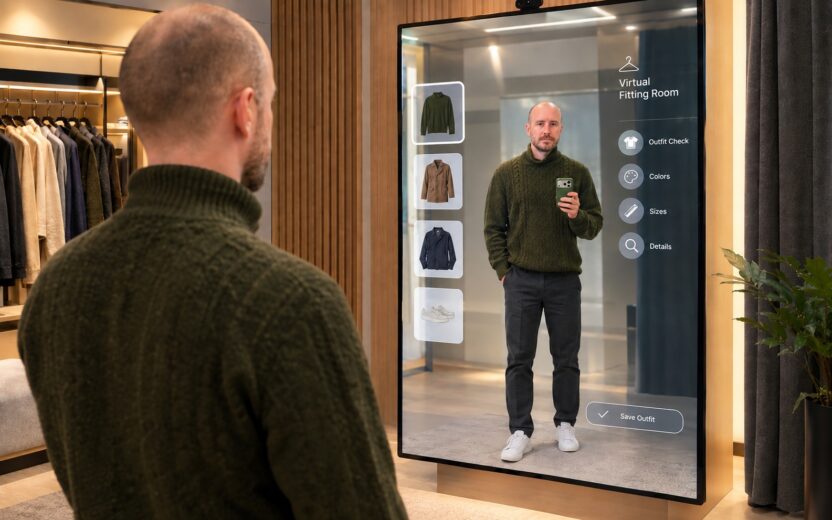
Customer Experience September 18, 2026
From webshop to virtual try-on: how AI is making its way into retail stores
Digital interfaces such as smart mirrors turn AI in the store into a tangible business case. What potential does this hold for the customer experience and in-store personalization? Matthias Vollmer explains how the retail industry can combine the best of both worlds and turn physical touchpoints into an intelligent part of the omnichannel journey.
From webshop to virtual try-on: how AI is making its way into retail storesDon't miss a thing.
Subscribe to our latest blog articles.