Highlight

Successful together – our valantic Team.
Meet the people who bring passion and accountability to driving success at valantic.
Get to know usApril 1, 2025
Implementing a Content Marketing Platform (CMP) like Optimizely is a complex, multi-month endeavor involving various business units, stakeholders, and teams within an organization. Beyond the technical aspects – such as data migration from legacy systems and integration with current marketing tools – the human element presents unique challenges. Employees must be trained on the new platform, workflows adjusted, and unforeseen obstacles navigated.
In many organizations, long-tenured employees may be wary of change, feeling most comfortable with familiar tools and processes. An already intricate martech landscape can make introducing another platform even more daunting. Not everyone is open to learning a new system.
Therefore, proactive measures are crucial for successful change management. The following five steps will assist you in effectively managing change and ensuring the successful integration of a CMP over the long term.
To ensure a smooth rollout of Optimizely CMP – or any CMP – organizations should follow these five essential steps:
Content often originates from vague ideas and progresses through multiple stages before reaching its intended audience as a polished artifact. Understanding the process is vital to avoiding unnecessary surprises and obstacles during CMP implementation.
Before you begin, it is important to map the entire content journey – from initial concept to publication. Determine which systems are affected, which need integration, and which stakeholders require CMP access. Knowing the content’s path through the organization ensures that all impacted employees are well-prepared.
Clear and succinct communication is key to successful change management. Leaders should articulate their core messages about the CMP introduction in a way that resonates with all relevant parties.
It’s crucial that key information is disseminated across multiple channels. In addition to emails, consider using a dedicated CMP landing page on your company’s intranet and providing onboarding training sessions. Tools like learning management systems (LMS) for onboarding can help standardize training content, track employee progress, and reinforce messaging introduced during the change management process. This strategy ensures all employees receive consistent information, regardless of the channel used.
In introducing a CMP, “senders” are typically marketing or project managers who relay information about the change, while “recipients” process the information with the goal of adapting to the new platform.
Clearly identifying senders and recipients, perhaps using a RACI diagram, is essential. Avoid authoritarian communication, which can provoke resistance. Instead, managers should engage actively with employees, clearly conveying the benefits of the CMP. Those who understand the “why” behind the change are more likely to embrace it.
| Project manager | Marketing team | IT department | Executive level | |
| Define CMP strategy | R | A | C | I |
| Integrate with existing systems | C | I | R | A |
| Train employees | I | C | R | A |
| Optimize content processes | A | R | C | I |
| Measure and optimize success | I | C | A | R |
Implementing a CMP naturally comes with resistance; the key is in how it’s handled. With well-planned change management, resistance should diminish over time.
If a small group of employees continually opposes the CMP implementation, it must be addressed promptly and decisively. Support from company leadership and the CMO is critical in these situations.
The most insightful feedback often comes from those using the CMP daily. They are best positioned to identify smooth operations and highlight areas for improvement. Actively request their feedback: What challenges exist? What integrations could be helpful? How might the platform’s usability be enhanced?
Focus on processes rather than the people behind them, particularly in the initial stages. Users need time to adjust to new workflows. Simultaneously, be open to change. Workflows are dynamic, and your CMP can be tailored to meet the needs of your team by collecting ample feedback.
Introducing a content marketing platform like Optimizely CMP can greatly enhance organizational efficiency and cross-team collaboration. However, structured change management is essential for a seamless transition. Effective communication plays a pivotal role. The five steps outlined will help you navigate the challenges of CMP implementation, enabling it to reach its full potential.

All-in-one solution for marketing requirements
Interested in learning how Optimizely can help you achieve your marketing goals efficiently?


Artificial Intelligence October 16, 2026
Autonomous Enterprise Journey: How AI value engineering creates measurable business value
How can the ROI of AI initiatives be reliably assessed and measured? How can companies identify the biggest levers and key processes for AI? Katrin Luft, Senior Expert at valantic and co-developer of the “Autonomous Enterprise Journey,” provides answers and recommendations in a conversation with Darya Basarhina, Vice President of Sales & Marketing and Manufacturing Practice Lead at valantic.
Autonomous Enterprise Journey: How AI value engineering creates measurable business value
Customer Experience October 8, 2026
Interview: From PIM to Data Spine – How companies prepare their data for AI
AI is changing the requirements for data, governance, and processes. Where should companies start, and what skills do they need? In this interview, Dietmar Rietsch, CEO of Pimcore, and Timo Huguet of valantic discuss the importance of clean data, the concept of the “Data Spine,” and the changing role of humans in the age of agentic AI.
Interview: From PIM to Data Spine – How companies prepare their data for AI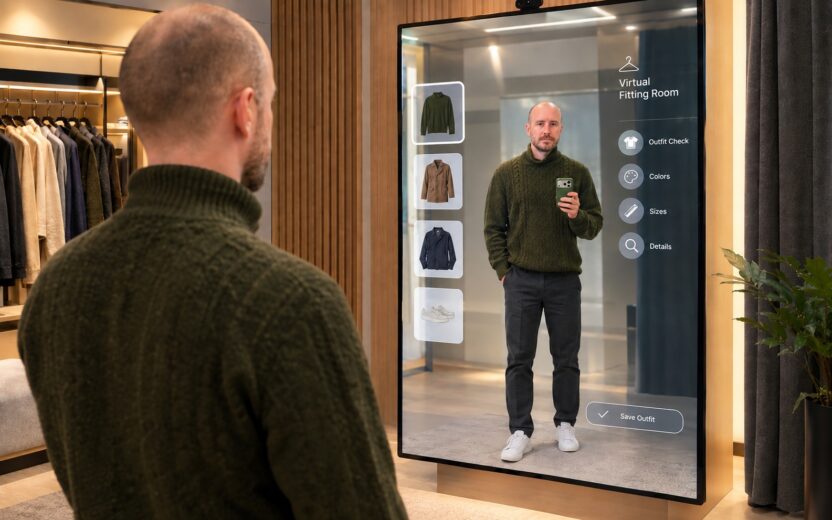
Customer Experience September 18, 2026
From webshop to virtual try-on: how AI is making its way into retail stores
Digital interfaces such as smart mirrors turn AI in the store into a tangible business case. What potential does this hold for the customer experience and in-store personalization? Matthias Vollmer explains how the retail industry can combine the best of both worlds and turn physical touchpoints into an intelligent part of the omnichannel journey.
From webshop to virtual try-on: how AI is making its way into retail storesDon't miss a thing.
Subscribe to our latest blog articles.