Highlight

Successful together – our valantic Team.
Meet the people who bring passion and accountability to driving success at valantic.
Get to know usOctober 21, 2026


Inference prices have dropped roughly 90 percent over the past couple of years. Ask around, though, and almost nobody’s actual bill has gone down.
The price per token was never what drove the invoice. Volume did, along with which model got used, how much context got stuffed in, and how many times a task got retried before someone was happy with it. Cheaper units just mean people use more of them, because things that weren’t worth automating last quarter suddenly clear the bar.
This is where the old subscription mental model breaks down. A normal software license costs the same whether you open the app twice a month or four hundred times, so the marginal click is free. With AI, no action is free at the margin. Every prompt and every document you paste in burns tokens, and so does every retry, tool call, and validation loop you never see. All of it gets metered and lands on the bill. Usage-based pricing simply exposes a cost structure that flat subscriptions used to hide.
Agentic workflows make this worse in a way most budgets don’t account for. One instruction, “update this feature, test it, ship it,” looks like a single task to the person who typed it. Underneath, the system might read a repository, plan, search docs, generate code, run tests, fail, repair, re-run, ask a second model to review, and repair again. That’s a dozen machine steps behind one sentence, and the whole chain can burn something like a thousand times the tokens of a simple chat exchange. Run the same task twice and the cost can differ by a factor of 30 depending on which path the agent takes. The averages look fine while the outliers drive the bill.
Before you try to control the number, you need to know what’s driving it. A model that reasons well about your documents doesn’t automatically know when it’s being asked to do something a simple rule or lookup could handle for a fraction of the cost. Most AI budgets leak through that gap between what a model can do and the judgment about when to use it.
A smaller model or a stricter budget alert won’t fix this on its own. You need to know which lever (volume, model choice, context size, retries) is pulling your invoice in which direction. Most organizations can tell you the total. Almost none can tell you why.

Customer Experience September 18, 2026
From webshop to virtual try-on: how AI is making its way into retail stores
Digital interfaces such as smart mirrors turn AI in the store into a tangible business case. What potential does this hold for the customer experience and in-store personalization? Matthias Vollmer explains how the retail industry can combine the best of both worlds and turn physical touchpoints into an intelligent part of the omnichannel journey.
From webshop to virtual try-on: how AI is making its way into retail stores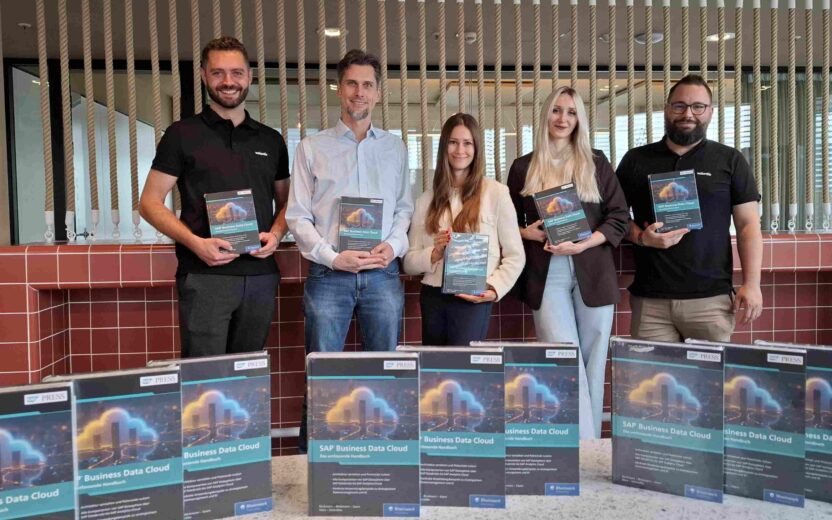
SAP Services September 17, 2026
The SAP BDC handbook: An interview on Business AI and data culture
Five valantic consultants wrote the SAP Business Data Cloud handbook. In this interview, they explain why SAP BDC is the enabler for business AI and why this book is a must-read.
The SAP BDC handbook: An interview on Business AI and data culture
Customer Experience August 27, 2026
Interview: How manufacturing stays digitally visible and AI-relevant
In the manufacturing sector, purchasing decisions are increasingly being made before the sales team is even involved. Designers, planners, maintenance technicians, and buyers conduct online research—and are increasingly receiving AI-generated responses. How can marketing teams at manufacturing companies ensure digital visibility and AI relevance? Answers and recommendations from the Manufacturing Practice.
Interview: How manufacturing stays digitally visible and AI-relevantDon't miss a thing.
Subscribe to our latest blog articles.