Highlight

Successful together – our valantic Team.
Meet the people who bring passion and accountability to driving success at valantic.
Get to know usDecember 19, 2024

From content brokerage and freight brokerage to smart home applications: Digital platforms have become modern marketplaces, reshaping the distribution of goods, services, and value-added features. At valantic, we know how to leverage digital ecosystems to help you achieve your business goals.
Upstream & Downstream
A powerful platform is defined by its robust and high-quality upstream and downstream ecosystems, which ensure a diverse representation of both supply and demand. The larger these two ecosystems, the higher the likelihood of alignment and successful transactions.
Digital marketplaces simplify transactions by offering the necessary infrastructure – not by generating direct value themselves, but by providing an optimal environment. Web-based platform operators typically generate revenue through membership fees or transaction charges.
At the heart of platform infrastructure lies the matching algorithm – a predefined set of parameters designed to optimize transaction matches between upstream and downstream stakeholders. This core function is supported by a range of interconnected components that form the technological backbone of a platform as a “connected business”. These essential elements include standardized interfaces, user and role management, device management, as well as product models and catalogues.
Targeted management strategies enhance the appeal of digital platforms by lowering entry barriers and ensuring mutually beneficial transactions for all participants. Key steps to increase relevance include implementing a seamless technical integration, standardized onboarding, efficient matching and billing processes, and prominently positioning key players. In addition, ongoing curation is essential to ensure that primary players are present on both ends of the platform.
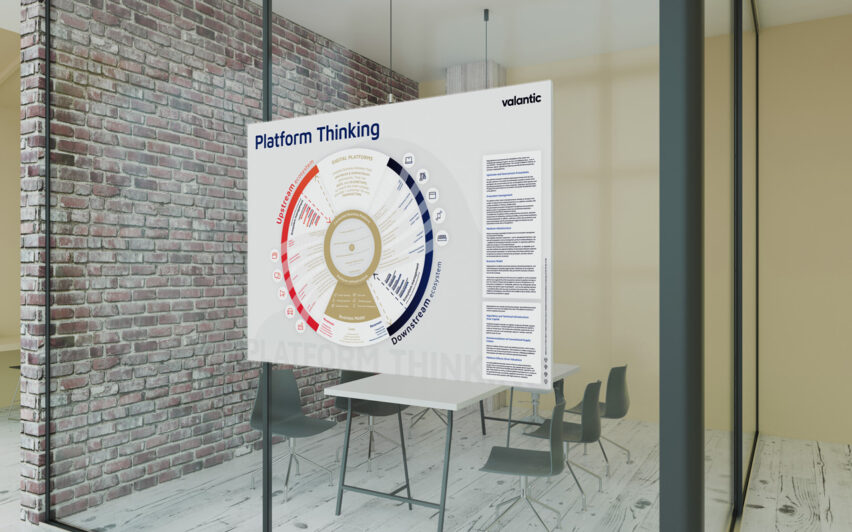
Download Platform Thinking poster now!
Digital platforms are the new marketplaces that are revolutionizing the exchange of goods, services and other added values. At valantic, we know how you can make optimal use of digital…

Customer Experience September 18, 2026
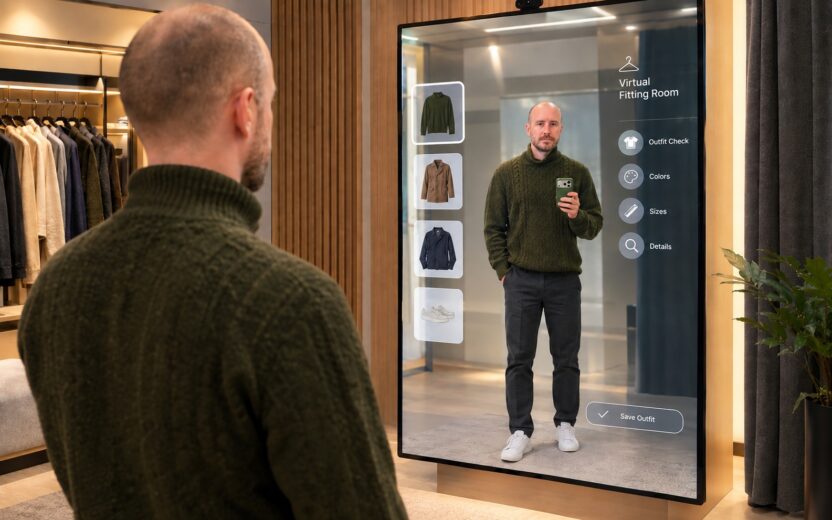
From webshop to virtual try-on: how AI is making its way into retail stores
Digital interfaces such as smart mirrors turn AI in the store into a tangible business case. What potential does this hold for the customer experience and in-store personalization? Matthias Vollmer explains how the retail industry can combine the best of both worlds and turn physical touchpoints into an intelligent part of the omnichannel journey.
From webshop to virtual try-on: how AI is making its way into retail stores
Customer Experience August 27, 2026
Interview: How manufacturing stays digitally visible and AI-relevant
In the manufacturing sector, purchasing decisions are increasingly being made before the sales team is even involved. Designers, planners, maintenance technicians, and buyers conduct online research—and are increasingly receiving AI-generated responses. How can marketing teams at manufacturing companies ensure digital visibility and AI relevance? Answers and recommendations from the Manufacturing Practice.
Interview: How manufacturing stays digitally visible and AI-relevant
Digitalization August 20, 2026
How many spreadsheets does it take to answer one HR question?
HR teams spend hours every day stitching data together across disconnected systems — 77% say integrating people data is one of their biggest analytics challenges. Discover what real, unified people analytics looks like, and how choosing the right HRIS turns scattered snapshots into one source of truth.
How many spreadsheets does it take to answer one HR question?Don't miss a thing.
Subscribe to our latest blog articles.