Highlight

Successful together – our valantic Team.
Meet the people who bring passion and accountability to driving success at valantic.
Get to know usAugust 10, 2026
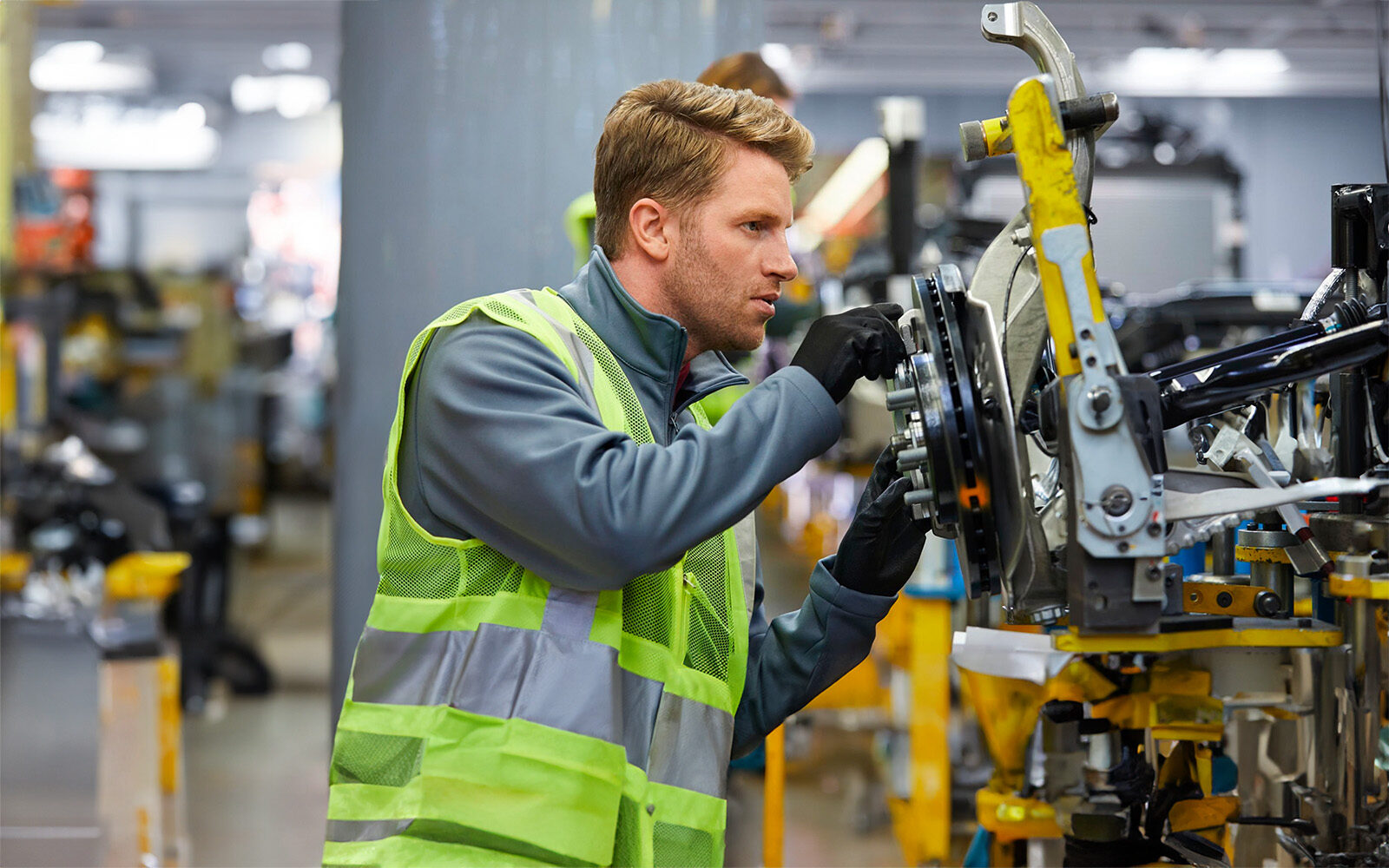
Physical AI in manufacturing sounds like robots automating assembly line work. In reality, though, it starts somewhere else entirely: in planning.
AI-based systems that perceive their environment through sensors, process values in real time, and factor in far more information than classic planning software orchestrate production processes, make decisions, and take action instead of merely preparing them.
Where physical AI is already in use at manufacturing companies, what’s working, and how to take the step toward this new generation of planning systems — Dr. David Holtkemper, Principal Supply Chain Consultant at valantic, explains in an interview with Darya Basarhina, Vice President Sales & Manufacturing Practice Lead at valantic.
David, many manufacturing companies are already experimenting with Agentic AI. What sets agents and physical AI apart from the automation we’ve known in manufacturing for a long time?
Traditional automation follows fixed rules. A system performs step A, then step B, always in the same sequence. An agent, by contrast, continuously evaluates new information and adjusts its decisions accordingly. If a supplier delivers late or a machine reports a maintenance need, the agent independently re-plans the production sequence. The logic responds to the situation, not to a rigid script.
So what exactly are we talking about when we say “physical AI” in manufacturing?
The term often sounds as if the agent sits directly inside the machine. It’s more accurate to say that a new type of planning system is emerging — one that processes far more information than a classic MES or previous APS software, including sensor data and status values straight from the shop floor. Based on this, the system proposes an action.
If, for example, a sensor reports wear or a maintenance need on a machine, the system recommends an early tool change, adjusts the speed, or stops the line before scrap or downtime occurs. Humans remain in a supervisory role and define the boundaries within which the system may act autonomously.
How do you make sure humans and agents don’t work against each other? Who has the final say?
Through clear decision rights that are established before going live, not afterward. The agent, for example, may adjust the production sequence within a defined tolerance range, but a safety-relevant shutdown of a system always requires sign-off from the shift supervisor. They retain veto power. For every use case, we define the scope within which the agent may act independently and the threshold at which a human needs to be involved.
Where do manufacturing companies currently stand? Is physical AI still a vision of the future, or is it already practice?
It’s not just a vision of the future anymore, but it’s not yet standard either. The first manufacturing companies have moved AI pilots into regular production operation, often for predictive maintenance or quality control. These use cases are well tested, the trial phases are complete, and the pilots run reliably. What most companies now face is the leap from individual solutions to a productive operating model spanning multiple plants and sites.
According to our study “AI at Scale 2026,” conducted with the Handelsblatt Research Institute, nearly half of manufacturing companies are still experimenting in isolated projects. At the same time, almost 80 percent expect to lose competitiveness by 2030 if they don’t use AI in their core processes. From my perspective, speed in transitioning to scalable models is now what will determine long-term competitive advantage.
What do companies underestimate most in this step?
Two things: first, the organizational side. An agent that adjusts production sequences also changes responsibilities on the shop floor. That can’t be sorted out as an afterthought. If, for example, it’s unclear who makes the decision on an expedited order — the agent or the shift supervisor — the technology simply goes unused.
The second aspect concerns data, though differently than most people think: I no longer consider master data quality a real obstacle. These days, AI systems largely compensate for inconsistencies on their own. What matters more is whether the data exists in historized form and whether interfaces exist that give an AI agent access to it. If not, the system only sees and processes a fraction of reality.
What would you recommend to companies still hesitating on their first AI pilot?
For getting started, I’d always choose a single, clearly measurable use case — predictive maintenance on one machine, for example. We often see companies launch five pilots at once but fail to consistently develop any single application beyond the demo stage into full implementation. When a use case is backed by traceable metrics, the effects and progress become visible. That builds acceptance and trust in the technology, while also creating a reference point to guide the next steps.
Do you have an example of how AI-supported production planning works in practice?
The first company that comes to mind is Everllence, better known to many under its former brand name, MAN Energy Solutions. The company has been using our APS system, wayRTS, for more than a decade. Building on that, we recently overhauled production planning at the Zurich site and expanded it with AI-supported automation. The system reconciles capacity and resources in real time, detects delays, makes suggestions, and sets priorities across different planning horizons. Looking ahead, the AI system will also be able to automatically clear backlogs and recalculate entire supply networks. Solid but reactive planning has become forward-looking control, without requiring a human to sign off on every individual adjustment.
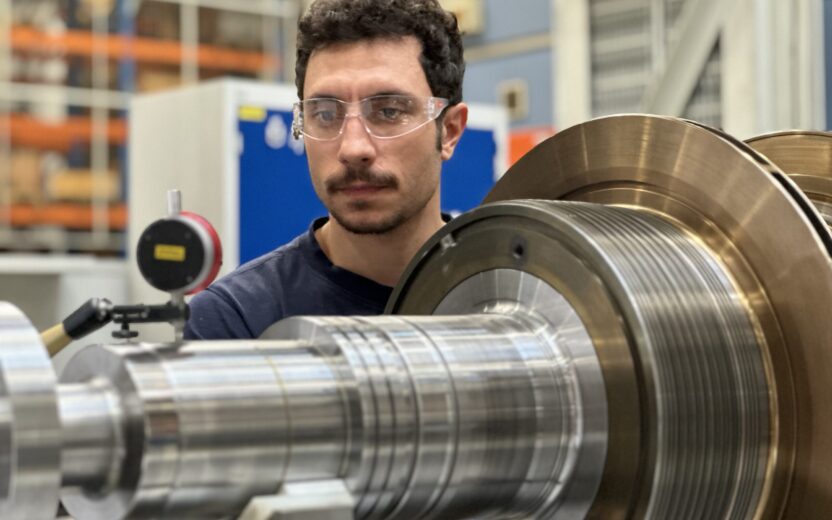
Case study: How Everllence optimizes planning with valantic APS software and AI
Transparent processes and on-time delivery — at Everllence, it pays off that planning systems have been consistently optimized over the years. AI now automates planning processes and production control, from staff deployment to supplier and material management.
To close, a look ahead: how far along do you think physical AI in manufacturing will be by 2030?
I’m convinced that physical AI with agents will become an everyday tool in production operations, much like an MES is today. Companies that not only make their data foundation usable now, but also invest in their organization, governance, and employees’ skills, are already well ahead — and, in my view, can achieve a valuable, lasting competitive advantage.
Thank you for your insights and recommendations, David!

Darya Basarhina
Vice President Sales & Manufacturing Practice Lead
valantic
As Vice President Sales, Darya Basarhina heads the Manufacturing Practice at valantic and supports companies in adopting industry-specific supply chain and logistics solutions. She is the driving force and primary point of contact for the valantic waySuite, our APS system for AI-supported production planning and control.

Dr. David Holtkemper
Principal Suppy Chain Consultant
valantic
As Principal Supply Chain Consultant at valantic, Dr. David Holtkemper advises manufacturing companies on supply chain management, sales & operations planning, and business development. A key focus of his work is the introduction of AI-supported planning and control solutions, from initial assessment through to scaling in production.

Planning is key: How can industrial companies escape crisis mode?
How AI-supported planning increases efficiency by up to 30% and measurably boosts resilience: our meta-study charts the path from Excel silos to integrated, data-driven planning, with quick wins and a clear roadmap.
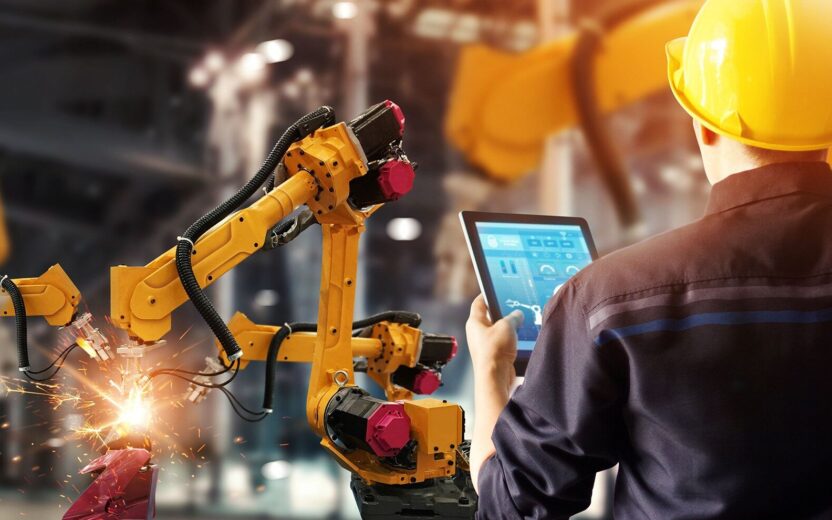
Unsure how to deploy Agentic AI in production and at scale?
Let’s get started together: with experience from more than 2,000 digitalization projects and proven AI use cases from the Manufacturing Practice, valantic supports you on the path to scalable AI solutions in manufacturing.

Artificial Intelligence June 25, 2026
AI potential in manufacturing: Which use cases are already live – and what pays off?
In the manufacturing industry, AI is already one of the most important technologies. Yet there is a significant gap between ambition and productive use with measurable results. Where will AI be worthwhile in the manufacturing industry in 2026, and which use cases are already making its potential tangible today?
AI potential in manufacturing: Which use cases are already live – and what pays off?
Customer Experience July 30, 2026
Cost center or revenue channel: How do B2B service portals pay off in 2026?
About one-third of B2B revenue is now generated through e-commerce and digital channels. Yet the potential of self-service portals in B2B often remains untapped. This article explains how customer platforms, powered by AI, sales excellence, and innovative revenue models, are becoming a revenue channel.
Cost center or revenue channel: How do B2B service portals pay off in 2026?
Customer Experience July 9, 2026
Customer centricity in B2B: How manufacturers are meeting rising customer expectations
Customer centricity is also essential in the B2B environment in order to build long-term relationships. But how can true customer centricity be achieved and how can the ROI be measured? Practical tips and a real-life project example show how manufacturing companies use customer centricity as a growth and competitive advantage.
Customer centricity in B2B: How manufacturers are meeting rising customer expectationsDon't miss a thing.
Subscribe to our latest blog articles.