Highlight

Successful together – our valantic Team.
Meet the people who bring passion and accountability to driving success at valantic.
Get to know usDecember 17, 2024

The fashion world is fast-paced and customers today expect seamless, personalized experiences across all channels. If these requirements are not fulfilled, customers disappear. How can scattered data be used to create tangible added value for customers and companies? Customer data platforms (CDPs) can help!
Consumers today have access to a huge number of brands and offers in the fashion industry. The ability to personalize and efficiently manage customer relationships is therefore becoming increasingly important. Trends are emerging, customer expectations are increasing and the challenge of creating personalized experiences is omnipresent. Today’s customers want more than just a standardized offering of clothing. They expect brands to know their needs and provide a personalized experience across all channels.
However, what happens when these expectations are not met? Orders may not reflect the anticipated quality or fit, sizes may vary, and the result is often the same: increased returns and a growing customer churn rate. Returns are not only costly but also leave a negative impact on customers; not to mention the additional effects on infrastructure and the environment.
What if there was a method to directly address this issue at its root? This is precisely the role of customer data platforms (CDPs). They ensure marketing efficiency, create harmony and forge a modern connection between fashion and customers.
Fashion companies generate vast amounts of data daily, from orders to returns to preferences and buying patterns. Especially in a sector driven by trends and consumer behavior, this data is critical to understand customers and make informed decisions. Direct access to customers offers an opportunity, though often the use of this data fails due to:
Thus, the potential to convert casual shoppers into loyal customers remains unexploited. The essential question is: How can we transform scattered data into tangible benefits for customers and companies?

A customer data Platform collects, harmonizes, and activates data to provide fashion companies with unprecedented insights into their customers, channels, and campaigns. It is integrated with all relevant systems and enables the merging of behavioral and service data in marketing. By centralizing all relevant data sources – such as email systems, customer master data, front-end applications, consent management, or order systems – CDP simplifies the management of customer data. Its flexible technology can be seamlessly integrated into existing system landscapes through open connectivity options..
By establishing a consolidated data foundation, a complete 360-degree view of customers is created, paving the way for data-driven decisions and personalized marketing throughout the customer journey. Leveraging this potential across all customer phases and touchpoints positively impacts customer engagement. Fashion companies can create dynamic customer segments in real-time, craft personalized campaigns, generate tailored product recommendations using AI, and strategically deploy them while considering privacy concerns.
A CDP not only enables companies to efficiently utilize previously scattered information in tailored automated journeys but also simplifies and enhances the monitoring of campaign success.
Implementing a CDP necessitates developing a clear strategy and technological expertise. However, the long-term benefits, including increased efficiency and stronger customer relationships, make it an essential tool in any marketing strategy.
CDPs organize data chaos and enable fashion companies to better understand their customers, optimize processes, and deliver personalized experiences that resonate. A CDP is much more than a technical solution: it is the key to unlocking the full potential of customer data and meeting the demands of modern consumers.
Fashion companies that prioritize data-driven approaches establish future-proof processes, reduce dependencies on manual workflows, and simultaneously satisfy the high expectations of their customers.
A customer data platform gives fashion companies the opportunity to create customer profiles as precisely as a perfectly tailored item of clothing.
The question is no longer whether fashion companies are ready for a data-driven transformation, but when they will take the first step.

Surviving the MarTech Jungle!
Expedition: TechStack Harmonization

Customer Experience October 8, 2026
Interview: From PIM to Data Spine – How companies prepare their data for AI
AI is changing the requirements for data, governance, and processes. Where should companies start, and what skills do they need? In this interview, Dietmar Rietsch, CEO of Pimcore, and Timo Huguet of valantic discuss the importance of clean data, the concept of the “Data Spine,” and the changing role of humans in the age of agentic AI.
Interview: From PIM to Data Spine – How companies prepare their data for AI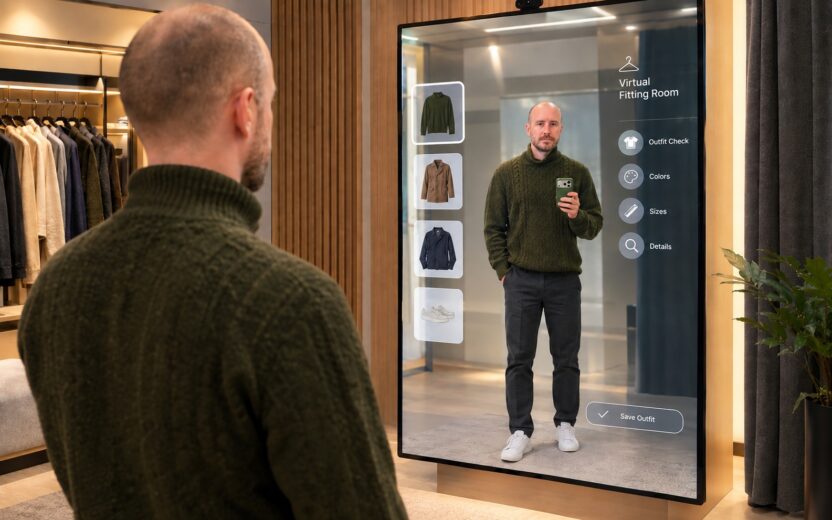

Customer Experience September 18, 2026
From webshop to virtual try-on: how AI is making its way into retail stores
Digital interfaces such as smart mirrors turn AI in the store into a tangible business case. What potential does this hold for the customer experience and in-store personalization? Matthias Vollmer explains how the retail industry can combine the best of both worlds and turn physical touchpoints into an intelligent part of the omnichannel journey.
From webshop to virtual try-on: how AI is making its way into retail stores
Digital Marketing September 3, 2026
ChatGPT Ads: a new touchpoint in the customer journey
ChatGPT Ads bring advertising to a new stage of the customer journey. We explain how the new ad format works, where its strengths lie, and what role it could play alongside Google Ads, paid social, and organic AI visibility.
ChatGPT Ads: a new touchpoint in the customer journeyDon't miss a thing.
Subscribe to our latest blog articles.