Highlight

Successful together – our valantic Team.
Meet the people who bring passion and accountability to driving success at valantic.
Get to know usOctober 21, 2025

On social media, users scroll rapidly through their feeds. Each post has only seconds to capture their attention. If an ad doesn’t stand out instantly, it loses valuable visibility. That’s why the creatives – image, video, and text – are more crucial than ever.
Only if the visual impact and core message of a social ad are compelling at first glance will users pause and engage with the content.
Today, social ads face new challenges like stringent data protection regulations and restricted tracking. Yet with a smart format strategy, privacy-conscious setups, and structured creative testing, advertisers can still boost performance and relevance.
Which formats truly stop the scroll? And how can campaigns be optimized measurably despite data gaps?
Platforms such as Instagram Reels, TikTok videos, and YouTube Shorts rely on vertical videos. They take up maximum space on mobile devices and generate higher engagement rates.
Authentic-looking content that appears to be recommendations from real users often performs better than polished brand productions.
The first 1–2 seconds are crucial. Creatives that immediately convey a strong visual or emotional message significantly increase the scroll-stop rate.
Ads that blend seamlessly into the content feed are perceived as less disruptive and achieve higher click and view rates.

Due to limited data availability – mainly driven by strict privacy regulations – traditional conversion metrics like cost per action (CPA) or return on ad spend (ROAS) are often only available with a delay or are incomplete. This is where creative testing using early-stage metrics becomes essential for more timely and effective performance evaluation:
Focus on important KPIs:
Brands that consistently monitor and analyze these early indicators gain faster insights into creative effectiveness – and with that, a genuine competitive edge.
Beyond strong creatives and smart metrics, technology is playing an increasingly vital role. Successful advertising can no longer rely solely on cookies or traditional browser tracking. Instead, companies must strategically leverage their own first-party data to close tracking gaps.
Platforms like Meta and TikTok offer server-to-server integrations that transmit key signals directly to the platform, regardless of cookie consent.
The benefits:
With the Conversion API, the “data blur” sharpens into a clear picture – assuming data privacy and quality are properly managed.
Today, successful social advertising strategies thrive on a powerful combination:
Stricter data protection rules do not mean less tracking, but smarter tracking. Those who prioritize quality over quantity and operate in a data-driven manner will remain visible and relevant in the future.
The future of social advertising will be shaped by three key factors: stricter data privacy regulations, reduced data availability, and higher expectations for creativity. In this landscape, early-stage metrics like scroll-stop rate or hold rate facilitate informed decisions, even without full conversion data.
Technologies such as the Conversion API and Customer Match help secure the data foundation and allow for more precise targeting. As regulations tighten, leveraging first-party data is no longer optional – it’s essential. Companies that invest early and use data to test and refine their creatives will gain a decisive edge, even in a data-constrained environment.

Book your free consultation now
Discover how new metrics and technologies can boost the performance of your social ads and harness the power of data-driven creatives with valantic.


Artificial Intelligence October 16, 2026
Autonomous Enterprise Journey: How AI value engineering creates measurable business value
How can the ROI of AI initiatives be reliably assessed and measured? How can companies identify the biggest levers and key processes for AI? Katrin Luft, Senior Expert at valantic and co-developer of the “Autonomous Enterprise Journey,” provides answers and recommendations in a conversation with Darya Basarhina, Vice President of Sales & Marketing and Manufacturing Practice Lead at valantic.
Autonomous Enterprise Journey: How AI value engineering creates measurable business value
Customer Experience October 8, 2026
Interview: From PIM to Data Spine – How companies prepare their data for AI
AI is changing the requirements for data, governance, and processes. Where should companies start, and what skills do they need? In this interview, Dietmar Rietsch, CEO of Pimcore, and Timo Huguet of valantic discuss the importance of clean data, the concept of the “Data Spine,” and the changing role of humans in the age of agentic AI.
Interview: From PIM to Data Spine – How companies prepare their data for AI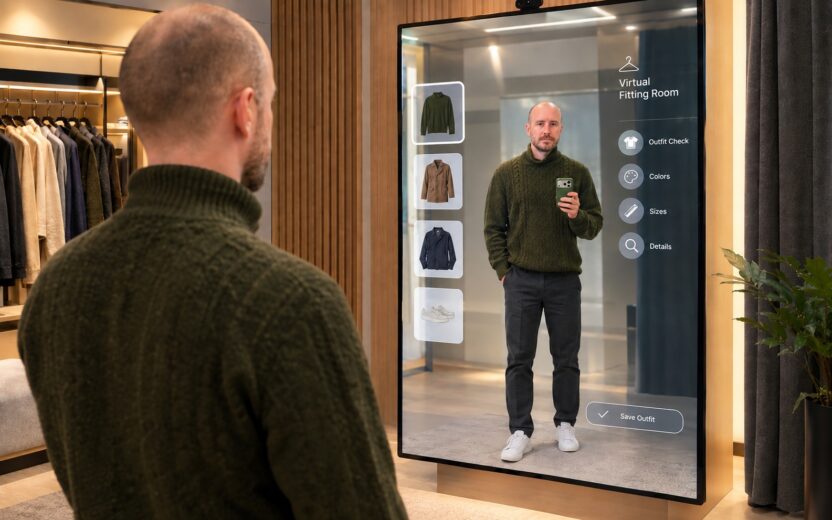
Customer Experience September 18, 2026
From webshop to virtual try-on: how AI is making its way into retail stores
Digital interfaces such as smart mirrors turn AI in the store into a tangible business case. What potential does this hold for the customer experience and in-store personalization? Matthias Vollmer explains how the retail industry can combine the best of both worlds and turn physical touchpoints into an intelligent part of the omnichannel journey.
From webshop to virtual try-on: how AI is making its way into retail storesDon't miss a thing.
Subscribe to our latest blog articles.