Highlight

Successful together – our valantic Team.
Meet the people who bring passion and accountability to driving success at valantic.
Get to know usNovember 20, 2025

Cross-selling is a key factor for increasing revenue in e-commerce. With the help of artificial intelligence (AI), it can now be made significantly more efficient – and the “Complete-the-Look” (CTL) feature is a great example of this. In the following, we explain how this solution works and how our valantic team has already implemented it successfully in client projects.
Complete-the-Look (CTL) refers to an established cross-selling method in online retail, where customers are shown suitable complementary items directly alongside the product they have selected. This not only creates an additional incentive to buy but also provides a helpful service that offers guidance and makes product selection easier. Technically, CTL is implemented through various functions of the shop system –previously, primarily using classic mechanisms.
Traditionally, these recommendations are based on fixed product relationships stored in the database. Items are linked to one another using attributes, tags, or defined rules, for example, when a dress is paired with matching accessories. In many shops, this process is still handled manually. Shop teams curate selected recommendations and assign them to the main product; e-commerce systems support this with native features. The recommendation section is then displayed in the shop via templates or custom frontend development – for instance, using labels like “You may also like” or “Complete your look.”
A new approach is becoming increasingly important: the automated generation of product combinations using artificial intelligence. Modern recommendation engines analyze shopping behavior, products frequently purchased together, and structural similarities between items. This eliminates much of the manual assignment. At the same time, the level of personalization increases because the suggestions are based on individual patterns and preferences.
The use of AI involves several layers. Algorithms analyze behavioral and order data and identify preferences related to style, colors, or sizes. Through image and text analysis, product attributes are automatically extracted from photos and descriptions – from materials and patterns to color palettes. Based on this information, the AI generates combinations that meaningfully complement the main product. Depending on context, season, or current trends, the recommendations vary dynamically. Retailers still have the option of managing suggestions manually, for example, when certain products should be promoted or remaining stock needs to be sold.
Fashion is the most obvious application, but CTL also works in many other segments.
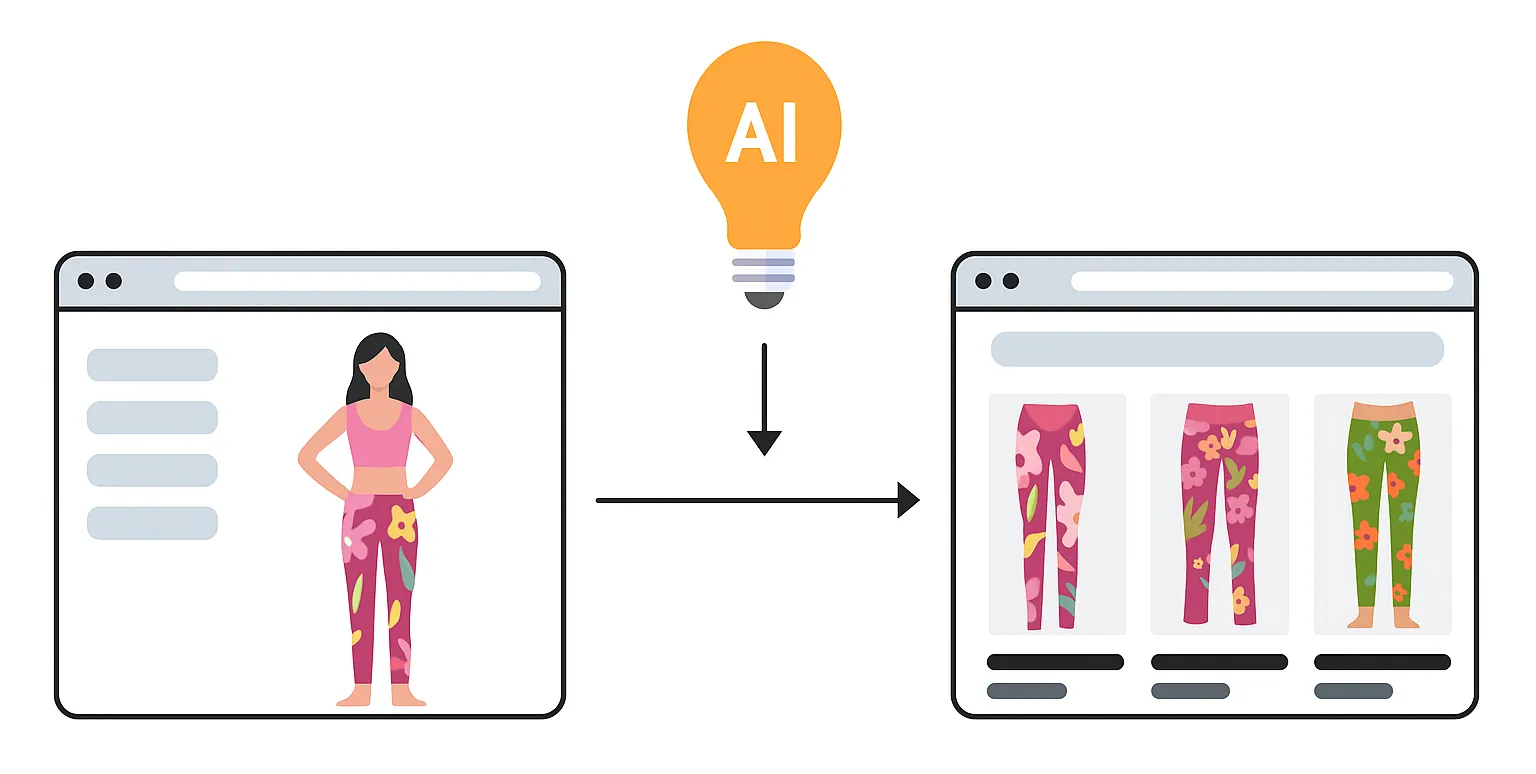
The use of AI significantly reduces the workload for teams because time-consuming maintenance processes are eliminated. At the same time, cart values increase because well-matched product combinations are purchased more frequently. Personalized recommendations also strengthen brand trust and improve the visibility of less prominent items that can be showcased more effectively through CTL. Another positive effect is the lower return rate: When products are well coordinated, the risk of poor purchasing decisions decreases.
From the customer perspective, the added value is equally clear: They get inspiration, guidance, and a pleasantly quick product selection because matching items are available without having to search for them. Visually presented looks further enhance the quality of the customer experience.
For the technology to function reliably, high-quality data is essential. Product master data, texts, and especially images must be well-organized, consistent, and complete, since the AI derives its recommendations from this information. The quality of the suggestions is equally important: Only relevant combinations lead to user acceptance. In addition, the integration should be designed in a way that keeps the purchase process intuitive and does not disrupt navigation.
For a fashion retailer looking to modernize their cross-selling processes, valantic developed a fully automated CTL solution. Until then, the retailer’s e-commerce team had manually curated every new collection, which required enormous effort. The new solution, built on Magento, integrates the Qdrant vector database, which analyzes product images and checks them for similarities, eliminating the need for manual assignment. Through this automation, the marketing team’s workload has decreased significantly and cross-selling has become more efficient. This type of AI-supported product recommendation is part of a broader solution portfolio that valantic offers for AI-driven e-commerce. You can find an overview on our website.
Complete-the-Look combined with AI is a powerful tool for higher revenue, better user experiences, and more efficient internal processes. While customers benefit from personalized, inspiring product suggestions, retailers save valuable resources and, at the same time, reduce returns. CTL is becoming an important differentiator in B2C e-commerce, especially in markets where product variety and competitive pressure are increasing.


Generative AI Consulting Services by valantic
Unlock the full potential of Generative AI for your business.

Customer Experience October 8, 2026
Interview: From PIM to Data Spine – How companies prepare their data for AI
AI is changing the requirements for data, governance, and processes. Where should companies start, and what skills do they need? In this interview, Dietmar Rietsch, CEO of Pimcore, and Timo Huguet of valantic discuss the importance of clean data, the concept of the “Data Spine,” and the changing role of humans in the age of agentic AI.
Interview: From PIM to Data Spine – How companies prepare their data for AI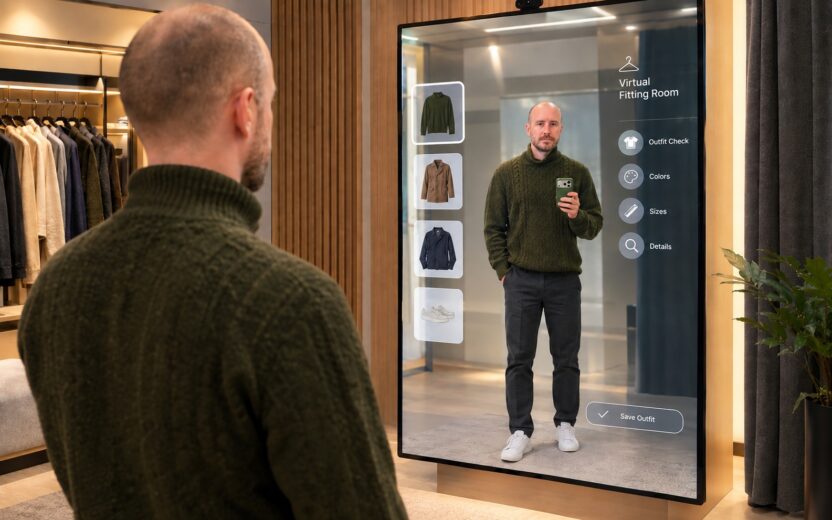
Customer Experience September 18, 2026
From webshop to virtual try-on: how AI is making its way into retail stores
Digital interfaces such as smart mirrors turn AI in the store into a tangible business case. What potential does this hold for the customer experience and in-store personalization? Matthias Vollmer explains how the retail industry can combine the best of both worlds and turn physical touchpoints into an intelligent part of the omnichannel journey.
From webshop to virtual try-on: how AI is making its way into retail stores
Digital Marketing September 3, 2026
ChatGPT Ads: a new touchpoint in the customer journey
ChatGPT Ads bring advertising to a new stage of the customer journey. We explain how the new ad format works, where its strengths lie, and what role it could play alongside Google Ads, paid social, and organic AI visibility.
ChatGPT Ads: a new touchpoint in the customer journeyDon't miss a thing.
Subscribe to our latest blog articles.