Highlight

Successful together – our valantic Team.
Meet the people who bring passion and accountability to driving success at valantic.
Get to know usOctober 23, 2025

A conversation between Volker John (Adobe) and Sarah Groß (valantic) about the future of digital commerce, the role of AI agents, and why Generative Engine Optimization is emerging as the new competitive advantage.
Digital commerce is once again at a turning point: after mobile, cloud, and headless, it’s now artificial intelligence – specifically Agentic AI – that is rewriting the rules, more radically than any technology before. Increasingly, it’s no longer humans who search, compare, and buy products – but AI agents who perform these tasks on behalf of customers. This development, known as Agentic Commerce, will transform the commerce ecosystem faster than ever before.
We spoke with Volker John, Senior Go-To-Market Lead at Adobe, about how companies can position themselves, the role of Generative Engine Optimization (GEO), and why humans will still remain part of the equation.
Sarah: : Volker, the term Agentic Commerce is appearing everywhere these days. What exactly does it mean – and why should retailers and brands start talking about it now?
Volker: Because we’re witnessing one of the biggest shifts since the dawn of digital commerce. Until now, e-commerce has always been a direct interaction between humans and systems: a person enters a search query, clicks a result, compares products, and makes a purchase decision.
With generative AI – or more precisely, Agentic AI – this interaction is changing. Increasingly, it’s not people but AI-powered assistants performing these steps in the background. They research, evaluate, recommend – and in some cases, even make purchases autonomously.
For retailers, this means they will no longer only communicate with consumers but also with their digital representatives. And that changes everything – from visibility and conversion to brand management.
Sarah: What does this mean in practical terms for brands and retailers?
Volker: The biggest change is how products and content are discovered. Agentic AI-driven systems operate differently from traditional search engines. Instead of delivering long lists of results, they return one or two recommendations – sometimes just one. If a shop or brand isn’t among them, it’s invisible.
Our data shows that 57% of Gen Z and Millennials say they will soon replace traditional search with AI interfaces. Those who fail to prepare for this new reality will simply no longer be seen. In the age of Agentic Commerce and Agentic AI, visibility means being cited. Only those understood and recommended by generative models will continue to matter.
Sarah: SEO has long been the key to visibility. What replaces it now – or does it complement it?
Volker: Traditional SEO remains important, but it’s no longer enough. The new lever is Generative Engine Optimization (GEO). GEO means designing content so that generative models and Agentic AI can easily find, interpret, and cite it. It’s not just about keywords anymore, but about context, data quality, structure, and semantic relevance.
And the impact is massive: even a 10% increase in GenAI citations can, according to our analysis, lead to 30% more revenue. Those who invest early will gain a competitive edge that latecomers will struggle to close. GEO is becoming the decisive success factor in the era of Agentic AI and Agentic Commerce.
Sarah: If AI agents are involved, website traffic changes too. How should companies respond?
Volker: Exactly – AI traffic behaves differently from classic website traffic. It’s often more exploratory, appears earlier in the funnel, and expects relevant answers within seconds. That means the on-site experience must adapt.
Companies should design their websites to be optimized for AI traffic and Agentic AI – with personalized experiences, contextual recommendations, and intelligent merchandising strategies. The goal is to influence agent decisions by providing exactly the information they need to make their selections.
Sarah: Many retailers are wondering: do we need to rebuild everything from scratch to keep up with Agentic Commerce?
Volker: No – and that’s the good news. Modern commerce architectures can be built on existing systems. With solutions like the Adobe Commerce Optimizer, companies can continue using their existing commerce platforms while realizing a new, AI-powered storefront.
We combine components such as Edge Delivery Services, AEM Assets, and Merchandising Services, and connect them to existing backends. This allows content updates to be made up to 98% faster, conversion rates to increase by up to 25% through AI-driven search and recommendations, and enables highly personalized shopping experiences – without a full replatforming.
Sarah: With all this technology, what does it mean for customer experience?
Volker: Even though AI agents will make many decisions in the future, at the core it’s still about people: they want experiences that fit their needs – and brands they can trust. Agentic Commerce isn’t an end in itself. It helps businesses meet these expectations by making experiences more individual, relevant, and seamless.
The most successful brands will be those that combine technology with empathy: using Agentic AI to understand needs, and shaping the customer journey to deliver real value – whether a human or an agent sits on the other side of the interface.
Sarah: If you had to give companies one piece of advice – what should they do first?
Volker: Three things. First: Start now. The pace of change in the market is tremendous. Waiting means losing visibility. Second: Invest in GEO competence. Understanding how generative models and Agentic AI process content will become a strategic advantage. Third: Build flexibility. Open, modular architectures and AI-powered services are key to adapting quickly.
Sarah: Thank you, Volker – for these insights into a future that’s no longer just ahead of us, but already here.
Agentic Commerce and Agentic AI are transforming how products are discovered, selected, and purchased – and who makes those decisions.
For retailers and brands, this means:
valantic supports companies on exactly this path – with strategic consulting, deep commerce expertise, and experience from numerous projects. Together, we prepare brands not just to keep pace in the age of Agentic Commerce and Agentic AI – but to lead the way.
With our Generative Engine Optimization (GEO) Audit, valantic helps you understand how well your content and data are prepared for AI-driven discovery. Together, we’ll develop actionable recommendations to ensure your brand remains visible — not just to humans, but to intelligent agents too.
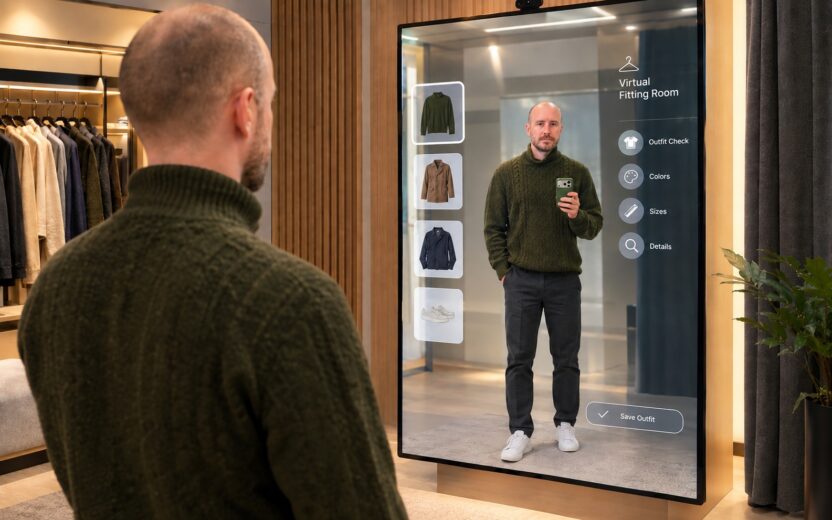

Customer Experience September 18, 2026
From webshop to virtual try-on: how AI is making its way into retail stores
Digital interfaces such as smart mirrors turn AI in the store into a tangible business case. What potential does this hold for the customer experience and in-store personalization? Matthias Vollmer explains how the retail industry can combine the best of both worlds and turn physical touchpoints into an intelligent part of the omnichannel journey.
From webshop to virtual try-on: how AI is making its way into retail stores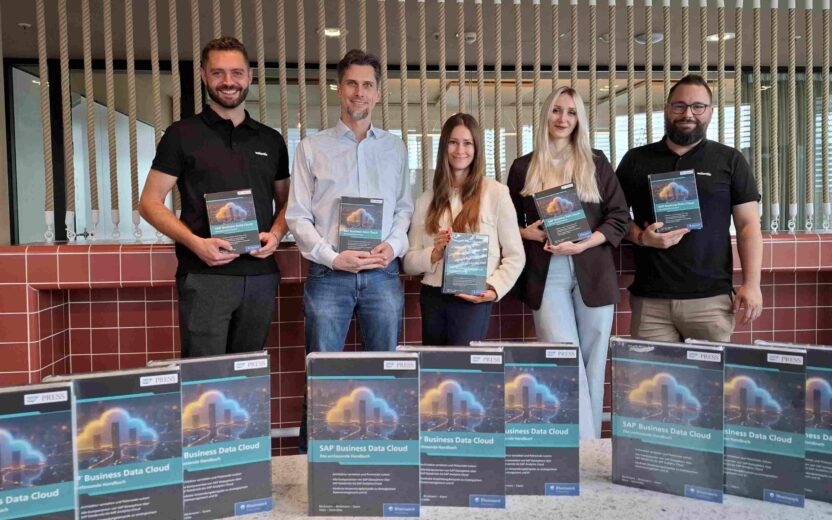
SAP Services September 17, 2026
The SAP BDC handbook: An interview on Business AI and data culture
Five valantic consultants wrote the SAP Business Data Cloud handbook. In this interview, they explain why SAP BDC is the enabler for business AI and why this book is a must-read.
The SAP BDC handbook: An interview on Business AI and data culture
Customer Experience August 27, 2026
Interview: How manufacturing stays digitally visible and AI-relevant
In the manufacturing sector, purchasing decisions are increasingly being made before the sales team is even involved. Designers, planners, maintenance technicians, and buyers conduct online research—and are increasingly receiving AI-generated responses. How can marketing teams at manufacturing companies ensure digital visibility and AI relevance? Answers and recommendations from the Manufacturing Practice.
Interview: How manufacturing stays digitally visible and AI-relevantDon't miss a thing.
Subscribe to our latest blog articles.