Highlight

Successful together – our valantic Team.
Meet the people who bring passion and accountability to driving success at valantic.
Get to know usOctober 16, 2025

The rise of generative AI is fundamentally transforming how people search for and consume information. As a result, companies face the challenge of ensuring their content is visible not only in traditional search engines but also in AI-generated responses. To address this, Adobe has introduced the LLM Optimizer – a new tool designed to help businesses adapt their content strategies to this evolving landscape.
Search engine optimization (SEO) remains essential, but it’s no longer sufficient to guarantee visibility and reach. Generative engine optimization (GEO) takes content optimization a step further, ensuring that AI models can effectively understand and incorporate it into their responses. While SEO focuses on keywords, links, and ranking factors, GEO emphasizes structure, context, and how well language models can interpret and use the content.
This is where Adobe LLM Optimizer adds transparency: It reveals how content is processed by AI systems such as ChatGPT or Gemini and highlights opportunities for targeted optimization.
The Adobe LLM Optimizer is designed to meet the needs of content and marketing teams. Its capabilities can be grouped into four key dimensions:
The tool detects access from AI-powered applications, enabling teams to understand how their content is being used by chatbots, assistants, and other LLM-based services.
The Optimizer identifies which AI responses feature competitors and where a company’s own content is absent, providing clear insights and actionable steps for improving the content strategy.
It uncovers missing metadata, unstructured content, and unused semantic markup. Based on these findings, companies receive targeted recommendations for making their content more AI-friendly.
Drawing on the analysis, the Optimizer provides concrete recommendations – such as which questions to include in FAQs, where more precise text modules could add value, and which semantic keywords can boost visibility in AI systems.
Additionally, Adobe LLM Optimizer considers the contextual visibility of content within AI systems – i.e. how these systems evaluate a topic based on external references and related sources. Each analysis includes practical, easy-to-implement recommendations to help companies enhance their content performance in generative AI environments.
The Adobe LLM Optimizer is built for flexible integration with a wide range of CMS and commerce systems. This works particularly well within the Adobe ecosystem. For instance, it connects seamlessly with solutions such as Adobe Experience Manager Sites and Adobe Commerce. However, open interfaces also allow for smooth integration with other platforms outside the Adobe environment. Data collection is handled efficiently through existing content delivery mechanisms. This minimizes technical complexity and keeps implementation efforts manageable for companies.
Adobe LLM Optimizer provides companies with a variety of advantages, particularly valuable for marketing teams and content managers:
This shifts the focus from traditional keyword optimization to holistic content quality in the age of AI. Adobe LLM Optimizer empowers marketing teams to make fast, informed, and targeted decisions, even with limited resources and without extensive content to draw from.
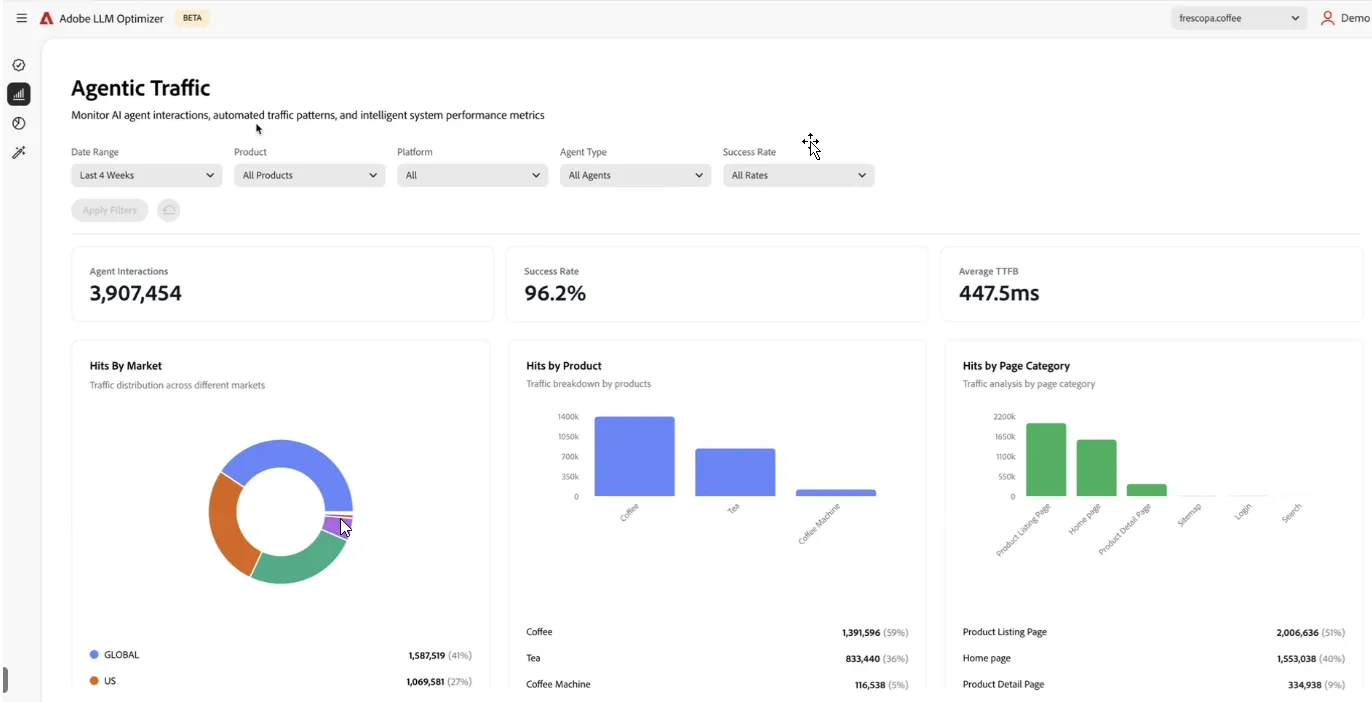
While GEO is still an emerging discipline, Adobe LLM Optimizer already equips companies with a powerful tool to proactively adapt their content to the evolving landscape of generative AI. It ensures that content remains visible not only to traditional search engines but also to AI systems, establishing the next standard in digital marketing.
valantic supports companies in implementing this new approach and making their content strategies future-ready. As an Adobe Gold Partner, we have gained exclusive access to the LLM Optimizer ahead of its official launch in October, enabling us to assist the first companies in successfully integrating the tool.
We’re happy to provide personalized advice on Generative Engine Optimization (GEO) and demonstrate the possibilities of Adobe LLM Optimizer. Get in touch with us to learn more!

Generative AI with valantic – Unlocking New Possibilities
(Generative) AI as well as Classic AI is transforming the business world in real time.


Customer Experience September 18, 2026
From webshop to virtual try-on: how AI is making its way into retail stores
Digital interfaces such as smart mirrors turn AI in the store into a tangible business case. What potential does this hold for the customer experience and in-store personalization? Matthias Vollmer explains how the retail industry can combine the best of both worlds and turn physical touchpoints into an intelligent part of the omnichannel journey.
From webshop to virtual try-on: how AI is making its way into retail stores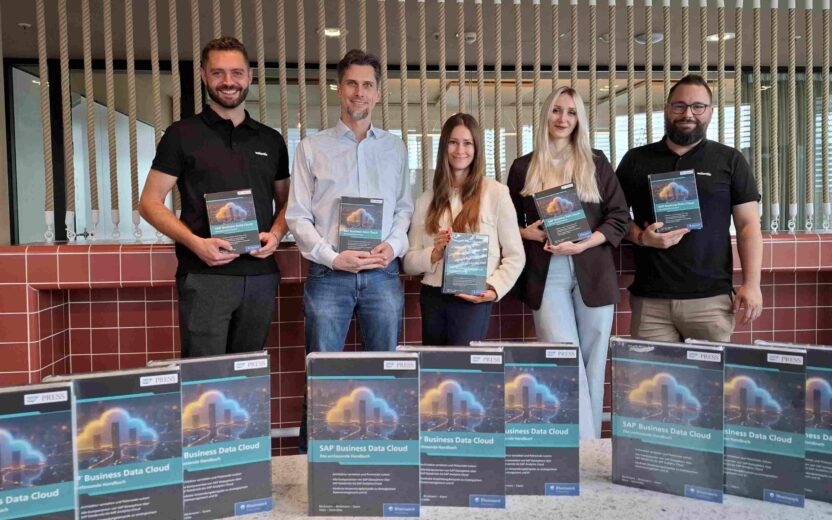
SAP Services September 17, 2026
The SAP BDC handbook: An interview on Business AI and data culture
Five valantic consultants wrote the SAP Business Data Cloud handbook. In this interview, they explain why SAP BDC is the enabler for business AI and why this book is a must-read.
The SAP BDC handbook: An interview on Business AI and data culture
Customer Experience August 27, 2026
Interview: How manufacturing stays digitally visible and AI-relevant
In the manufacturing sector, purchasing decisions are increasingly being made before the sales team is even involved. Designers, planners, maintenance technicians, and buyers conduct online research—and are increasingly receiving AI-generated responses. How can marketing teams at manufacturing companies ensure digital visibility and AI relevance? Answers and recommendations from the Manufacturing Practice.
Interview: How manufacturing stays digitally visible and AI-relevantDon't miss a thing.
Subscribe to our latest blog articles.