Highlight

Successful together – our valantic Team.
Meet the people who bring passion and accountability to driving success at valantic.
Get to know usMake use of your data
Fragmented data landscapes are slowing innovation, governance, and AI initiatives. valantic helps companies build a unified data & AI platform with Databricks – from data strategy and implementation to a scalable foundation for data engineering, analytics, and AI.

The challenge
Companies in all industries are facing the challenge of efficiently processing, analyzing, and harnessing a flood of data from multiple sources for AI applications. In reality, however, data landscapes are usually fragmented: Data warehouses, data lakes, and separate ML platforms coexist, resulting in high operating costs and delayed time-to-insight.
At the same time, there is increasing pressure to move data and AI initiatives into productive applications more quickly. Many companies are struggling with inconsistent data, insufficient governance, and the lack of a unified platform for data engineering, analytics, and machine learning.
Media disruptions occur most commonly in mature system landscapes: Operational data is isolated from analytics layers, while analytics and reporting applications need to access complex and disparate data models.
Without a scalable, state-of-the-art data infrastructure, the potential of data & AI remains untapped, leaving some companies missing out on a key competitive advantage.
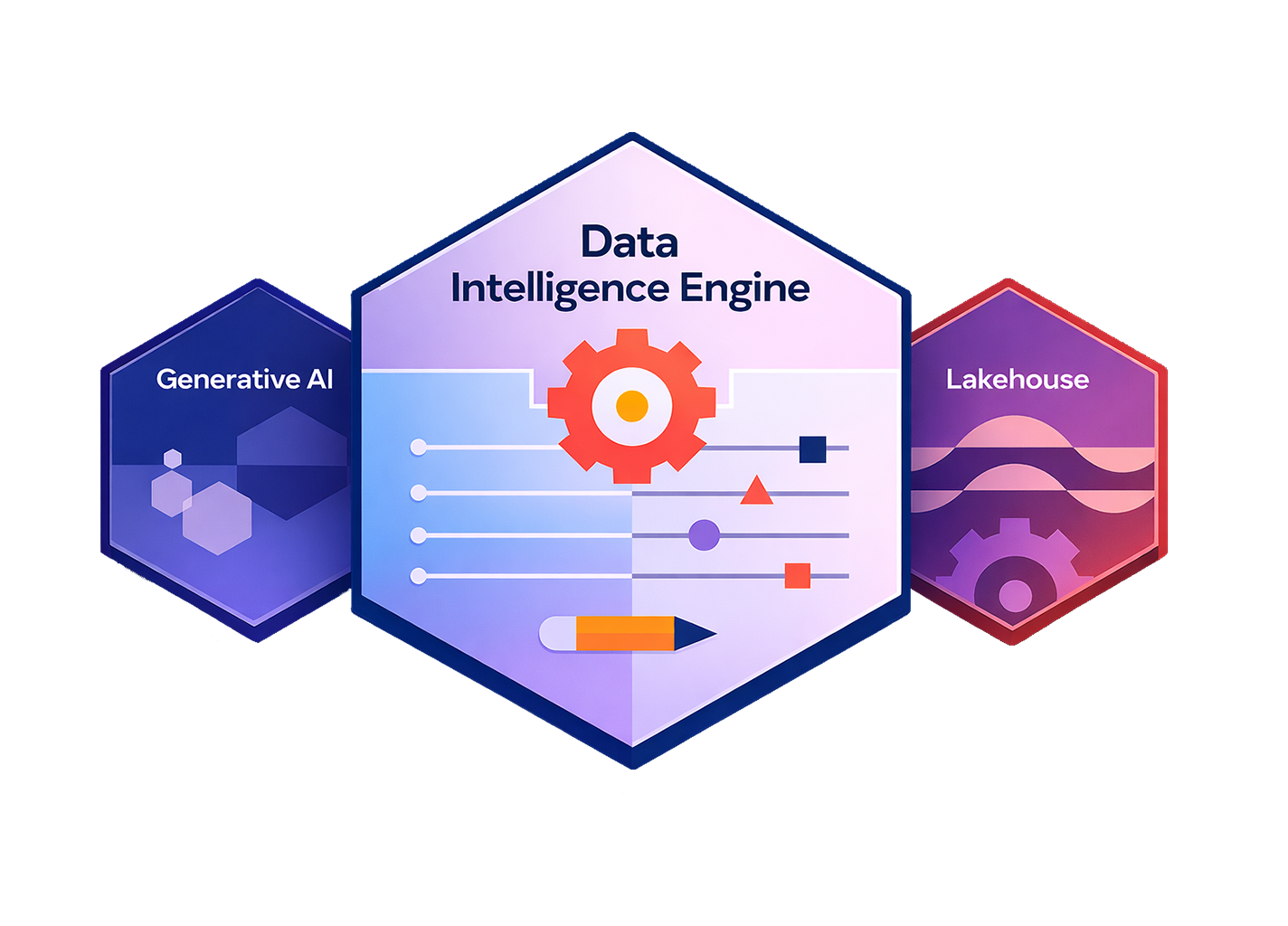
Overview of Databricks: The focus is on the data intelligence engine
Faster time-to-insight with a unified, scalable data platform: From raw data processing to AI applications in one environment.
Many companies today pay for three to five different data tools that do not work together seamlessly. Databricks consolidates these silos onto a single platform – significantly reducing licensing and operating costs. An independent study by Nucleus Research shows that customers achieve an average ROI of 482% over three years, with a payback period of just four months.
As your data volume grows, you don’t need to worry about scaling your infrastructure. Databricks scales automatically, whether you’re dealing with terabytes or petabytes, without your team having to manually manage clusters or pre-book capacity. You only pay for what you actually use.
In vielen Unternehmen ist unklar, wer welche Daten sehen und nutzen darf – und wer in der Vergangenheit darauf zugegriffen hat. Unity Catalog – die zentrale Schaltstelle für Datenzugriff und Compliance auf Databricks – löst genau dieses Problem: Zugriffskontrolle, vollständige Datenherkunft und auditierbare Compliance-Reports über alle Workloads hinweg, Cloud-übergreifend in Echtzeit.
For many teams, the journey from the first model to production takes months because experiments are not documented in a traceable manner and the handover between data science and engineering needs to run smoothly. Mlflow, the most widely used open-source framework for experiment tracking, the feature store and model serving solve precisely this problem: a seamless workflow that automatically logs experiments and deploys models to production in a reproducible manner. Nucleus Research has found that Databricks customers reduce their time-to-production by an average of 52%.
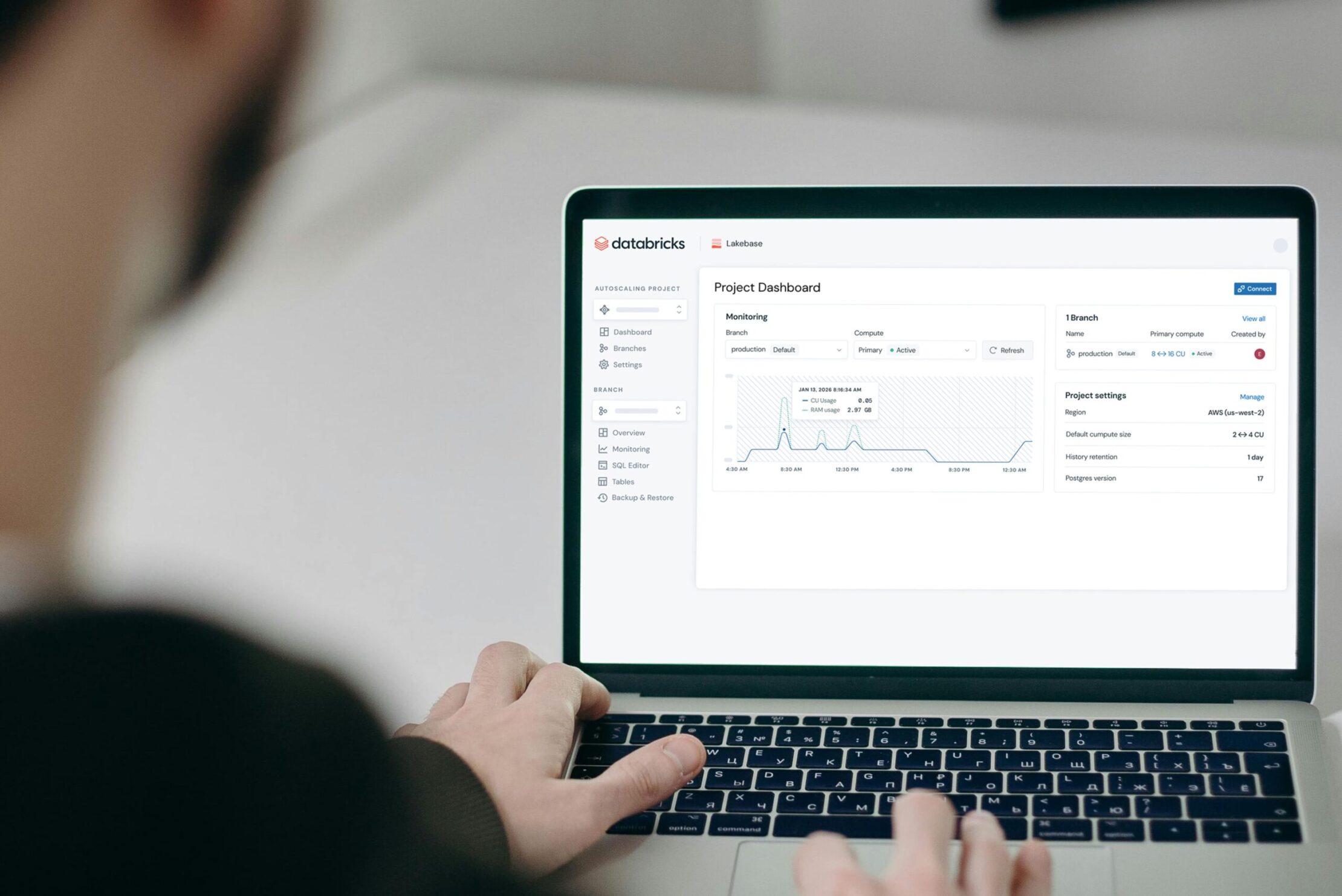
Your data is currently in SAP; tomorrow, you want it to be visible in Power BI. In between lie manual exports, fragile scripts and outdated reports. Databricks bridges this gap: SAP ERP / S/4HANA provides the operational data, Databricks processes and refines it into a consistent data set, whilst Power BI and Tableau visualise the results in real time. A single data chain, not parallel worlds.
The solution
valantic advises companies from data strategy to the productive operation of a Databricks platform. Together, we define a target architecture based on the Lakehouse paradigm and build a uniform platform for data engineering, analytics, and AI.
It integrates batch and streaming processing, SQL analytics, data science, and generative AI into a single environment, providing a foundation for scalable data applications.
In its implementation, valantic relies on proven architectural principles: Medallion Architecture (Bronze, Silver, Gold), Unity Catalog for Data Governance, Delta Live Tables for Automated Data Pipelines, and MLflow for the ML and AI life cycle.
The implementation is done both in cloud environments such as Azure, AWS or GCP, as well as in existing system environments – for example, with SAP and analytics and reporting solutions such as Power BI or Tableau – for an end-to-end database.
Through training and coaching, valantic also ensures that internal teams can develop and operate the platform independently.
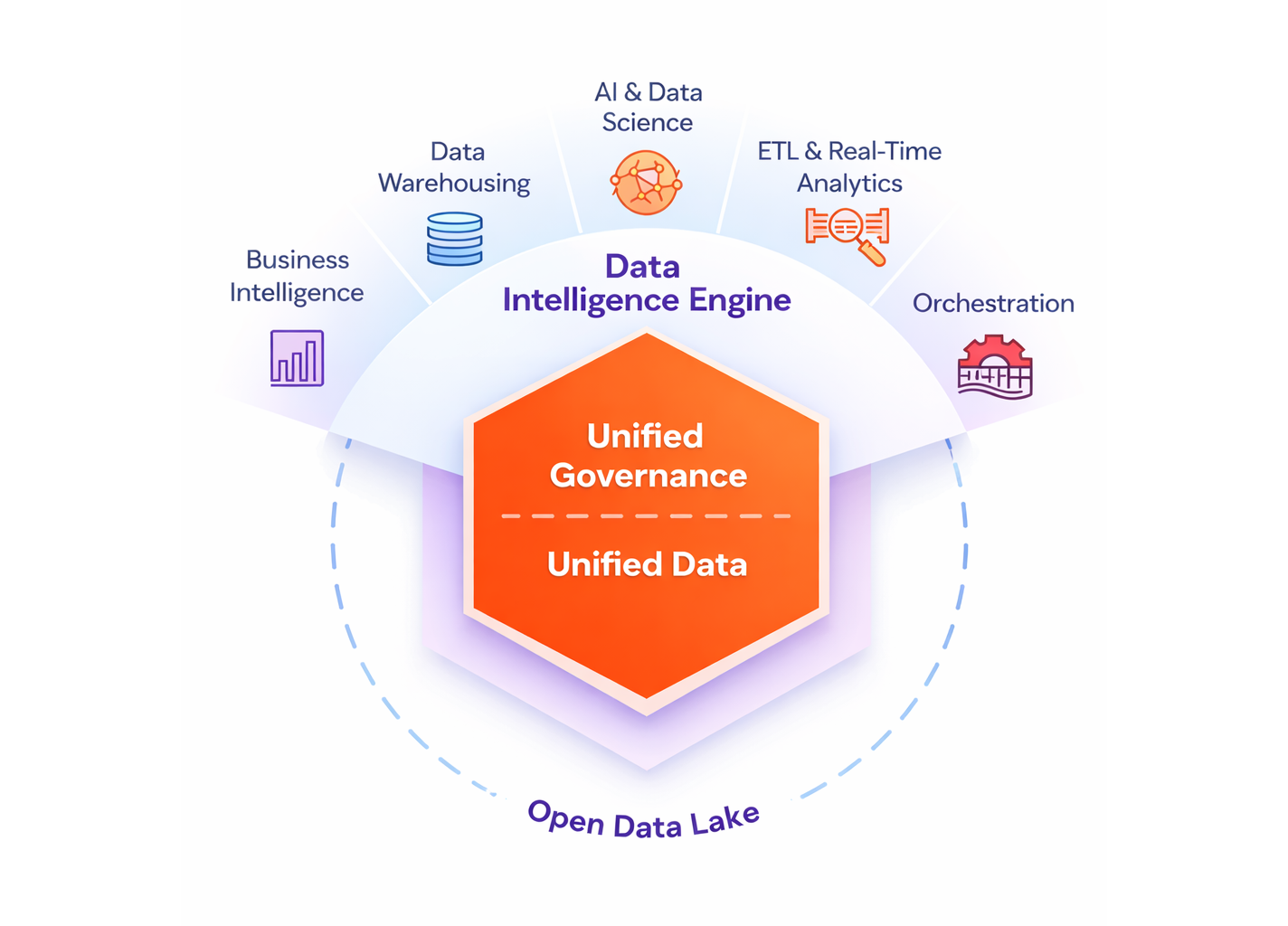
Databricks Data Intelligence Platform
Block 1
Databricks assessment & architectural design
Create a clear foundation for a modern data & AI platform. Analyze existing data landscapes and define a target architecture based on the Lakehouse paradigm – with a focus on scalability, governance, and integration. Select the right cloud environment (Azure, AWS, or GCP) and a prioritized roadmap to ensure rapid and targeted implementation. The result: Architecture that is fit for the future and combines data, analytics, and AI on a single platform.
Block 2
Implementation & migration
Build a scalable database platform as a central foundation for data engineering, analytics, and AI. Develop robust data pipelines with Delta Live Tables for automated data quality and reliable operation, without requiring teams to regularly analyze and troubleshoot errors. Integrate existing data and system environments and implement central governance with Unity Catalog. Supplement with CI/CD and automated testing to create robust production-ready data platforms. The result: An integrated data & AI platform that processes data efficiently and makes it usable across the company.
Block 3
ML & AI Enablement
Accelerate the development and scaling of AI applications, from initial models to productive use. Use MLflow to make experiments traceable, models reproducible, and the path to production significantly shorter with structured ML and AI pipelines. Deploy Feature Store and Model Serving to enable the reliable use of models in the operational business. Integrate generative AI applications – for example, with RAG architectures for using internal company data or fine-tuning LLM for specific use cases. The result: AI applications that become more productive faster and deliver measurable business value.

Use case: Real-time customer analysis in retail
A European retailer uses a central data & AI platform based on Databricks to process transaction and customer data in real time...
A European retailer uses a central data & AI platform based on Databricks to process transaction and customer data in real time. This way, personalized offers and recommendations can be made during the purchasing process.
The result: Higher conversion rates, increasing revenue per visitor, and a significantly better customer experience.

Use case: Predictive maintenance in manufacturing
An industrial company analyzes IoT sensor data on a scalable Data & AI platform with Databricks...
An industrial company analyzes IoT sensor data on a scalable Data & AI platform with Databricks. ML models detect patterns of potential machine failures early on and enable predictive maintenance.
The result: Less unplanned downtime, lower maintenance costs, and increased plant availability.

Use case: Regulatory reporting in financial services
A financial institution uses a central data & AI platform to automatically generate regulatory reports, making them traceable...
A financial institution uses a central data & AI platform to automatically generate regulatory reports, making them traceable. Data is processed consistently and meets requirements such as BCBS 239 and MaRisk.
The result: Faster reporting processes, higher data quality, and complete transparency for regulators.
valantic is an experienced Databricks partner with certified experts and extensive project experience implementing modern data & AI platforms across Europe. As an international digital consulting company, valantic combines deep technology expertise with a sound understanding of the industry.
The focus is on holistic implementation: from data strategy to Databricks implementation to the operation of scalable data & AI platforms. The focus is on technical implementation and integration – with the aim of putting data pipelines and AI applications into productive use quickly.
Companies benefit from an integrated solution for data engineering, analytics, and AI based on modern Lakehouse architectures.
A key success factor is project continuity: the same experts who develop the architecture also support implementation, without changing teams or fragmented delivery structures.
4000+
Experts worldwide
~500
Customers from medium-sized businesses to corporate groups
100+
Experience from numerous data & AI projects – including Databricks
Your contacts