Highlight

Successful together – our valantic Team.
Meet the people who bring passion and accountability to driving success at valantic.
Get to know usSAP APO is being phased out. We show how to future-proof your supply chain planning and what to consider when choosing a successor system.

Pressure is mounting – a new solution is needed
By 2027 at the latest, SAP will discontinue support for its APO planning system. For many companies, that’s more than a technical cutoff — it marks a strategic turning point.
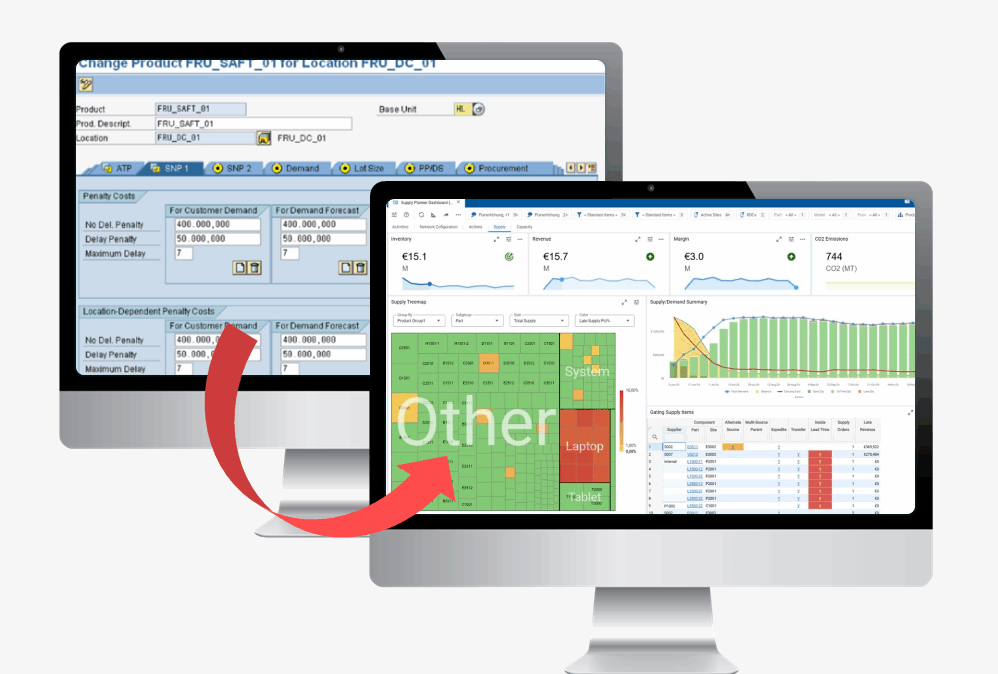
The question now is how supply chain planning should work going forward: in real time, AI-enabled, and end-to-end.SAP Integrated Business Planning (IBP) seems like a natural option — especially for organizations already invested in the SAP ecosystem. However, the move comes with important prerequisites: IBP is only fully realized in combination with SAP S/4HANA. For companies not already on an S/4HANA migration path, this means significant technological and organizational effort — in integration as well as in change management.
That’s why it pays to consider alternatives. The market offers modern platforms built on new principles — more transparent, faster, smarter.
Rogerio Branco
Chief Supply Chain Officer, Eaton Corporation
”The techniques and processes that we’ve relied on for the past 30 years will not survive the next three.“
SAP IBP is not the only option
The end of SAP APO support is coming – and with it, growing urgency to act. Companies that wait too long risk extending operational risks and technical dependencies unnecessarily. At the same time, this transition is the perfect opportunity to modernize supply chain planning — with solutions that deliver not only a technology shift, but real strategic value.
Organizations evaluating the replacement of SAP APO should consider the following aspects. They provide a solid basis for identifying future-ready platforms:
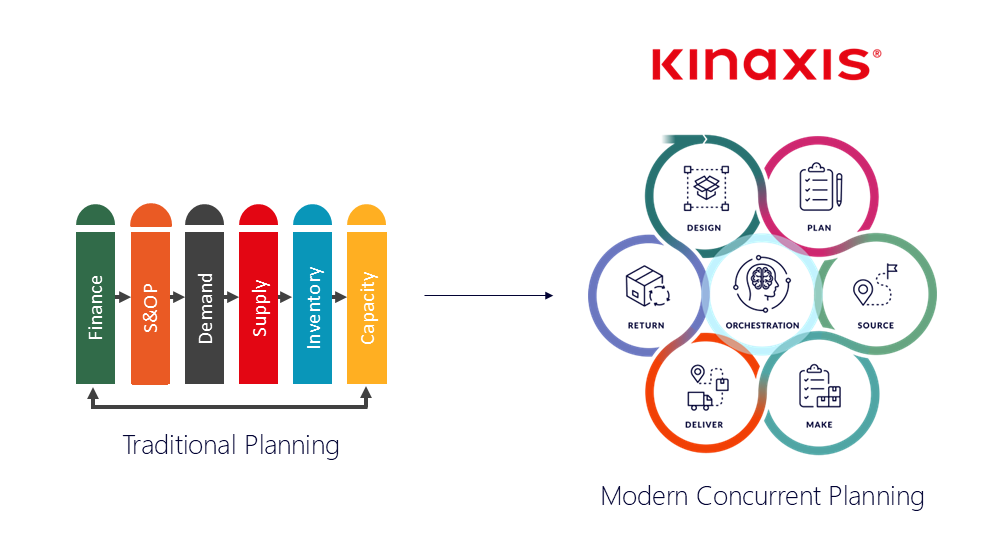
Can the new supply chain software respond to market changes and disruptions in real time – for example, through concurrent planning and intelligent scenario modeling in seconds?
Does the platform include modern technologies such as artificial intelligence (AI), automation, and machine learning?
How seamlessly can the solution connect with existing ERP systems like SAP S/4HANA, Oracle, Infor, or with hybrid IT landscapes?
Does the solution provide continuous insights across the entire supply chain – from demand planning to fulfillment – and enhance cross-functional collaboration?
Kinaxis Maestro is an AI-powered supply chain planning platform designed specifically for the challenges of dynamic markets. It sets a new standard for speed, visibility, and responsiveness – and in 2025, it was recognized as a Leader in the Gartner Magic Quadrant for Supply Chain Planning for the 11th consecutive year.
2025 Gartner Magic Quadrant for Supply Chain Planning Solutions: Kinaxis recognized as a Leader for the 11th year in a row and ranked highest in Ability to Execute.
Gartner Peer Insights lists Kinaxis Maestro as one of the top alternatives to SAP. Based on verified end-user reviews in the Supply Chain Planning category, Kinaxis Maestro ranks above established vendors such as SAP. The platform currently holds an average rating of 4.5 out of 5 stars from 125+ reviews — a strong signal of real customer value.

Supply-Chain-Executive
World-leading consumer goods company
”As a long-standing SAP APO customer, we wanted to consolidate our many standalone systems and make our planning more flexible. Kinaxis Maestro convinced us with its agility, high level of security, and ease of use, providing our planners with valuable insights.“

Senior Director Supply Chain
Global semiconductor foundry
”Our first go-live with another planning solution dragged on for years, required numerous adjustments, and still left gaps. In parallel, Kinaxis Maestro proved to be far more effective – especially thanks to its flexibility, rapid what-if scenarios, and integrated alert features.“
The replacement of SAP APO is more than a migration project. It’s an opportunity to leave outdated processes behind and reimagine planning as end-to-end, collaborative, and AI-powered. Companies that act early secure both competitive advantage and long-term resilience.
Which options fit your IT landscape? Let’s analyze it together.
Are you wondering whether Kinaxis Maestro is the right alternative to SAP APO — and how seamlessly it integrates into your existing systems?