Highlight

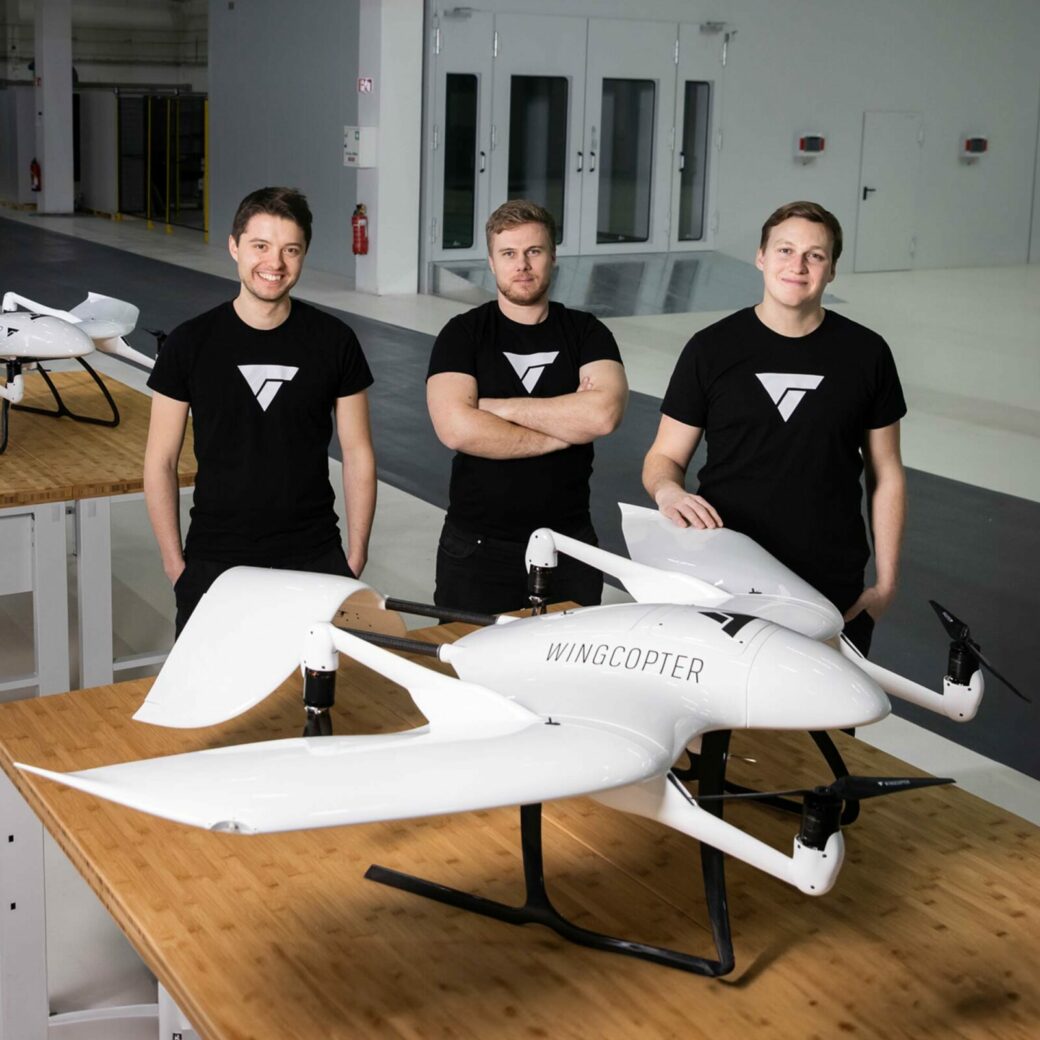
Successful together – our valantic Team.
Meet the people who bring passion and accountability to driving success at valantic.
Get to know usAccelerating Your Business's Forward Movement
By implementing Product Lifecycle Management (PLM) efficiently and rigorously, companies achieve growth, agility, and competitive advantages. To enable this, valantic serves as the link between your product-related business processes and their implementation through tailor-made PLM solutions. As a system-agnostic service company, valantic understands PLM as a strategic core competency, ensuring that all information and processes surrounding a product are effectively managed and optimized – from the initial idea to recycling.

With a holistic view of the entire product lifecycle, we support your teams throughout all development phases. Our aim is not to sell a specific software solution, but to work with your PLM community to define and sustainably implement the most technically and economically viable solution. As a navigator in the PLM sector, we analyze your initial situation and develop solutions that are optimally tailored to your specific requirements.
We combine strategic consulting with operational implementation expertise and stand behind the concepts we develop with conviction.
Our team of experts has comprehensive PLM expertise in a wide range of industries – from discrete manufacturing and the process industry to the food and consumer goods sector. We are also experienced partners in highly regulated markets. With industry-specific templates and proven methods, we meet you where you are and efficiently accompany you on the way to your individual PLM goal.
Introduction and Initial Assessment of Currently Existing PLM Processes
Analysis and Optimization of Your PLM Processes
Careful Selection and Evaluation of PLM Providers
Ensuring Your Investment through Post-Implementation Support of Existing Solutions
Integration of Heterogeneous System Landscapes
Development of a Future-Proof PLM Architecture and Strategy
Implementation and Ongoing Operation of Your PLM Solution
Collaborative Product Development
PLM promotes collaborative and interdisciplinary product development for you, emphasizing innovation and sustainability, thereby increasing customer satisfaction and strengthening market position.
Faster Time to Market
PLM accelerates your product’s entry to the market through streamlined business processes and intuitive PLM solutions, allowing you to capture new markets more quickly than the competition and solidify existing markets.
Increased Product Appeal
Enhance the agility and attractiveness of your product range through structured and transparent organization of all product-relevant information and processes.
Flexibility in the Product Lifecycle
Respond flexibly and promptly to changes in the product lifecycle by making current information available across the company at the right place and time. This ensures that all stakeholders are always up to date.
Compliance and Documentation
Seamlessly meet constantly changing regulatory requirements and audits and always ensure access to all necessary evidence and documentation.
PLM is a crucial component of a state-of-the-art enterprise architecture. As a strategic core competency, PLM deals with everything that makes your products unique, essentially the heart of your business value creation.
The interplay between Product Lifecycle Management (PLM), Enterprise Resource Management (ERP), and Manufacturing Execution System (MES) forms the supporting pillar of industrial product creation – the “magic triangle” of corporate IT infrastructure.
Synergies of PLM, ERP, and MES for the Optimization of Business Processes
These systems complement each other and must be finely coordinated to optimize their respective tasks:
Together, PLM, ERP, and MES create a holistic system where information flows seamlessly, enhancing efficiency, consistency, and quality across all stages of product creation and business operations.

Ecodesign Directive as an catalyst for more efficient product development
The implementation of the Ecodesign Directive (2009/125/EC) of the European Parliament shifts the focus away from purely functional product features toward ecological efficiency and resource conservation. In the early stages of product design – where technical design freedom and influence are greatest – approximately 80% of a product’s environmental impact and 90% of its manufacturing costs are currently generated.
Integrated Product Development: From Market Needs to Customer Service
Product development does not occur in a vacuum. Rather, it is intricately linked with Manufacturing Engineering (or Production Engineering) and Service Engineering. Everything is based on market requirements, trends, and desires, aiming to generate competitive advantages.
Here, too, a number of systems are used that work closely with the PLM system:

PLM as a Catalyst for Tailored Business Success
With a smooth integration into your enterprise architecture, PLM, with its product-related data, becomes the fuel that gives your corporate rocket impressive thrust! This integration creates maximum added value, and your investments pay off with greater business success. There is no “one-size-fits-all” solution because every company and industry operate differently and has its own culture.
At valantic, specialists work in all the markets and areas of expertise mentioned in digitalization. They are well-versed in the possibilities and limitations of various solutions of the market leaders and have valuable industry insights. Respectful partnerships with leading PLM vendors ensure that our customers’ interests are always at the forefront. Thus, we bridge the gap between your business processes and a system landscape tailored to your needs. Valantic supports its customers through their individual PLM transformation process while always keeping an eye on adjacent disciplines.
Above all, we aim to inspire and excite you and your colleagues with the many possibilities of the latest digitalization technologies – because at valantic, the focus is always on people. Take off and leave your competitors behind!


Florian Bischof
Global Director Digital Platforms & AI, Trelleborg Sealing Solutions
”valantic plays a crucial role in our global PLM strategy, roadmap, and implementation.“
As the link between your business processes and the implementation of a holistic PLM solution, valantic has created a proven framework and approach that systematically takes into account the four core components of people, processes, systems and data. This enables us to reach our goal faster together: your optimal PLM solution.
1. Explore PLM
We analyze your current PLM maturity level in a structured manner, identify specific areas for optimization, and create a solid basis for decision-making regarding your future PLM strategy.
2. Plan PLM
Based on clearly prioritized requirements, we develop a viable PLM vision, architecture and roadmap – including a business case as the foundation for implementation.
Step 1
The foundation for PLM success is as comprehensive a capture of the current state as possible. After all, your company already successfully develops products. Consequently you already practices a form of Product Lifecycle Management. The question is how you handle PLM currently and whether there are potential improvements which could make your company even more successful or catapult it to the top of your market segment.
Using industry-specific templates as a framework, we analize the current PLM practices in place at your organization together with your subject matter and process experts. We draw upon a selection of up to 80 functional and non-functional topics, then focus on the essentials.
This approach ensures that nothing is overlooked, while also avoiding excessive effort. By communicating with your internal stakeholders, we form a PLM community in this early phase, thereby initiating the very important change management. PLM experts from valantic use a combination of exploratory workshops, interviews, and document reviews to fully understand where your PLM currently stands and where it could potentially be in the future.
We analyze the results systematically and prioritize the issues together with you, working towards a possible future vision. The PLM maturity level is assessed using a recognized process maturity model. This provides you with a clear reflection of your current situation.
You will receive insights and recommendations from our experts to prepare the next steps for you:
The results of the “Explore” phase become the basis for all subsequent steps. Often, PLM projects fail because this crucial foundational phase, where the course is set, does not receive the necessary attention. However, the comparatively small investment here in this phase can save considerable effort and frustration in later activities.
The scope and effort of this phase can, of course, be flexibly and incrementally designed, depending on how clear your ideas already are.
If you already have a PLM program running and are questioning whether the investments have been correct, a retrospective “Explore” phase can provide clarity and, if necessary, initiate supplements, readjustments, or a realignment. It is not uncommon for us to find situations with clients where a PLM system exists but is scarcely or incorrectly used. While this could indeed be due to the software, it is more likely due to an inadequate or missing “Explore” and “Plan” phase.
An “Explore” phase can also be very beneficial for a possible planned consolidation of heterogeneous PLM landscapes, which may have become necessary due to mergers & acquisitions or historically evolved structures.
At the end of the “Explore” phase, the decision must be for the future PLM system supplier has to be taken. valantic can accompany this process with systematic evaluation criteria, to create a detailed and comprehensible basis for decision-finding for the selection of a PLM system provider.
Step 2
After the goals and scope for a future PLM setup are roughly outlined in the Explore phase, the “Plan” phase involves a more detailed and refined approach.
During the “Plan” phase, the conceptual design of the PLM solution architecture is developed as the basis for a subsequent implementation phase. For the conceptual design, requirements are again systematically captured, goals clearly defined and prioritized, a high-level system architecture developed, data management planned, integration planning carried out, and the security concept analyzed.
The solution architecture is aggregated at the end of the “Plan” phase in the form of a PLM vision and roadmap. This involves planning action sequences and work packages that contribute to the jointly formulated target vision. The planning provides clarity about the scope and effort of a PLM project and forms the basis for the subsequent “Build” phase.
valantic works closely with clients and solution providers to define the project scope, work division, organization, and schedule. The strategic direction of the project and the right approach are crucial for success. In this phase, it is important to gain the approval of all key PLM stakeholders and the management of your company.
Step 3
In the “Build” phase, the planned activities are executed, and the PLM system begins to take shape gradually. We recommend an approach that combines the structure of the waterfall model with the flexibility of Scrum, known as Water-Scrum-Fall. It’s also advisable to initially establish a PLM core solution, which can be gradually expanded afterward.
Concurrently, interfaces are implemented, necessary data migrations carried out and test plans created and executed. Training materials for your key users are developed step by step, and your organization is gradually introduced and enabled to work with the new solution.
The experts at valantic have ample experience from numerous large and small projects across different industries to accompany you on the path to PLM success. As a full-range supplier in the field of industrial digitalization, valantic also covers all adjacent disciplines and systems.
At the end of the “Build” phase, your individual PLM solution can be rolled out and go live.
Step 4
In the “Operate” phase, the fully tested solution is transferred from the development environments to the production environment, marking the beginning of the hypercare phase. After this, the solution enters regular operational support with KPIs, SLAs, and continuous improvements.
The shift from traditional on-premise solutions towards SaaS and cloud is also transforming PLM, having gained significant momentum. Our clients face the challenge of deciding which solution is most practical for them. PLM providers have various models in their portfolios to cater to different needs. The right model influences the decision for or against a particular provider. There is no one-size-fits-all solution, as each industry and company has its unique requirements.
At valantic, specialists who are well-versed with various hosting and operational concepts are ready to assist. We are pleased to offer you consulting services in the context of PLM.
Strong Partnerships for Sustainable Success
Selecting a suitable PLM technology is not purely a system decision, but rather the result of clearly defined objectives and a well-thought-out architecture. Different industries, levels of maturity, and IT strategies require different approaches.
valantic therefore pursues a technology-neutral consulting approach and works with leading PLM providers. This ensures that the focus is not on a specific system, but on the solution that best suits your company in terms of technical, organizational, and economic requirements.

With its PLM portfolio, Siemens Digital Industries offers an integrated solution for development, simulation, manufacturing, and service. Key components include systems such as Teamcenter, NX, and Opcenter, which are based on a consistent data model and support the digital twin throughout the entire product lifecycle.
Siemens’ strength lies in particular in the close integration of engineering software, automation technology, and manufacturing. This makes the portfolio particularly suitable for companies with high technical complexity and strong manufacturing integration.

Centric PLM™ is a cloud-based solution with a clear focus on industries such as fashion, retail, food, and consumer goods. The platform supports product development, variant and SKU management, and the structured management of product-related information along the value chain.
A key approach is the provision of a consistent database as a single source of truth to reduce manual processes and isolated data sources. Standardized workflows and integration interfaces enable connection to ERP, PIM, or other third-party systems.
SAP PLM is tightly integrated into the SAP ERP and supply chain world and enables end-to-end management of product data across key business processes. The focus is on the structured mapping of bills of materials, materials, and variants, as well as integration with procurement, production, and logistics.
Bidirectional interfaces also allow external authoring and PLM systems such as Teamcenter, 3DEXPERIENCE, PTC Windchill, or Autodesk Vault to be connected. This enables SAP PLM to function as the integration and process backbone within heterogeneous system landscapes.


PlastiVation Plans and Designs Product Lifecycle Management (PLM) With valantic’s Help
Simply arrange an appointment with our experts!

Dieter Dragon
Managing Director
valantic