Highlight

Successful together – our valantic Team.
Meet the people who bring passion and accountability to driving success at valantic.
Get to know usAugust 18, 2026

Managing HR across multiple countries is complicated enough. Add five different tools to the mix — one for payroll, one for expenses, one for talent management, one for recruiting, and one for surveys — and the complexity doesn’t just add up. It multiplies.
The average Fortune 500 employee switches between apps and tabs more than 3,600 times a day. This constant switching back and forth costs employees about five hours per week. 44% say disconnected HR systems limit visibility across workflows.
Abacus for payroll, Leapsome for talent, Teamtailor for recruiting — employee data scattered across incompatible systems. For your HR team managing multiple countries and compliance requirements, this fragmentation becomes paralyzing.
Updates in one system don’t reflect in another, creating multiple sources of truth. Integration errors cost time and money as you scale across countries.
Multiple tools mean multiple contracts, multiple vendors to manage, multiple training sessions, and multiple integrations to maintain. Each new country = new compliance configurations across disconnected systems.
75% of organizations say they are not effective at evaluating employee performance across global teams. This highlights the urgent need for more standardized, flexible, and culturally aware frameworks.
When your recruiting process is separate from onboarding, and onboarding is separate from performance management, you lose the continuity that builds strong company culture.
What a modern consolidated platform delivers:
If the honest answer is somewhere between “it’s getting complicated” and “we lost count,” you’re not alone — and it’s worth taking a closer look at what’s really driving that complexity.

Ready to simplify your HR tech stack?
At valantic, we partner with growing multi-national scale-ups to evaluate, select, and implement the right unified HRIS. Whether you’re considering HiBob, Personio, Successfactors or Workday, or another platform, our implementation expertise ensures you make the choice that scales with your ambitions.


Artificial Intelligence October 16, 2026
Autonomous Enterprise Journey: How AI value engineering creates measurable business value
How can the ROI of AI initiatives be reliably assessed and measured? How can companies identify the biggest levers and key processes for AI? Katrin Luft, Senior Expert at valantic and co-developer of the “Autonomous Enterprise Journey,” provides answers and recommendations in a conversation with Darya Basarhina, Vice President of Sales & Marketing and Manufacturing Practice Lead at valantic.
Autonomous Enterprise Journey: How AI value engineering creates measurable business value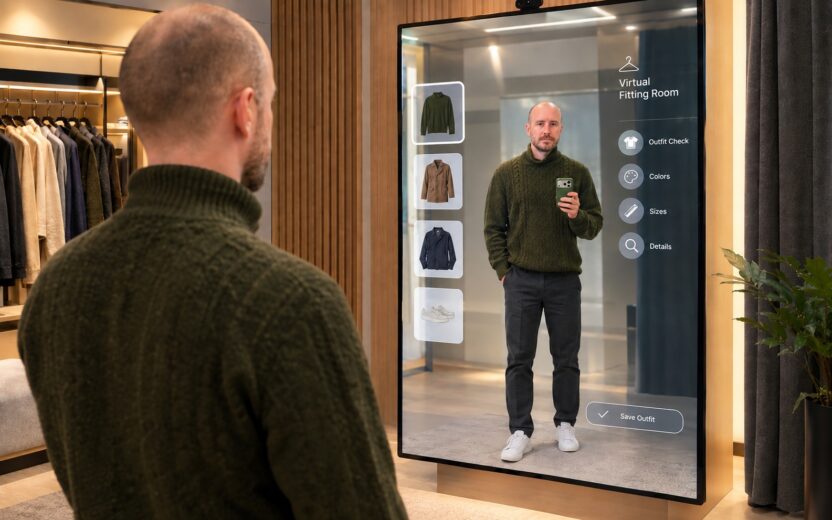
Customer Experience September 18, 2026
From webshop to virtual try-on: how AI is making its way into retail stores
Digital interfaces such as smart mirrors turn AI in the store into a tangible business case. What potential does this hold for the customer experience and in-store personalization? Matthias Vollmer explains how the retail industry can combine the best of both worlds and turn physical touchpoints into an intelligent part of the omnichannel journey.
From webshop to virtual try-on: how AI is making its way into retail stores
Customer Experience August 27, 2026
Interview: How manufacturing stays digitally visible and AI-relevant
In the manufacturing sector, purchasing decisions are increasingly being made before the sales team is even involved. Designers, planners, maintenance technicians, and buyers conduct online research—and are increasingly receiving AI-generated responses. How can marketing teams at manufacturing companies ensure digital visibility and AI relevance? Answers and recommendations from the Manufacturing Practice.
Interview: How manufacturing stays digitally visible and AI-relevantDon't miss a thing.
Subscribe to our latest blog articles.