Highlight

Successful together – our valantic Team.
Meet the people who bring passion and accountability to driving success at valantic.
Get to know usAugust 26, 2025

After exploring the conceptual foundations of Industry 5.0 and smart services, one insight stands out: Without closing the gap between customer and product data, many of these visions will remain purely theoretical. Linking customer relationship management (CRM) and product lifecycle management (PLM) is becoming a strategic imperative for building scalable and sustainable data-driven business models.
CRM systems are primarily used by sales, marketing, and service teams to record and manage customer interactions. PLM systems, by contrast, span the entire product lifecycle – from development and manufacturing to end-of-life. In many organizations, these two worlds have historically evolved in isolation, resulting in inefficient processes, redundant data, and media discontinuity.
Smart services, however, require the opposite: Seamless data flows that enable context-aware, personalized offers based on product condition and customer needs. Without integration, capabilities such as predictive maintenance, dynamic pricing, and tailored service recommendations remain out of reach.
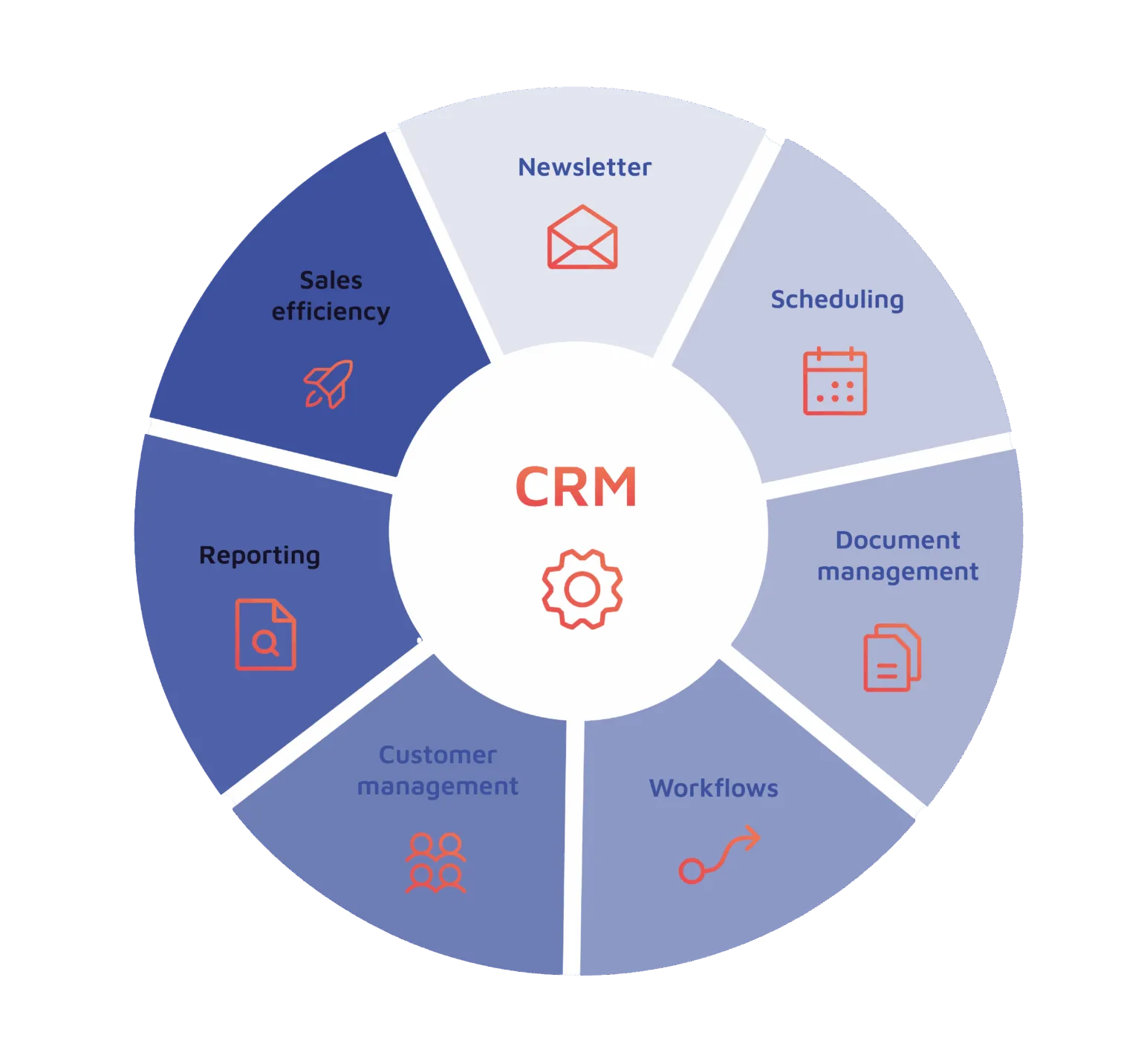
A future-ready system landscape must seamlessly connect CRM and PLM. The objective is a shared “digital thread” that unites product data, usage contexts, and customer feedback in real time. Key enablers include:
This ensures that field data flows directly back into development, while service teams can instantly access configured product information – without manual research.
The true added value emerges when artificial intelligence can access integrated data. By analyzing customer behavior in CRM and comparing it with product usage data from PLM, AI generates recommendations for upselling, maintenance, and product development. At the same time, it automates and accelerates feedback loops between customer support, engineering, and sales.
AI also acts as a connector between the customer lifecycle and the product lifecycle: It identifies patterns and anomalies, uncovers optimization potential, and orchestrates new service offers across both cycles. The result is an intelligent data flow – from product development through usage to recycling – and back into the customer relationship.
In practice, this means AI-based smart services draw on a unified data space rather than fragmented systems. This greatly enhances their relevance, personalization, and scalability.
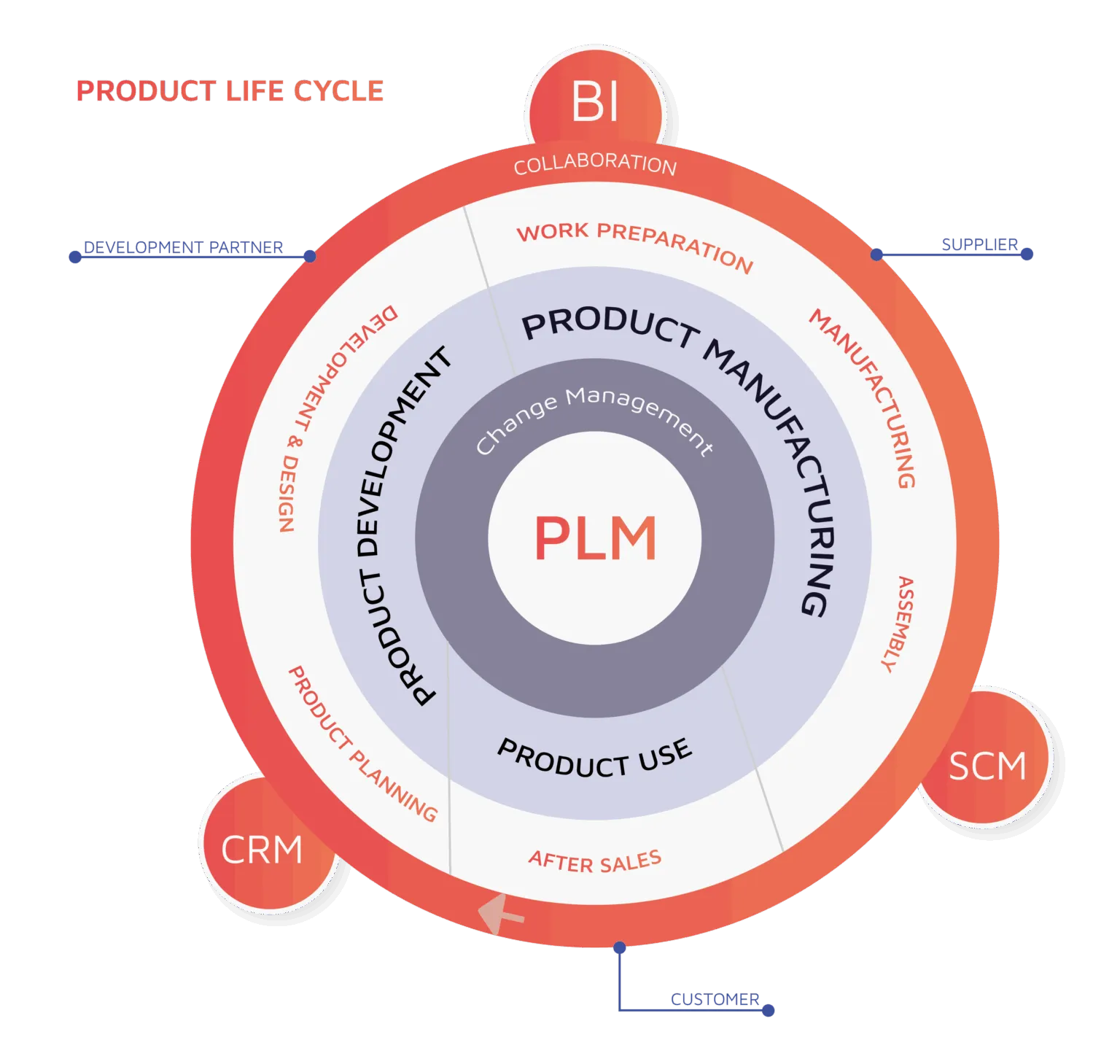
The future of intelligent, customer-centric services lies not in isolated tools but in integrated system architectures. Connecting CRM and PLM forms the technological backbone of smart services – and with it, the basis for modern business models in the era of Industry 5.0.
Companies that bridge this gap achieve not only internal efficiency but also create new digital customer experiences. By uniting customer proximity with technological depth, the integration of CRM and PLM lays the foundation for genuine competitive differentiation.

Subscribe to our newsletter now and stay up to date!
In our Digital Now! Newsletter, you can expect a selection of interesting blog posts, inspiring white papers, informative webinars, and exciting news on a regular basis.


Artificial Intelligence October 16, 2026
Autonomous Enterprise Journey: How AI value engineering creates measurable business value
How can the ROI of AI initiatives be reliably assessed and measured? How can companies identify the biggest levers and key processes for AI? Katrin Luft, Senior Expert at valantic and co-developer of the “Autonomous Enterprise Journey,” provides answers and recommendations in a conversation with Darya Basarhina, Vice President of Sales & Marketing and Manufacturing Practice Lead at valantic.
Autonomous Enterprise Journey: How AI value engineering creates measurable business value
Customer Experience October 8, 2026
Interview: From PIM to Data Spine – How companies prepare their data for AI
AI is changing the requirements for data, governance, and processes. Where should companies start, and what skills do they need? In this interview, Dietmar Rietsch, CEO of Pimcore, and Timo Huguet of valantic discuss the importance of clean data, the concept of the “Data Spine,” and the changing role of humans in the age of agentic AI.
Interview: From PIM to Data Spine – How companies prepare their data for AI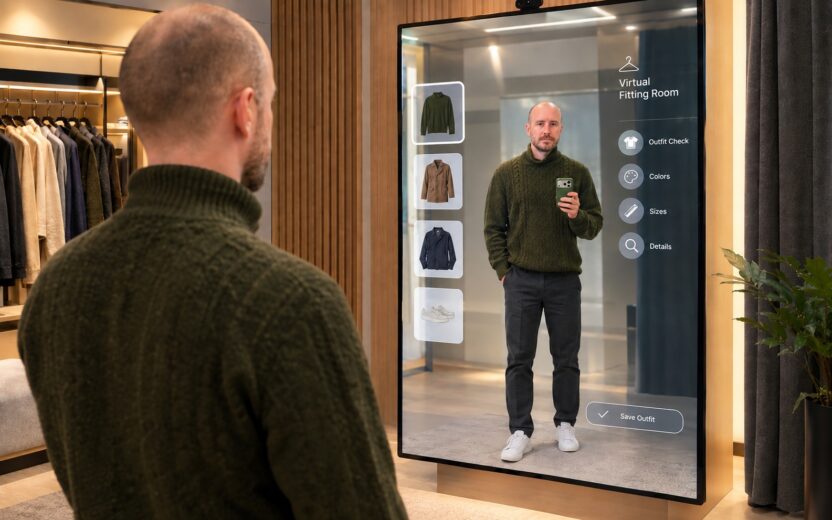
Customer Experience September 18, 2026
From webshop to virtual try-on: how AI is making its way into retail stores
Digital interfaces such as smart mirrors turn AI in the store into a tangible business case. What potential does this hold for the customer experience and in-store personalization? Matthias Vollmer explains how the retail industry can combine the best of both worlds and turn physical touchpoints into an intelligent part of the omnichannel journey.
From webshop to virtual try-on: how AI is making its way into retail storesDon't miss a thing.
Subscribe to our latest blog articles.