Highlight

Successful together – our valantic Team.
Meet the people who bring passion and accountability to driving success at valantic.
Get to know usJune 12, 2025

In today’s highly competitive retail landscape, it is crucial to present customers with the right offer at the right moment. Every retailer is familiar with the scenario: customers add products to their shopping cart but abandon their purchase, or they opt for a basic version when a premium variant would better meet their needs. These situations hold enormous revenue potential, yet without the right data, this potential remains untapped.
A Customer Data Platform (CDP) helps retailers fully leverage cross- and upselling potential through data-driven personalization. With a CDP, successful cross- and upselling is no longer based on gut feeling but on smart data utilization—without any additional manual effort. This article explains how it works.
Cross- and upselling are proven strategies to maximize revenue per customer.
Both approaches not only increase the shopping cart value but also enhance customer satisfaction by providing personalized recommendations that meet their needs.
A CDP enables retailers to execute these sales strategies in a targeted way by analyzing customer data to determine which products or upgrades are most relevant for individual buyers.
The foundation of effective cross- and upselling strategies lies in a deep analysis of customer behavior. A CDP aggregates data from multiple channels—including online orders, in-store purchases, and customer service interactions—to create a 360-degree customer profile. This allows retailers to gain insights into purchase histories, preferences, and behavioral patterns, helping them predict the Next Best Offer (NBO) with precision.
One of the greatest strengths of a CDP is its ability to deliver real-time recommendations. For example, if a customer repeatedly visits a product page or adds an item to their shopping cart, a personalized product recommendation can be delivered immediately—whether in the online store, via email, or through an app push notification.
This form of hyper-personalization not only increases conversion rates but also improves the overall customer experience.
Without automation, personalized cross- and upselling would be difficult to execute efficiently. With the help of Artificial Intelligence (AI) and Machine Learning (ML), a CDP can:
Additionally, CDPs enable continuous performance tracking. Retailers can analyze which offers perform best, where customers drop off, and which target groups are most receptive to specific promotions. This ongoing optimization ensures that the Next Best Offer becomes increasingly accurate and relevant – ultimately boosting customer loyalty and revenue.
The future of retail is data-driven, personalized, and efficient. A CDP empowers companies to optimize their cross- and upselling strategies by delivering the right message at the right time through the right channel. Those who invest in intelligent data usage and automation today will not only increase revenue but also create a superior shopping experience – gaining a decisive edge over the competition.
Surviving the MarTech Jungle Vol 2
Discover how you can avoid digital overload and clear the path to a superior customer experience through targeted harmonization and consolidation of your tech stack.

Customer Experience October 8, 2026
Interview: From PIM to Data Spine – How companies prepare their data for AI
AI is changing the requirements for data, governance, and processes. Where should companies start, and what skills do they need? In this interview, Dietmar Rietsch, CEO of Pimcore, and Timo Huguet of valantic discuss the importance of clean data, the concept of the “Data Spine,” and the changing role of humans in the age of agentic AI.
Interview: From PIM to Data Spine – How companies prepare their data for AI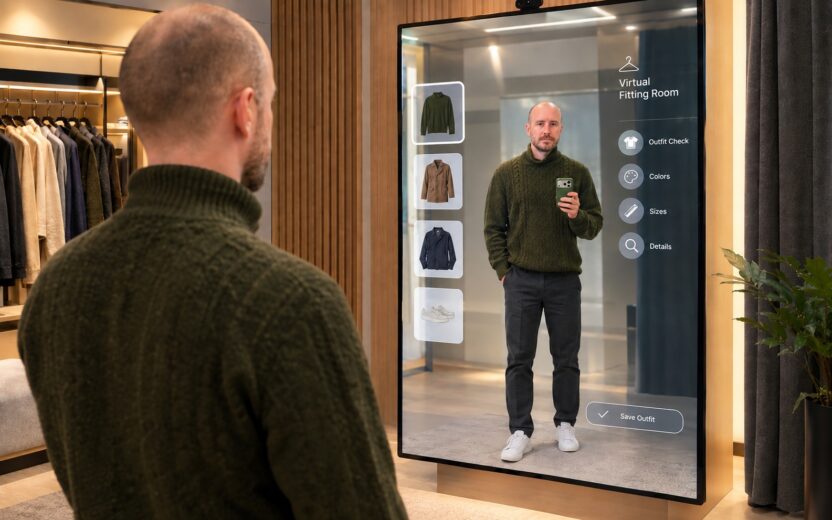

Customer Experience September 18, 2026
From webshop to virtual try-on: how AI is making its way into retail stores
Digital interfaces such as smart mirrors turn AI in the store into a tangible business case. What potential does this hold for the customer experience and in-store personalization? Matthias Vollmer explains how the retail industry can combine the best of both worlds and turn physical touchpoints into an intelligent part of the omnichannel journey.
From webshop to virtual try-on: how AI is making its way into retail stores
Digital Marketing September 3, 2026
ChatGPT Ads: a new touchpoint in the customer journey
ChatGPT Ads bring advertising to a new stage of the customer journey. We explain how the new ad format works, where its strengths lie, and what role it could play alongside Google Ads, paid social, and organic AI visibility.
ChatGPT Ads: a new touchpoint in the customer journeyDon't miss a thing.
Subscribe to our latest blog articles.