Highlight

Successful together – our valantic Team.
Meet the people who bring passion and accountability to driving success at valantic.
Get to know usvalantic Viewpoint
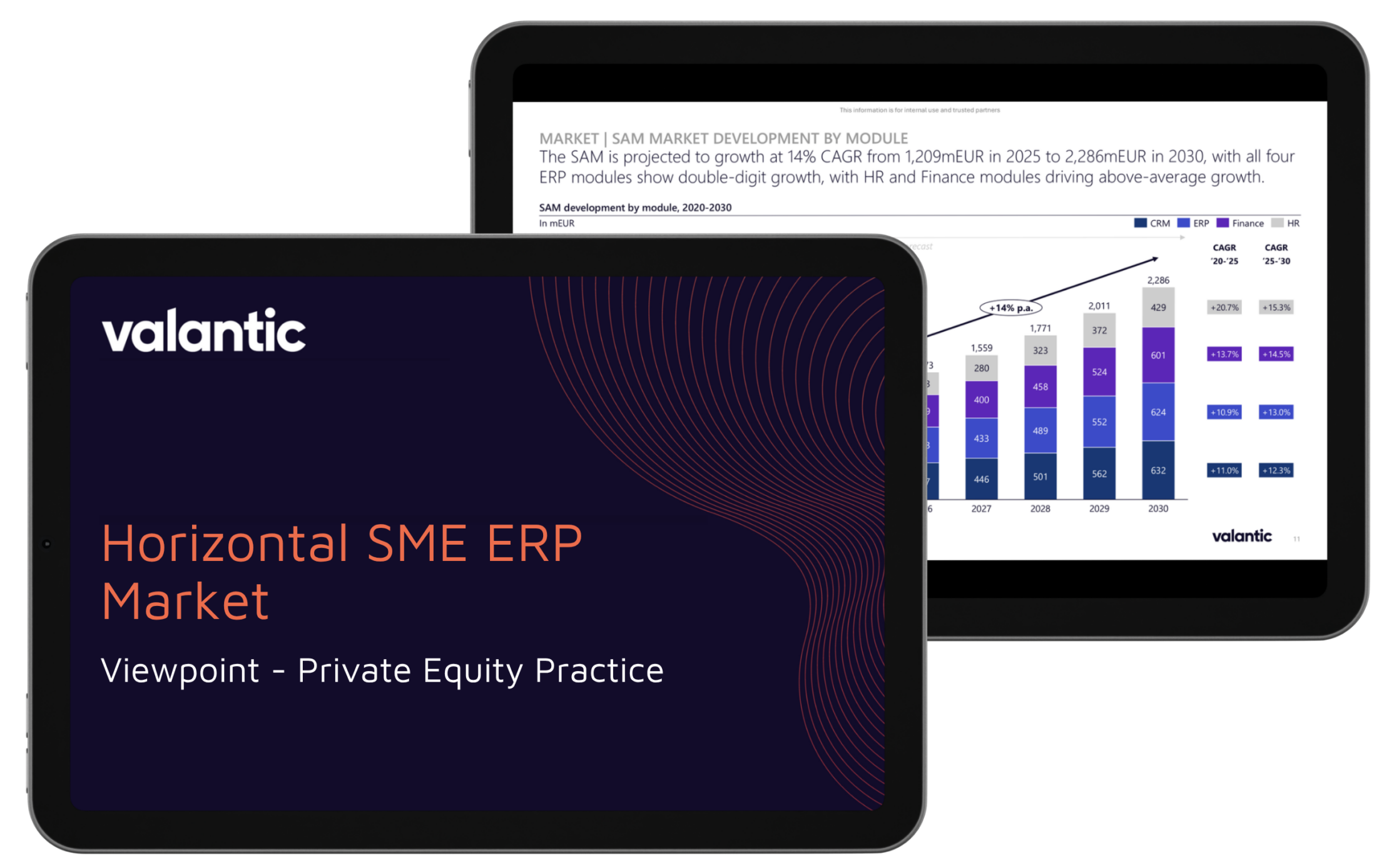
Germany’s horizontal SME ERP market is set to nearly double by 2030. See how ERP adoption, customer lock-in and AI reshape vendor economics.
This is an excerpt of our viewpoint on the German horizontal SME ERP market. Get in touch if you would like to learn more about the market dynamics, business models, competitive landscape, impact of AI and growth drivers in this market.


~14% CAGR
projected market growth between 2025 and 2030
86%
of surveyed SME users rate ERP switching effort as high
+10-20%
price upside per customer from today's AI features alone
Executive Summary
Germany’s horizontal SME ERP market is worth ~1.2bnEUR in 2025 and is projected to reach ~2.3bnEUR by 2030, growing at ~14% CAGR. First-time ERP adoption among underserved SMEs is the main engine, supported by the labor shortage, SaaS models that lower implementation barriers and e-invoicing mandates. Once installed, systems stay in place for a decade or more, because finance modules and German compliance requirements make switching a high-risk decision.
The DACH vendor landscape is fragmented across more than 300 vendors. Compliance depth shields established vendors from AI-native entrants, but the gap between AI-progressive players and legacy vendors on aging stacks is widening. Lock-in protects installed bases, while first-time adopters, the largest growth pool, choose on usability and AI readiness. AI puts pressure on seat-based licensing and implementation fees while opening new usage- and outcome-based revenue pools. Vendors that combine targeted verticalization, a convincing AI roadmap and a timely shift to SaaS are best placed to capture more than their share of growth and represent the most attractive targets for investors.
First-time ERP adoption among underserved SMEs drives ~60% of market growth.
Compliance-driven lock-in shields established vendors from AI-native entrants, while the gap between AI-progressive and legacy players widens.
AI shifts ERP monetization from seat-based licenses towards usage- and outcome-based pricing.

Christoph Nichau
valantic Partner & Managing Director
”Our data reveals that vendors shifting from seat-based to usage-based pricing early can turn AI into net revenue growth.“
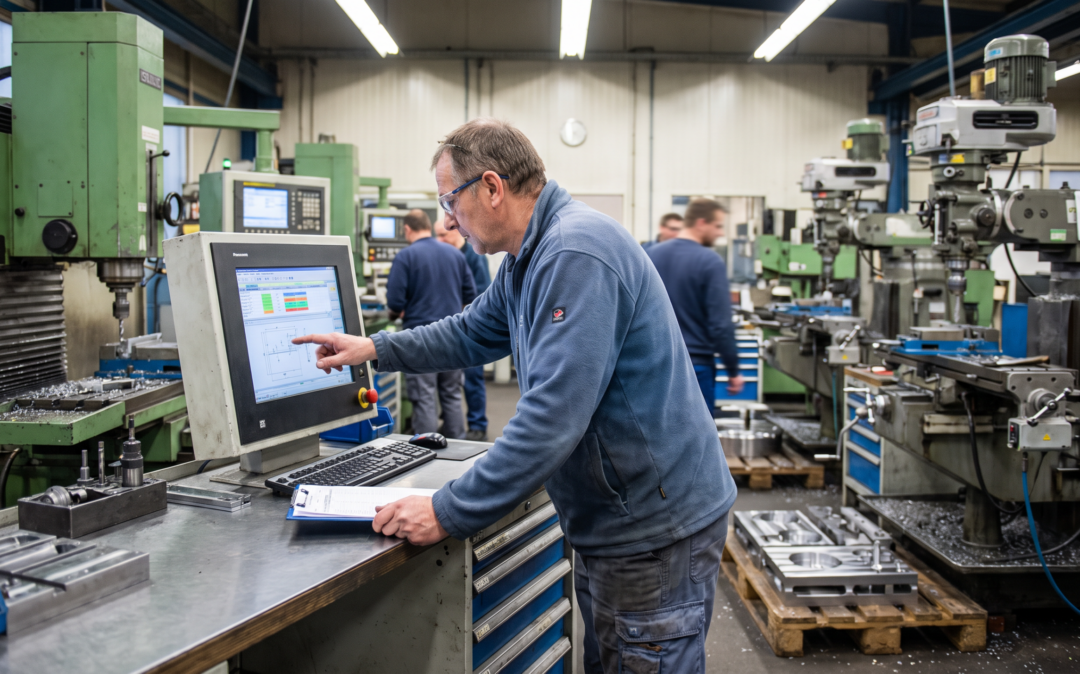
The horizontal SME ERP market in Germany is going through a structural change. The shift from on-premise to SaaS is speeding up: cloud penetration is expected to rise from ~25% of deployments in 2025 to ~45% by 2030, as SMEs look to get rid of server hardware, IT maintenance and manual updates. E-invoicing mandates phase in between 2025 and 2028 and force SMEs to digitize invoicing; for many, the switch becomes the trigger to adopt an integrated system. Legacy on-premise vendors are under growing pressure, because aging stacks struggle to deliver AI capabilities or multi-tenant economics, and this opens the door to consolidation. AI cuts both ways: it erodes classic per-seat licensing while enabling outcome-based monetization through agents that take over back-office tasks. Cloud-native vendors also build advantages that compound over time from anonymized data pooled across customers.
Key Takeaways:
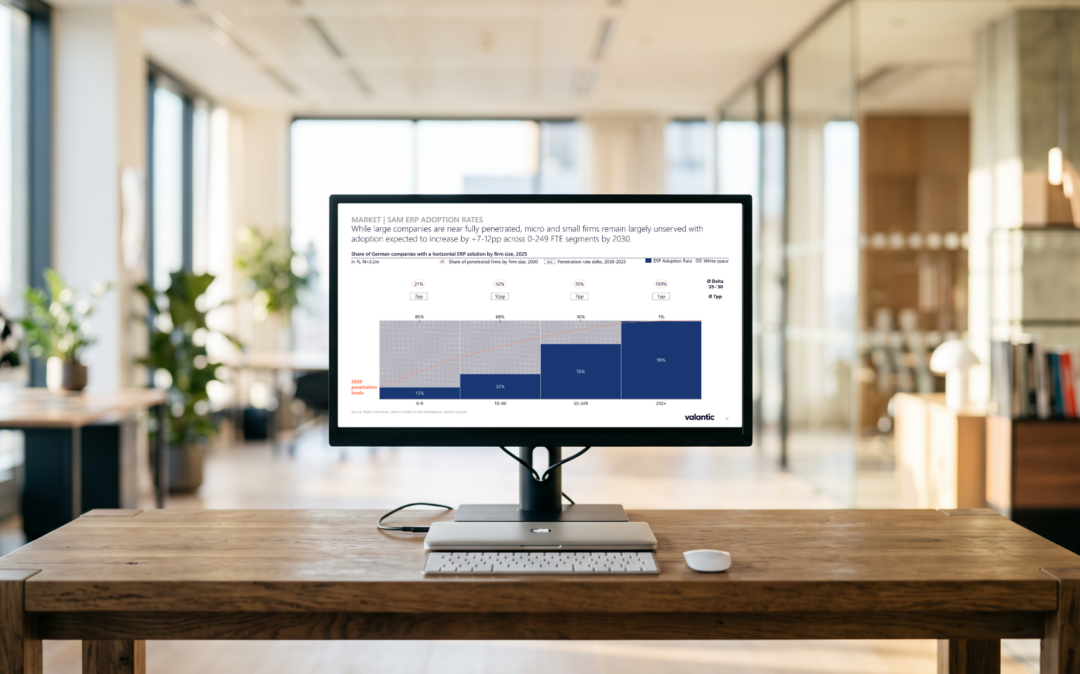
Growth in the horizontal SME ERP market comes mainly from new adoption, not from displacing competitors. Adjusted for industries and modules addressable by horizontal ERP, the ERP adoption rate across German companies is projected to rise from ~13% in 2025 to ~19% by 2030, which accounts for around 60% of total market expansion; the remainder comes from rising revenue per customer and a growing company base. The biggest whitespace is among micro firms with fewer than ten employees, ~85% of which still work without a horizontal ERP solution, while mid-sized companies with 50 to 249 employees account for most of the absolute volume. Three structural catalysts support this demand. The labor shortage and margin pressure force SMEs to automate back-office processes. SaaS models lower implementation barriers. E-invoicing mandates turn compliance into a buying trigger. For customers, usability is the most important selection criterion, ahead of integration and support. Buyers are also increasingly open to AI, even though most still see their current vendor as having limited AI capabilities. The demand is there, but vendors with a credible offer still need to activate it.
Key Takeaways:
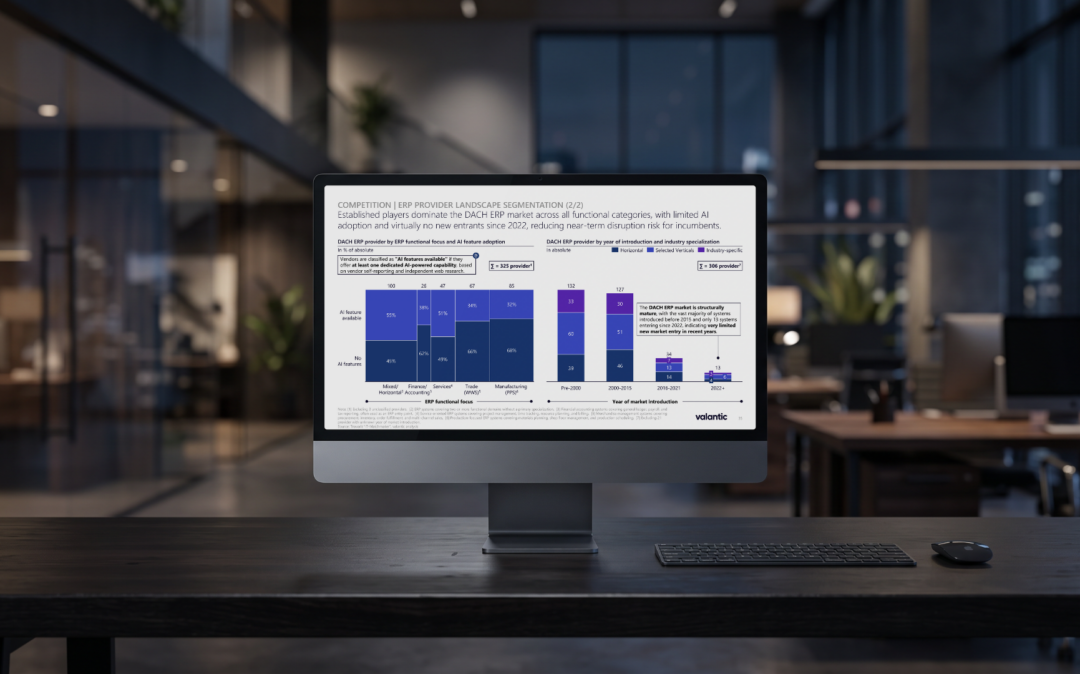
Our vendor database covers 328 DACH ERP vendors, of which ~80 compete as horizontal full-suite players for SME customers. Six groups define the market:
The vendor structure is stable: few new systems enter, and installed systems stay in place for a decade or more. AI-native entrants pose no credible near-term threat, because German compliance requirements raise the bar. The bigger risk comes from AI-progressive established players pulling further ahead of legacy vendors.
Key Takeaways:
Horizontal SME ERP vendors usually earn money from a mix of licenses or subscriptions, maintenance and one-off implementation and customization services. More than half of SME customers still run on traditional license and maintenance models, so the SaaS migration still has a long way to go. The value chain depends heavily on industry-savvy sales teams and partner ecosystems. Winning a customer takes three to six months, and implementations often run six to twelve months. Once installed, systems tend to stay in place for ten years or more. Finance is the most widely adopted module and anchors retention, because DATEV, ELSTER, GoBD and e-invoicing requirements make migration a high-risk decision. Customers with an integrated finance module churn up to three times less often than those without one. In smaller firms, bookkeeping often sits with tax advisors working in DATEV, so the finance-module anchor is strongest in larger SMEs. Pricing structures and packaging vary widely, and industry-specific tiers are common. Verticalized offerings typically earn a premium of 20-30% over horizontal solutions, rising to as much as 100% in highly regulated industries such as pharma and medtech.
Key Takeaways:

Vendors that want to grow faster than the horizontal SME ERP market have four levers. The first is AI monetization. Our analysis groups AI features into three levels: must-have back-office functions such as automated invoice processing, module-specific point features such as automated quoting in CRM, and horizontal assistants such as copilots that work across modules. Willingness to pay rises with measurable business impact, above all saved headcount, while customers compare simple assistants with low-cost general AI tools. Beyond these levels, agents that take over complete back-office tasks, starting in finance and accounting, offer the largest upside. Only ≈14% of German ERP vendors offer AI copilots today, which leaves room for differentiation. The market projection already reflects AI conservatively through annual list price increases of about 6-7% per module, which experts partly attribute to AI features, while a mix shift towards smaller customers dampens average revenue per customer. Expert interviews point to further upside: today’s AI features support price increases of 10-20%, and agents could capture considerably more through usage- and outcome-based pricing, offsetting pressure on seat-based licenses and service fees. The second lever is verticalization: targeted go-to-market plus industry-specific features that support premium pricing. The third is moving the installed base to SaaS, which standardizes pricing and, once completed, raises switching costs. Finally, the fragmented landscape offers buy-and-build potential, as legacy vendors facing costly re-architecture become consolidation targets for well-funded cloud-native platforms.
Key Takeaways:
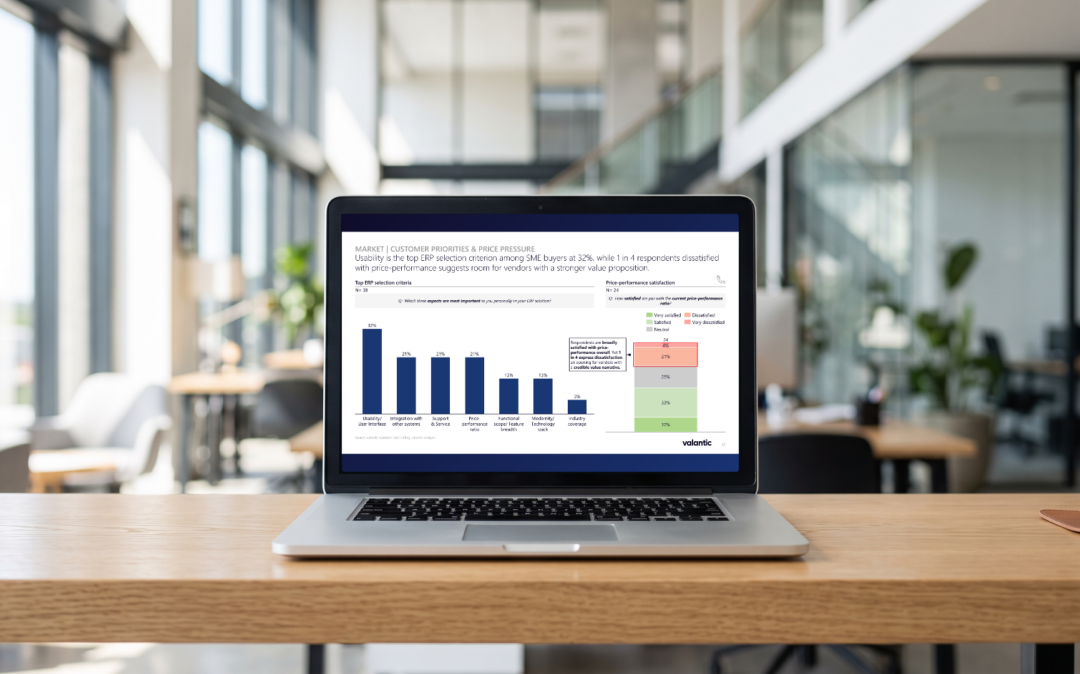
Want the full breakdown? The full viewpoint on the Horizontal SME ERP market is available on request. The typical scope includes market size, market trends and drivers, competitive landscape and competitor benchmarks, business models, impact of AI and growth levers.

Christoph Nichau
Partner & Managing Director
Private Equity Practice

Jan Dingerkus
Partner & Managing Director
Private Equity Practice

Khalid Ouaamar
Managing Director
Private Equity Practice