Highlight

Successful together – our valantic Team.
Meet the people who bring passion and accountability to driving success at valantic.
Get to know usvalantic Viewpoint
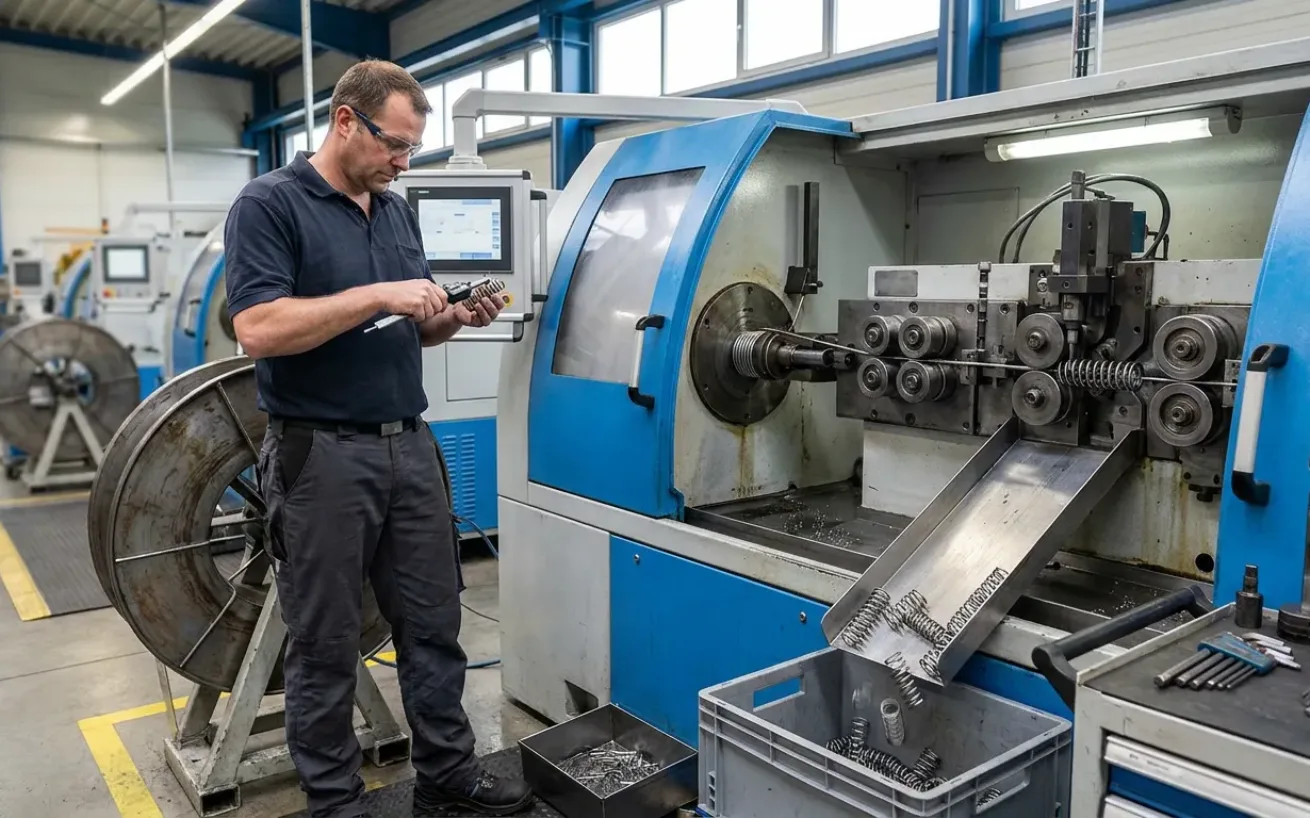
Growth in demand for technical springs is driven by medical self-injection devices, electrified grids and building electrification, as well as comfort features in furniture and appliances. Each spring is qualified into the customer’s product and production line, so suppliers that win a program usually keep it for years, turning a low-cost part into recurring business.
This is an excerpt of our viewpoint on Custom Technical Spring Manufacturing in Germany and the DACH region. Get in touch if you would like to learn more about the market dynamics, business model, competitive landscape and growth drivers in this market.

~2.3% CAGR
expected growth of German demand for cold-formed technical springs, 2025 to 2030
~2.6bnEUR
EU27 demand for cold-formed technical springs
70+
smaller regional custom spring makers in DACH
Executive Summary
Springs cost little, yet in autoinjectors, soft-close fittings and circuit breakers their failure costs far more than the part. That imbalance shapes the economics of custom technical spring manufacturing. After two weak industrial years, German demand stabilized in 2025 and now follows end markets with structural momentum: self-injection therapies, grid and building electrification, and comfort features in furniture and appliances.
Automotive remains a large volume base but adds little growth. Supply is fragmented, and specialists differentiate through finishing, cleanliness and line-ready services rather than coiling itself. The strongest levers lie in widening the core offering and reaching customer programs beyond Germany.
Requalification effort in validated applications typically keeps qualified spring suppliers in place for a product's full lifecycle.
Proximity to customer plants matters, as buyers favor qualified European suppliers over cheap imports.
Consolidation among DACH custom spring makers is underway and likely to intensify competition for targets.


Jan Dingerkus
valantic Partner & Managing Director
”We found that the greatest upside for spring platforms lies in medical certifications and reach beyond Germany.“
German demand for cold-formed technical springs fell by ~2.7% p.a. between 2023 and 2025, as output weakened in electrical equipment and motor vehicles. Compression springs and wire forms, the two largest product groups, absorbed most of the decline. Our forecast sees demand returning to growth of ~2.3% p.a. and reaching ~1.2bnEUR by 2030, above its 2023 level. Growth differs by product type: springs for soft-close mechanisms, switchgear and drug-delivery devices outpace the average. For investors, portfolio mix decides whether a spring maker grows faster than its market.
Key Takeaways:
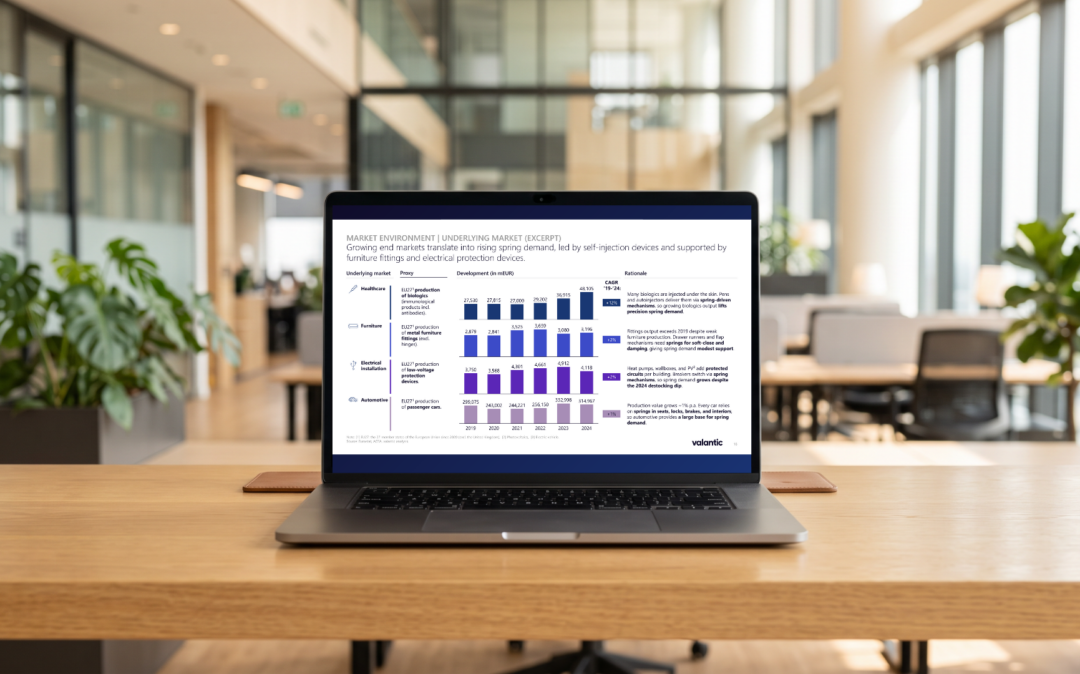
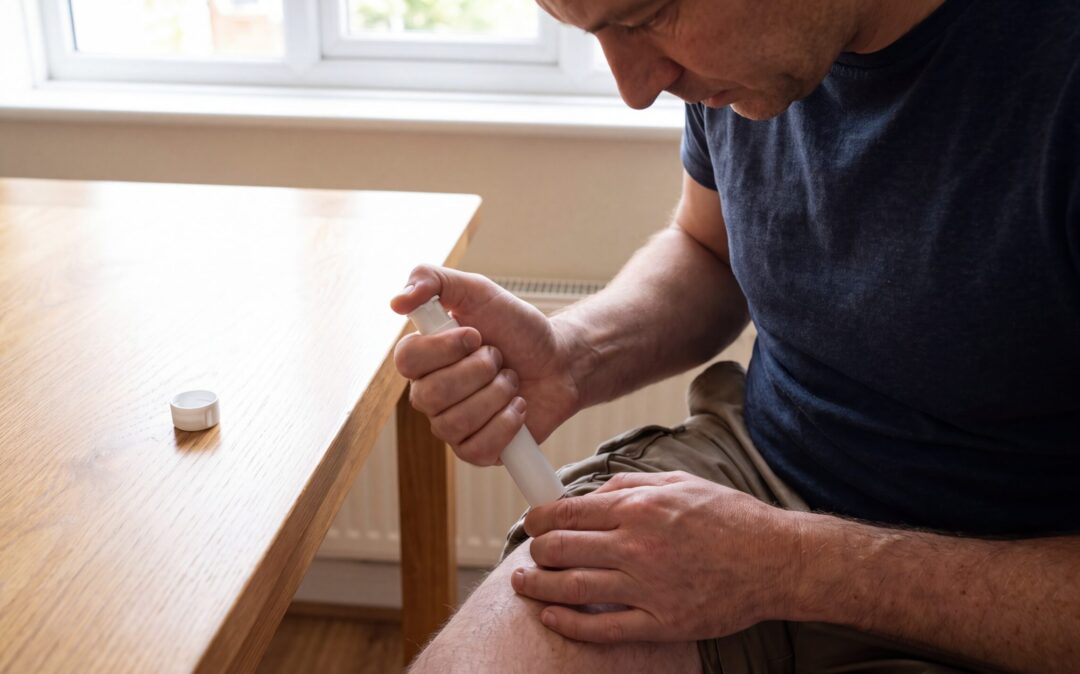
Spring demand moves with the products springs sit in. Self-injection is the strongest driver: more patients administer therapies at home, for chronic diseases and weight loss, and every autoinjector relies on a drive spring and a needle-guard spring. Electrification follows, as grid expansion, heat pumps, wallboxes and solar add protected circuits and spring-driven breakers. Comfort features such as soft-close drawers and damped flaps spread from premium into mid-range furniture and appliances. Automotive is the counterweight: European car production has plateaued, and electric drives need fewer springs. On the cost side, EU steel protection and the carbon border levy keep spring wire expensive, so the ability to pass on surcharges becomes a margin question.
Key Takeaways:

Daniel Meyn
Director, Private Equity Practices
”We saw that the fastest-growing end markets reward custom series specialists far more than catalog suppliers.“
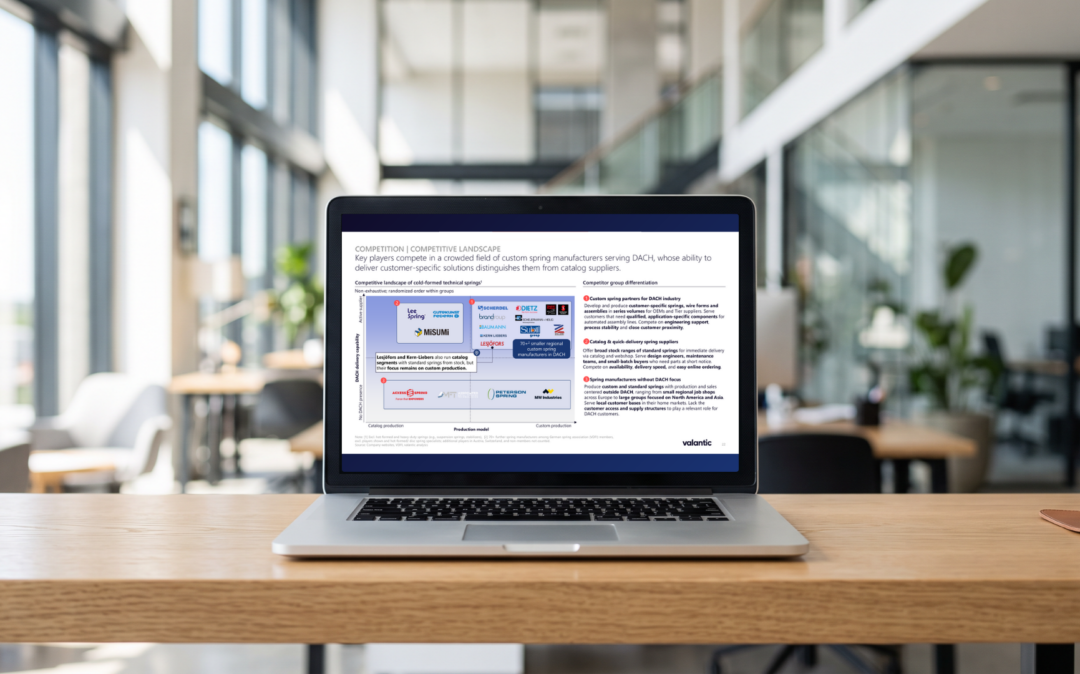
Competition in custom technical spring manufacturing for DACH customers splits into three groups. The most relevant are custom spring partners for DACH industry, including Scherdel, Baumann, Kern-Liebers, Lesjöfors, Scheuermann + Heilig, Brandgroup, Dietz, Sauter Group, Subtil Group and Ziller, complemented by a long tail of smaller regional specialists. They develop customer-specific springs, wire forms and assemblies in series volumes and compete on engineering support, process stability and proximity. Ownership is traditional: eight of ten benchmarked players in this group are family-owned. Catalog and quick-delivery suppliers such as Lee Spring, Gutekunst Federn and MISUMI form the second group. They sell standard springs from stock via webshops to design engineers and maintenance teams and win on availability and speed rather than customization. The third group covers custom spring manufacturers without a DACH focus, from regional job shops elsewhere in Europe to large groups centered on North America and Asia, such as MW Industries, Peterson Spring and Acxess Spring. They lack the local access and supply structures DACH customers expect. Within the custom group, downstream services separate leaders from followers: only four of ten benchmarked players offer feeding-ready packaging for automated assembly.
Key Takeaways:
The typical business model is B2B series supply of customer-specific springs, bent wire and stamped parts, mostly built to print and delivered from Tier 2/3 suppliers up to OEMs. Requirements definition and just-in-time, Kanban or consignment logistics are table stakes. Specialists stand out in spring design, precision series production and value-added services such as cleanroom packaging and assembly. In production, CNC coiling is industry standard, while heat treatment, shot peening, washing and feeding-ready packaging determine force stability, fatigue life and cleanliness. Customers pay for that downstream performance.
Key Takeaways:


Maximilian Bischopink
Senior Consultant
”Our analysis showed that a convincing equity story in springs combines proven process quality with a credible buy-and-build plan.“
Substitution is not a material risk: polymer, composite, shape-memory and 3D-printed alternatives remain limited by load capacity, cost or scalability. Growth therefore comes from widening the core. Medical-grade certifications and micro springs are the most accessible levers and shift the mix toward higher-value volume at moderate effort. Geographic reach offers a larger prize: around 1.5bnEUR of EU27 demand for the same spring types sits outside Germany, and customers prefer qualified suppliers close to their plants. Building that footprint, like adding hybrid metal-plastic assemblies, typically requires acquisitions or capex rather than organic build-up.
Key Takeaways:

Want the full breakdown? The full viewpoint on the Custom Technical Spring Manufacturing Market is available on request. The typical scope includes market size, market trends & drivers, competitive landscape, competitor groups, competitor benchmarks, explanation of the business model.

Jan Dingerkus
Partner & Managing Director
Private Equity Practice

Khalid Ouaamar
Managing Director
Private Equity Practice

Christoph Nichau
Partner & Managing Director
Private Equity Practice