Highlight

Successful together – our valantic Team.
Meet the people who bring passion and accountability to driving success at valantic.
Get to know usMunich, June 02, 2026: Combining the performance of international hyperscalers with central sovereignty criteria: This is a strategic goal that many companies in Germany are currently pursuing. They want to expand their IT infrastructure in Europe and thus become less dependent on US hyperscalers in particular, as the new study “Sovereign hypercloud – between trust, control and geopolitical change” by digital consultancy valantic shows. How exactly do modern cloud services need to be structured in order to meet the new market requirements? These and other questions were answered by 212 decision-makers from companies with 1,000 employees or more.
Geopolitical tensions, an unpredictable US trade policy and concerns about extraterritorial data access have turned digital sovereignty from a compliance issue into a strategic boardroom topic. Four out of five respondents (80 percent) state that they are expanding their IT infrastructure in Europe in light of these challenges. At the same time, 72% confirm a structural dependency on hyperscalers – particularly in terms of performance, stability and cost-effectiveness. It is clear that hyperscalers are not being fundamentally called into question, but the framework conditions for their use are changing.
According to the survey, companies have clear priorities when it comes to cloud decisions: The most important criteria are performance and stability during peak loads. This is directly followed by data sovereignty and EU sovereignty, which are also clearly more important than scalability and costs. Sovereignty is therefore not a “nice to have”, but a key decision criterion, at least as important as technical performance.
Many companies are currently caught between a rock and a hard place: 73% are prepared in principle to use US public clouds for critical data. However, if sovereign hypercloud offerings from European providers offered a comparable level of security, 64% would prefer them.
The willingness to migrate is generally high. 51% are planning a partial transfer of their workloads to sovereign hypercloud models, 21% are considering a complete switch and a further 18% are considering the move. Only nine percent categorically rule out public cloud for sensitive workloads.
At the same time, there is a pronounced lack of orientation: 73% of survey participants see the US CLOUD Act as a major risk, while 69% criticize the lack of an overview of sovereign offerings. There is currently no clear perception leader here. Microsoft and Telekom/T-Systems are seen as potential sovereign cloud providers by 42% each, Google by 41% and AWS, IBM and IONOS by around a third each.
In order for sovereign hyperscaler offerings to prevail, the survey participants believe that they must meet a clearly defined set of criteria: First and foremost is end-to-end encryption, followed by sovereign cloud certifications, a clear EU data boundary and EU-only operations with European support.
Sovereignty is not understood as a single measure, but as a multi-layered trust architecture consisting of technical, organizational and legal protection mechanisms. A large majority also expects a sovereign single hypercloud to significantly reduce the costs of today’s hybrid and multi-cloud landscapes.
“The idea of a sovereign hypercloud is not an ideological counter-movement to the existing offerings of the large hyperscalers – it is their logical further development under European auspices,” says Dr. Robert Klimke, Director Advanced Cloud Solutions at valantic. “Our study shows that companies do not want less cloud performance, but more control over who can access their data and under what conditions. Those who credibly solve this balancing act will shape the cloud architecture of the next decade.”
For this study, techconsult GmbH conducted an online survey of 212 decision-makers and managers actively involved in cloud strategy from large German companies in March 2026. All participants are involved in cloud architecture and provider decisions in their organization in a main, co-decisional or advisory capacity. The survey only covers companies with 1,000 or more employees in Germany.
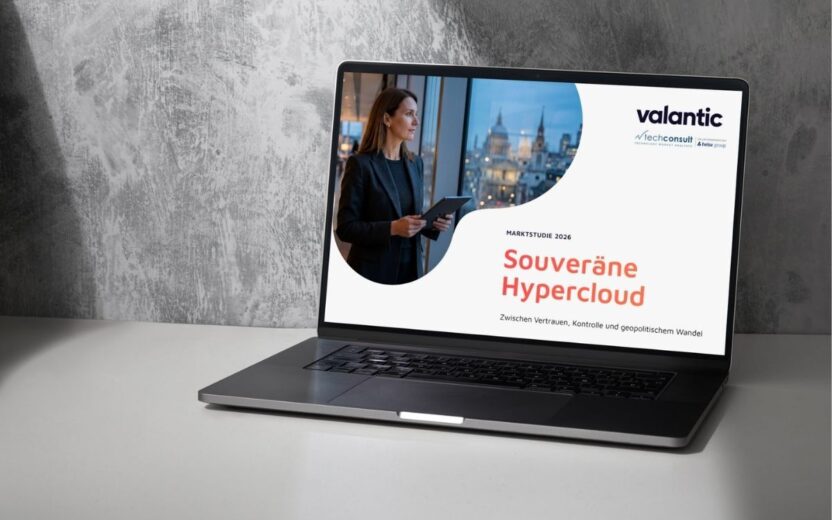
Download the full study report free of charge (German)
212 IT and business decision-makers from large German companies shared their views on hyperscaler dependency, cloud decision-making processes and willingness to migrate.
Source: valantic
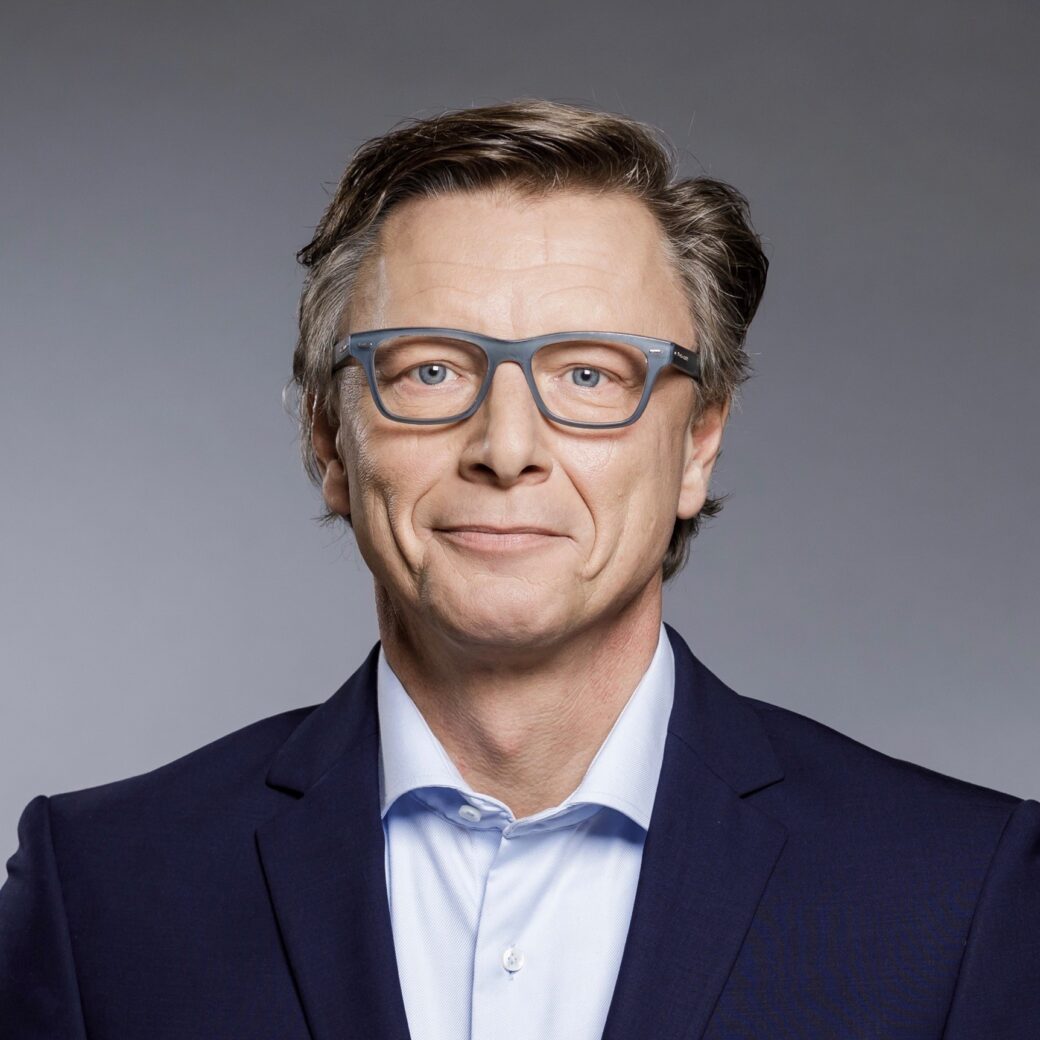
"Logical further development under European auspices": Dr. Robert Klimke, Director Advanced Cloud Solutions at valantic