Highlight

Successful together – our valantic Team.
Meet the people who bring passion and accountability to driving success at valantic.
Get to know usDPP: Prepare now and implement with regulatory certainty
The Digital Product Passport (DPP) will become mandatory for an increasing number of products across the EU in the coming years. Companies are therefore required to capture, manage, and continuously update product-related sustainability, material, and compliance data in a structured way throughout the entire product lifecycle. valantic supports you in implementing the DPP from a strategic, technical, and organizational perspective – pragmatically, in full regulatory compliance, and with a future-proof approach.

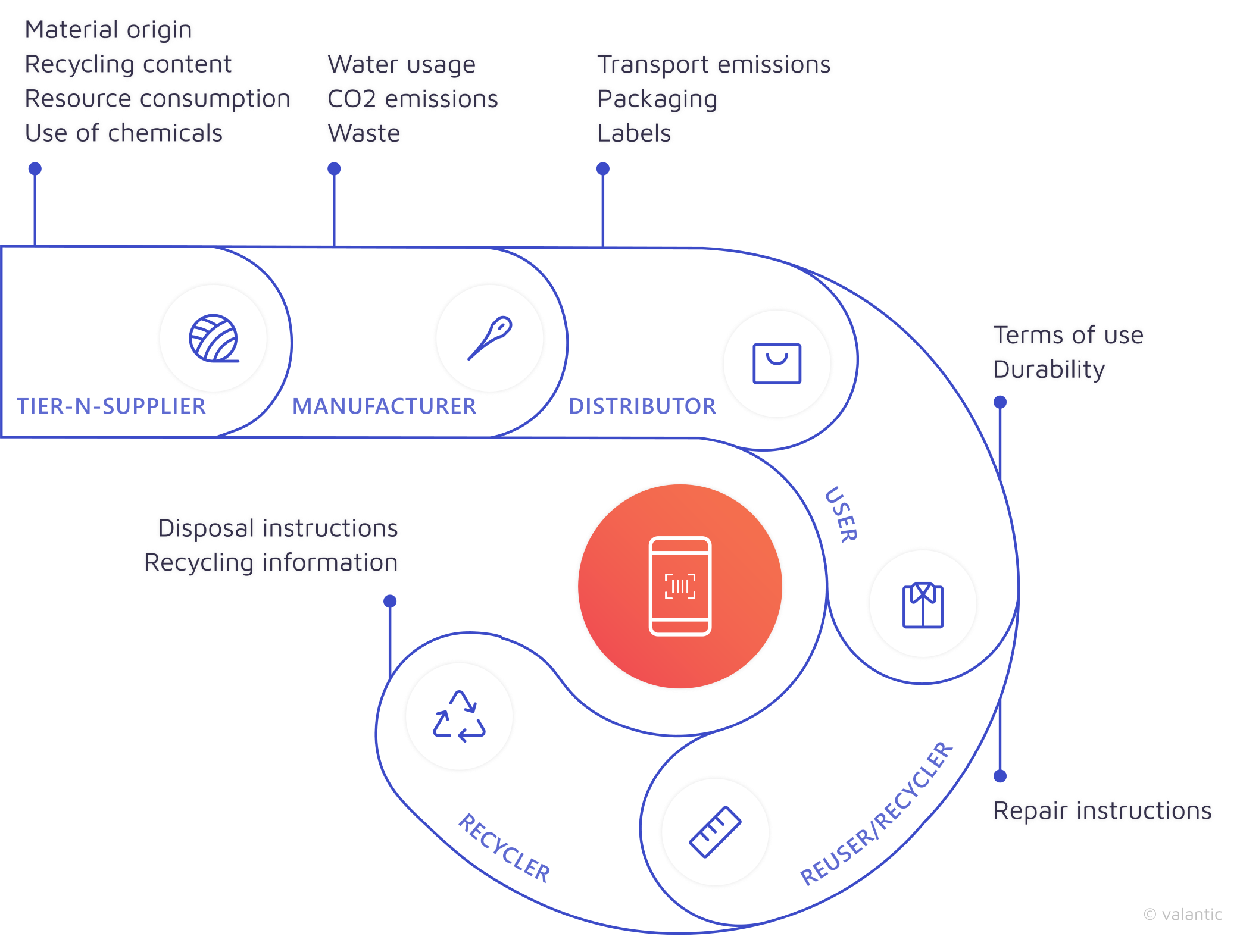
The Digital Product Passport (DPP) is a key instrument of the EU Ecodesign Regulation (ESPR) and part of the European Green Deal. It provides digital access to product-related information across the entire lifecycle – including data on materials, carbon footprint, reparability, and recyclability.
The DPP aims to enhance product sustainability by improving:

The DPP does not define a single, fixed dataset; rather, it establishes a structured information space around the product. It brings together material data, environmental indicators, compliance information, and lifecycle-related data within a transparent and standardized framework.
Materials & product composition
Environmental data
Origin information
Compliance information
Packaging information
Product life cycle and performance
Who is affected by the Digital Product Passport?
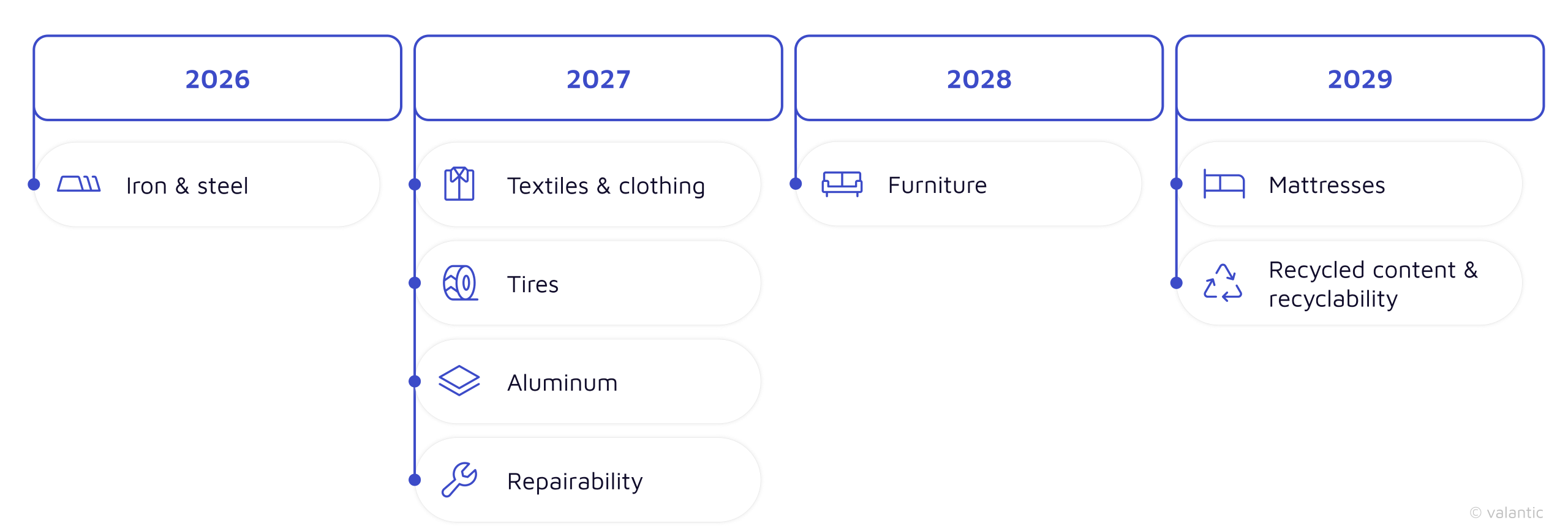
The DPP will be introduced gradually through delegated acts, either at the level of individual products or across entire groups of comparable products. An initial work plan defines six product groups as well as two horizontal requirements, all of which are to be implemented by 2030.
As a result, the rollout will be phased over time. However, the need for structural preparation already affects nearly all product-oriented companies. The real challenge lies not in the timing of the formal obligation, but in building robust and scalable product data structures.
Why is it worth starting early?
Although implementing the DPP requires effort, it is far more than a regulatory obligation. A strategic approach creates tangible added value:
Starting early allows companies not only to implement the Digital Product Passport in isolation, but to leverage it as a driver for sustainable product data and governance structures.
We support you by analyzing your product portfolio, assessing regulatory requirements, and identifying the structural measures that can already be implemented today.
Our approach to DPP implementation
From regulatory obligation to a sustainable DPP architecture
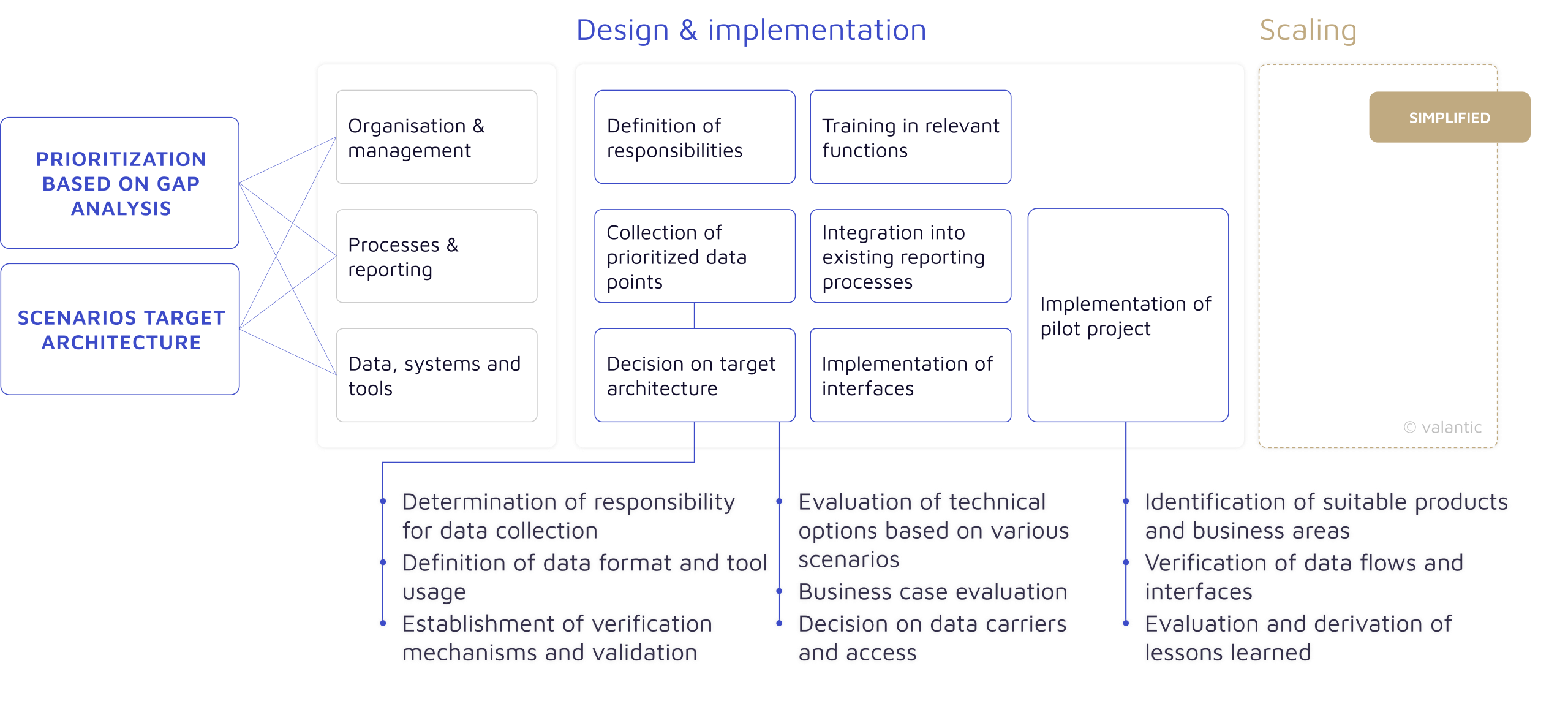
Successfully implementing the Digital Product Passport requires more than technical adjustments alone. It calls for regulatory clarity, robust data structures, and clearly defined responsibilities. That is why we follow a structured and pragmatic approach that aligns regulatory requirements with business realities:
Throughout the process, we keep a close focus on which DPP requirements are truly relevant to your business – and which are not.
1. DPP Impact Analysis
We assess whether, when, and to what extent your product portfolio is affected by the DPP. Rather than evaluating your company in isolation, we consider its position within the entire value chain, taking into account regulatory requirements, industry-specific delegated acts, and your role within the ecosystem.
The result is a clear assessment of your DPP obligations, including a defined timeline and prioritized areas for action.
2. Gap Analysis
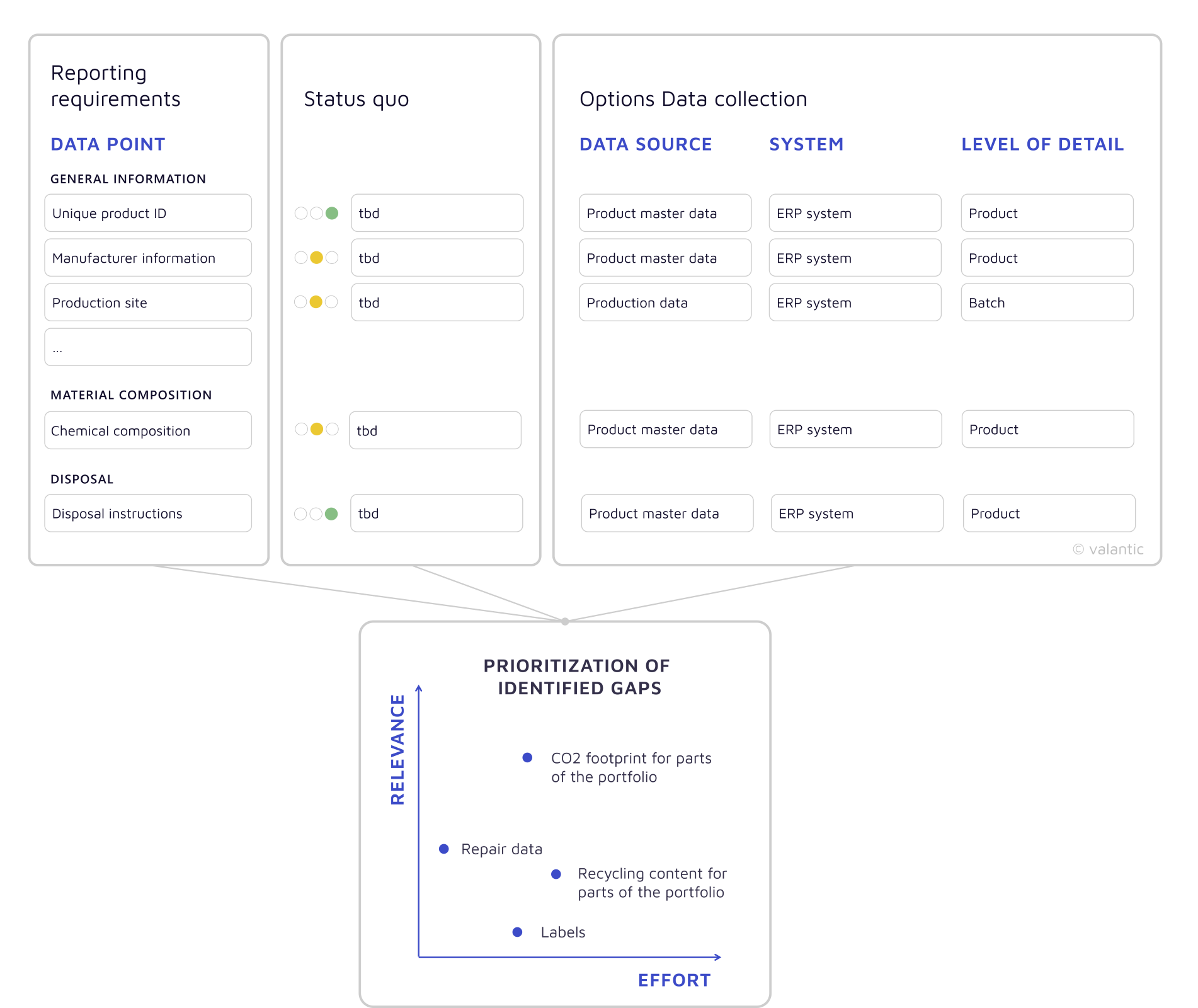
Based on regulatory requirements, we assess which DPP-relevant data is already available within your organization and identify any existing gaps. This includes product, process, and IT-related information.
The gap analysis provides the foundation for a realistic and prioritized DPP roadmap.
3. Definition of the DPP Target Architecture
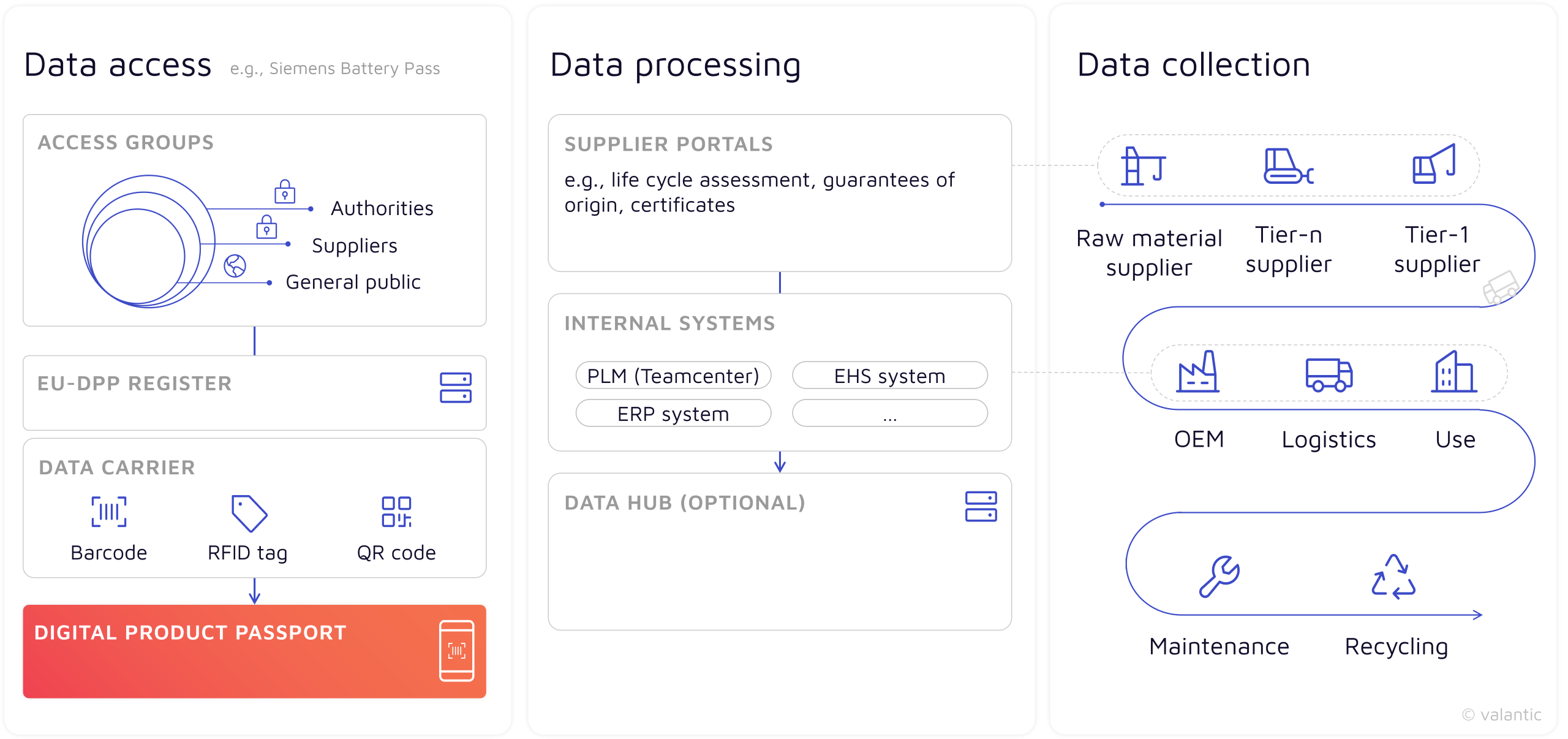
Together, we define a company-specific target architecture for the DPP.
4. Technical & Organizational Implementation
We support you in implementing suitable IT solutions, designing data models, and integrating the DPP into your existing system landscape. At the same time, we help establish clear processes and governance structures.
Our approach is deliberately tool-agnostic and aligned with your existing systems.
Why valantic is the right partner for the Digital Product Passport
The DPP is not a standalone sustainability or IT topic. Its requirements sit at the intersection of regulation, data, processes, and technology – and this is exactly where valantic adds value.
We support companies holistically throughout the entire DPP implementation journey – from initial assessment to operational execution.
Our approach enables companies to:
Make product data usable for the DPP
Much of the information required for the Digital Product Passport is already available within existing systems. Product Lifecycle Management (PLM) systems, in particular, can provide up to 80% of the relevant product data. We help you structure this data effectively and complement it where needed.
Reduce complexity and implement DPP requirements pragmatically
Rather than creating isolated solutions, we follow a tool-agnostic approach and design a system architecture that integrates seamlessly into your existing IT landscape. This avoids unnecessary redundancies and ensures a scalable foundation for the DPP as well as future regulatory requirements.
Leverage the DPP as part of the customer experience
Going forward, the DPP will become an important touchpoint in customer interactions. We support you in integrating DPP information into your digital customer processes and using transparency as a source of added value.
The Digital Product Passport is coming – the question is not if, but when and how.
We support you in gaining clarity early on and staying in control of your next steps.
Let’s talk about your DPP challenges.
Your contact persons

Jan Laakmann
Partner
valantic

Marco Fuhr
Managing Consultant
valantic

Dr. Jens Lehnen
Principal
valantic

Sebastian Badaghlou
Partner & Managing Director
valantic