Highlight

Successful together – our valantic Team.
Meet the people who bring passion and accountability to driving success at valantic.
Get to know usApril 7, 2026
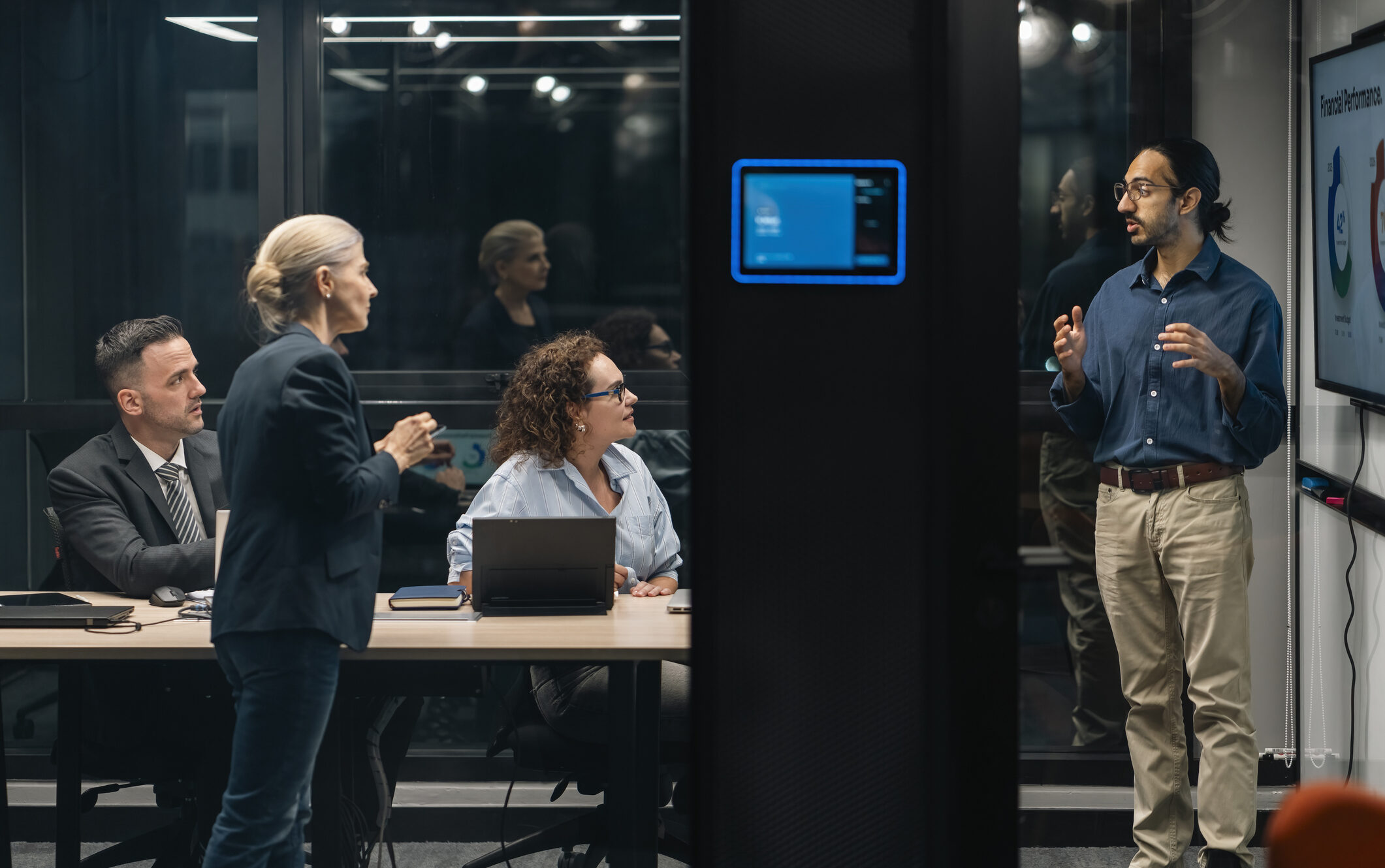
40% avoidable operating costs, 50% longer service delivery times, frustrated customers and teams stuck in manual escalation loops – this is the reality for many telecoms companies today. The cause? Not a lack of technology, but systemic fragmentation.
Despite numerous tools, automation initiatives and selective efficiency gains, one decisive lever often remains unused: end-to-end orchestration of business processes across all systems.
This article shows why process orchestration is business-critical today, which structural blockades are slowing down telcos – and how a pragmatic approach can unlock measurable business value.
Telcos are at a turning point. Customers expect fast, flawless services – but product landscapes, networks and partner models are becoming increasingly complex. Process chains in fulfillment, assurance, billing and care have been fragmented for years, and the consequences are clearly noticeable:

”You can't successfully automate a bad process. If a process is no longer up to date, AI will only digitize the problem.“
This is exactly where Agentic AI comes in: Based on orchestrated end-to-end transparency, it takes over dynamic prioritization and decision-making in real time. Important for the business context: the AI operates within firmly defined business guardrails. It only makes decisions where it is safe to do so and escalates complex borderline cases immediately to human experts. Instead of just executing workflows, the system actively steers towards defined goals such as SLA, OPEX or customer satisfaction.
The key question is therefore not whether to orchestrate, but when and how consistently.
Process orchestration is not primarily about technology, but about efficiency, transparency, control and scaling – regardless of the system used. End-to-end orchestration creates a common process logic across all systems, makes workflows measurable and ensures that processes can be actively controlled.
Before automation can scale, there are three basic requirements: clear end-to-end process models, defined business logic across system boundaries and complete transparency regarding KPIs, bottlenecks and performance. This is exactly what an orchestrated process architecture provides.
The results of consistent process orchestration are clearly quantifiable. Experience from valantic projects and industry studies show typical improvements:
| Metric | Typical Improvement |
|---|---|
| OPEX reduction | Up to 40% through elimination of redundant interface and rework processes |
| Throughput | +50% thanks to consistent end-to-end process chains |
| Process quality | Significant improvement through real-time monitoring and automation governance |
| Return on investment | Less than 12 months for focused pilots |
| Operating costs | Up to 25% lower costs thanks to cloud-native operating models |
These figures prove that orchestration makes business value visible, raises it systematically and pays off comparatively quickly.
Our projects with European Tier 1 and Tier 2 telcos demonstrate measurable business value along the entire value chain – from fulfillment to assurance and billing. Our goal: to understand where the customer stands and where the journey is heading.
Most telcos today move between isolated automation and partially orchestrated processes – but silos prevent scaling. valantic enables telcos to take the step towards end-to-end orchestration and adaptive automation, where efficiency translates into real economies of scale.
We analyze the current maturity level, identify manual breaks, bottlenecks and OPEX drivers and quantify the greatest value levers. This creates the basis for fact-based prioritization.
We implement an end-to-end pilot in a clearly defined high-impact process that delivers concrete improvements within a few weeks. This results in a resilient business case and a well-founded decision to ‘scale or stop’.
We are building on the success of the pilot and scaling the orchestration to other domains. In doing so, we are establishing a modern operating model and a Center of Excellence. This serves as the organizational backbone for sustainable automation and the controlled use of agent-based decision-making logic – so that efficiency gains remain permanently anchored in the business.
The result: a scalable, measurable and consistently orchestrated process landscape that increases efficiency, reduces OPEX and delivers real business value along the entire telco value chain.
Theory is good – practice is better. In our video, we show the result of adaptive automation, the highest level of digitalization in our process value journey.
The AI-supported diagnostic system developed by valantic aggregates data from various sources in real time, analyzes it and uses it for automated error diagnosis and correction. Complex processes are analyzed independently, data from several systems is linked together and solutions are derived automatically. This results in more efficient processes, fewer errors and significantly faster decisions.
If you would like to understand what specific OPEX reduction potential and business value lies dormant in your company or a sub-area, we will accompany you from the initial analysis through a non-binding workshop to implementation. Let’s take your process landscape to the next level together – with process orchestration that addresses your specific challenges and creates measurable added value.
Contact us for a no-obligation initial consultation and find out what potential lies in your processes.

Dirk Pöppelbuß
Director Telecommunications
valantic


Customer Experience September 18, 2026
From webshop to virtual try-on: how AI is making its way into retail stores
Digital interfaces such as smart mirrors turn AI in the store into a tangible business case. What potential does this hold for the customer experience and in-store personalization? Matthias Vollmer explains how the retail industry can combine the best of both worlds and turn physical touchpoints into an intelligent part of the omnichannel journey.
From webshop to virtual try-on: how AI is making its way into retail stores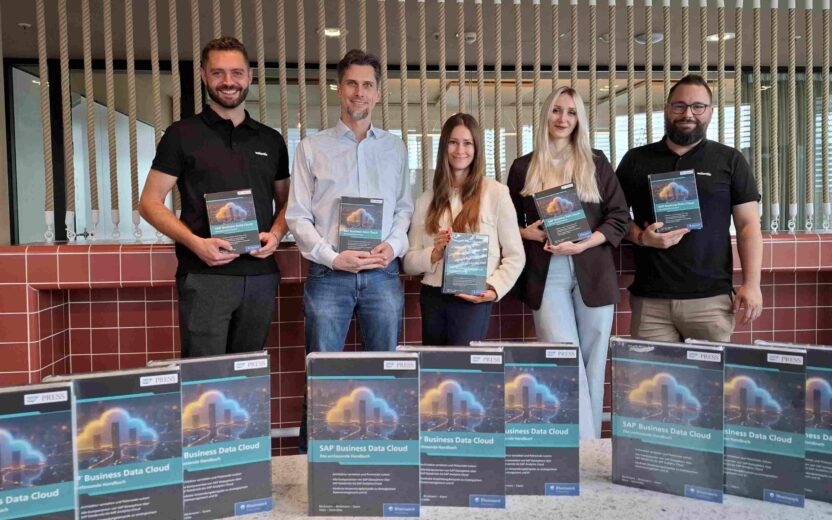
SAP Services September 17, 2026
The SAP BDC handbook: An interview on Business AI and data culture
Five valantic consultants wrote the SAP Business Data Cloud handbook. In this interview, they explain why SAP BDC is the enabler for business AI and why this book is a must-read.
The SAP BDC handbook: An interview on Business AI and data culture
Customer Experience August 27, 2026
Interview: How manufacturing stays digitally visible and AI-relevant
In the manufacturing sector, purchasing decisions are increasingly being made before the sales team is even involved. Designers, planners, maintenance technicians, and buyers conduct online research—and are increasingly receiving AI-generated responses. How can marketing teams at manufacturing companies ensure digital visibility and AI relevance? Answers and recommendations from the Manufacturing Practice.
Interview: How manufacturing stays digitally visible and AI-relevantDon't miss a thing.
Subscribe to our latest blog articles.