Highlight

Successful together – our valantic Team.
Meet the people who bring passion and accountability to driving success at valantic.
Get to know usvalantic viewpoint
An aging population is driving higher demand for complex specialty therapies delivered in outpatient and home-based care settings, creating a vertically integrated market shaped by strict regulation and ongoing staffing shortages.
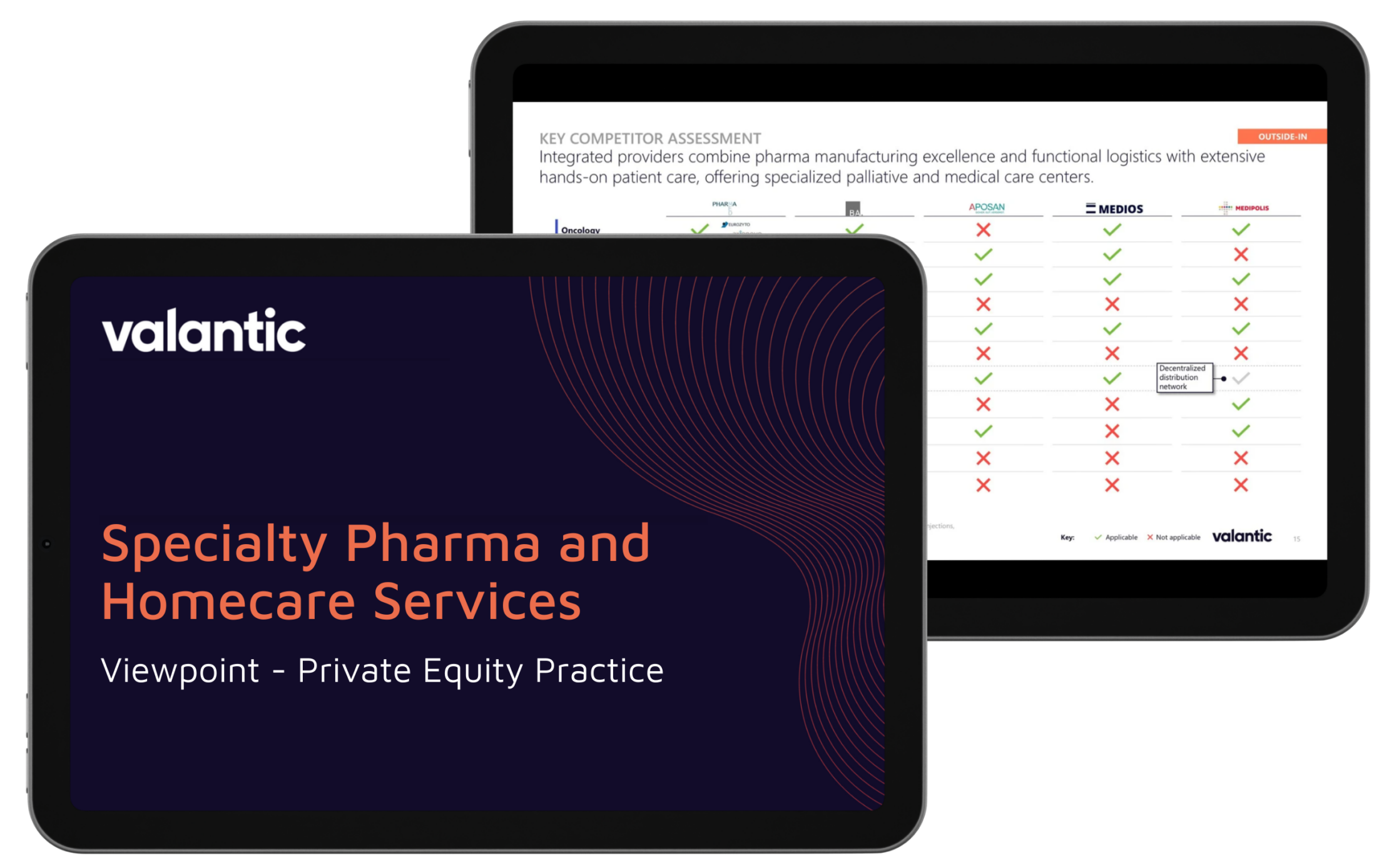
This is an excerpt of our viewpoint on Specialty Pharma and Homecare Services Germany. Get in touch if you would like to learn more about the market dynamics, business model, competitive landscape and growth drivers in this market.

4,000
orthopedic care providers in Germany
€70m
EBITDA Potential emphasizes profitability potential of the sector
3,300
acquisition targets available
Executive Summary
The market centers on high‑complexity therapies that require sterile, patient‑specific compounding, cold‑chain distribution, and administration in outpatient clinics or at home. Operators that combine §13 AMG (Medicinal Products Act, German: “Arzneimittelgesetz”) manufacturing, §52a AMG wholesale, and licensed care delivery achieve higher stickiness with prescribers and payers. Demand is supported by aging demographics, therapy personalization, and a structural shift from inpatient to home‑based care, while staffing shortages and reimbursement exposure constrain pace and scale.
Leading platforms digitize ordering, scheduling, and monitoring to release scarce capacity and selectively consolidate labs, homecare units, and medical care centers to build regional density. Competitive dynamics cluster into five archetypes, with vertically integrated platforms capturing more value than single‑step players. For investors, diligence priorities include integration depth, license coverage, referral capture, digital execution, and resilience to payer steering via selective contracts
Vertical integration significantly increased stickiness across therapy, logistics, and patient care touchpoints.
Persistent staffing scarcity, rather than demand, capped operating scalability.
Digital orchestration and Advanced digital orchestration and selective contracts fundamentally reshaped market access and margins.
Khalid Ouaamar
valantic Managing Director
”In this market, integration is not optional - it is the foundation of long-term resilience.“
Germany shifts complex treatments from hospitals into medical care centers and homes, enabled by telehealth, e‑prescriptions, and home‑infusion capabilities. Personalized therapies in oncology and rare diseases demand sterile, patient‑specific compounding and reliable cold‑chain logistics. Consolidation continues as sponsors pursue integrated platforms, while digitization promises throughput gains but requires upfront investment and change management. A persistent skilled‑labor gap, estimated at 500k+ in healthcare roles, remains a binding constraint on growth. Net effect: integrated models with manufacturing, distribution, and care delivery under one roof capture more value and deliver a superior patient experience versus single‑step competitors.
Key Takeaways:
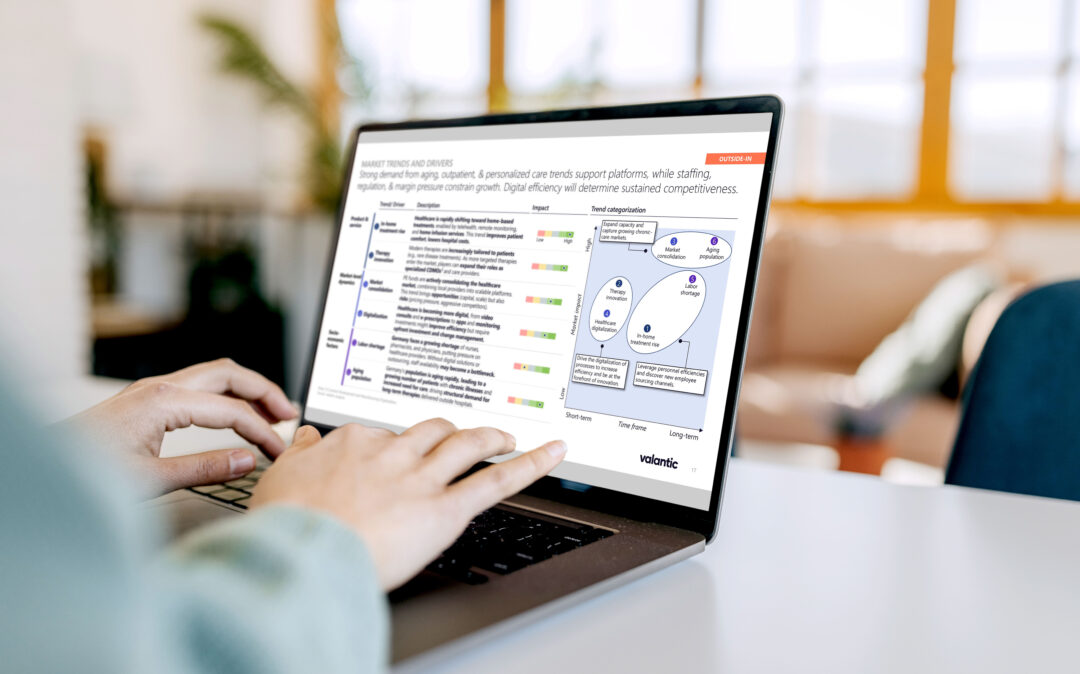
Access and economics hinge on license coverage and regulatory compliance: §13 AMG for sterile manufacturing under GMP (Good Manufacturing Practice), §52a AMG for wholesale under GDP (Good Distribution Practice), and permissions for outpatient medical care centers and specialized homecare. Demographics, chronic disease prevalence, and payer steering via selective contracts shape volume flows across oncology, ophthalmology, and parenteral nutrition. Operators that couple compliant compounding with reliable cold‑chain logistics and licensed care teams secure referral loyalty and reimbursement access, while single‑step players face margin pressure and volatility.
Key Takeaways:

Competition groups into five archetypes: vertically integrated care platforms, homecare providers, tech‑enabled therapy coordinators, hybrid or international care‑tech entrants, and sterile compounders. Integrated platforms combine in‑house compounding, §52a logistics, and licensed medical care, achieving high stickiness but bearing operational complexity. Homecare specialists offer proximity and logistics, yet rely on external pharma supply. Tech coordinators innovate orchestration but face reimbursement and execution barriers. Hybrid entrants scale digitally, yet they meet Germany’s access constraints. Pure compounders excel in GMP scale and cost but lack the downstream care touchpoints that anchor loyalty and margin.
Key Takeaways:
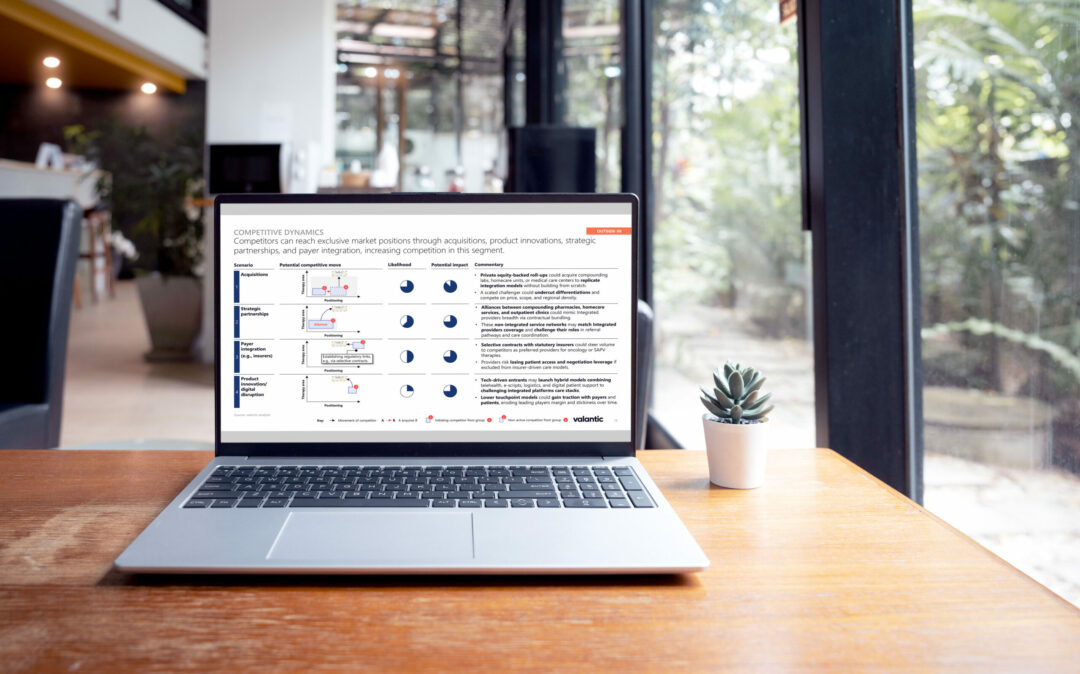
Beyond R&D, the value chain spans five steps: pharmaceutical production, wholesale, pharmacy compounding, distribution logistics, and outpatient or home‑based administration. Value concentrates where complexity and accountability are highest, namely sterile compounding of patient‑specific therapies, cold‑chain logistics, and licensed care delivery. Integrated players leverage cross‑step synergies to shorten lead times, reduce error rates, and lock in prescribers but require rigorous quality systems and scarce talent. Revenue models mix wholesale margins, fixed fees, and reimbursed services, with selective contracts stabilizing volumes in key therapy areas.
Key Takeaways:

Platforms scale through selective M&A across compounding labs, homecare units, and outpatient centers, replicating integrated coverage region by region. Workflow digitization, from e‑scripts to scheduling and remote monitoring, raises throughput and mitigates staffing constraints. Payer alignment via selective contracts secures volume, reduces referral volatility, and improves negotiation power. Expansion beyond Germany faces heterogeneous reimbursement rules and the need to rebuild local referral trust, tempering cross‑border speed despite strong underlying demand trends.
Key Takeaways:

Want the full breakdown? The full viewpoint on German Specialty Pharma and Homecare Services on request. The typical scope includes market size, market trends & drivers, competitive landscape, competitor groups, competitor benchmarks, explanation of the business model, value chain and future growth levers.
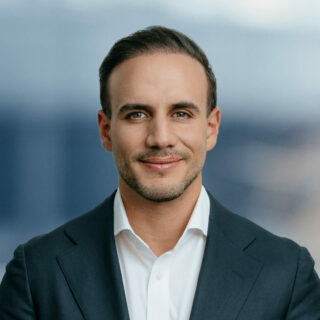
Khalid Ouaamar
Managing Director
Private Equity Practice
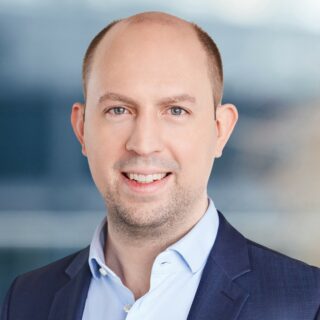
Christoph Nichau
Partner & Managing Director
Private Equity Practice

Jan Dingerkus
Partner & Managing Director
Private Equity Practice