Highlight

Successful together – our valantic Team.
Meet the people who bring passion and accountability to driving success at valantic.
Get to know usvalantic viewpoint
Special-purpose machinery manufacturing benefits from megatrends like energy transition, e-mobility, and composites, driving resilient demand.
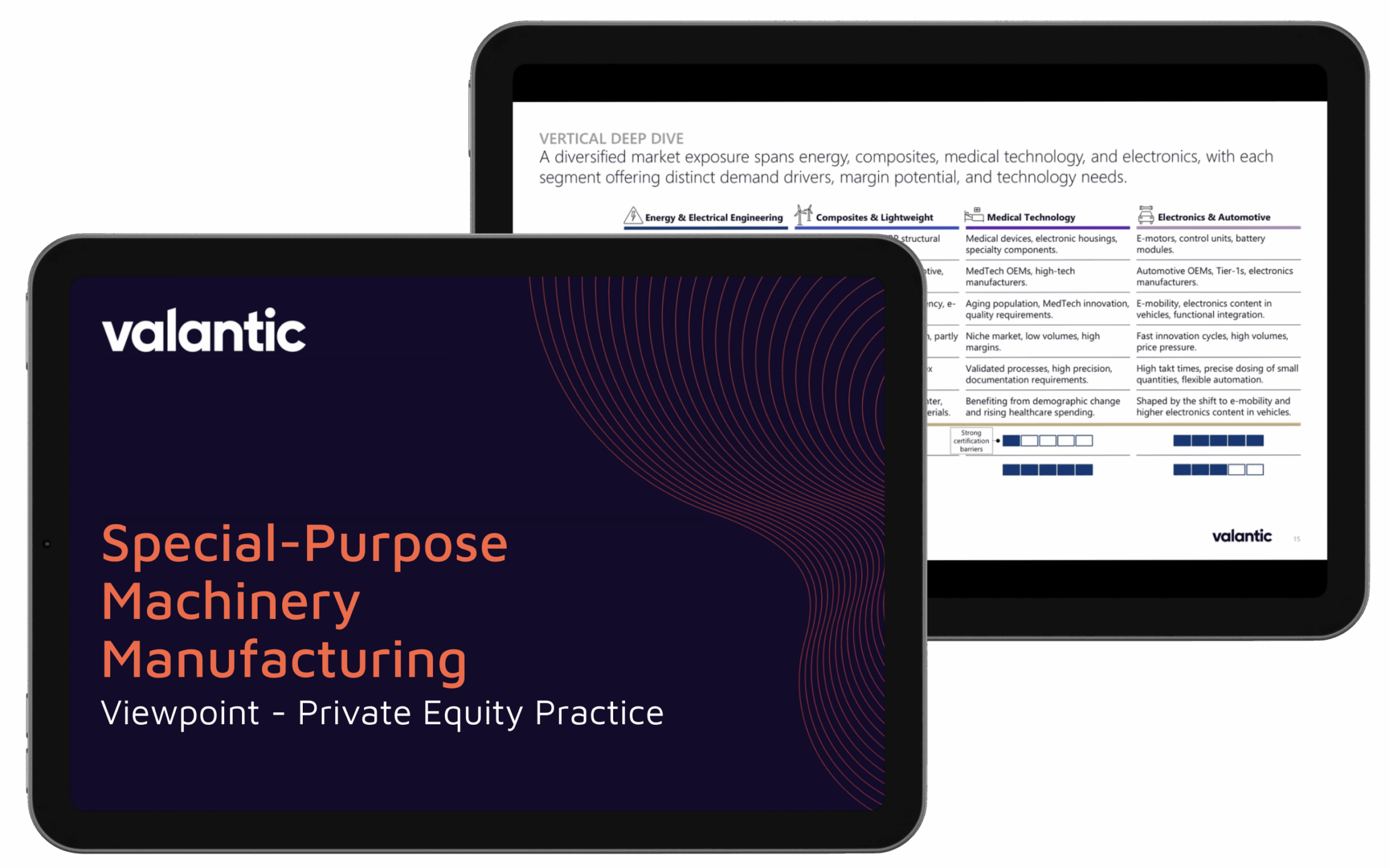
This is an excerpt of our viewpoint on Special-Purpose Machinery Manufacturing. Get in touch if you would like to learn more about the market dynamics, business model, competitive landscape and growth drivers in this market.
Executive Summary
The special-purpose machinery manufacturing industry is positioned at the heart of structural shifts in global production. Increasing electrification, the expansion of renewable energy, and the push for lightweight materials are driving long-term demand. Market participants benefit from high entry barriers, as engineered-to-order solutions require deep technological expertise, validated processes, and customer-specific integration. Unlike commoditized machinery, this segment delivers resilient margins supported by after-sales, service, and digital enhancements. However, cyclical investment patterns tied to utility and OEM capex remain a factor, with geographic expansion and diversification into emerging applications offering mitigation.
Competitive intensity varies: highly specialized providers operate alongside multi-purpose conglomerates and composite-focused firms. The sweet spot lies in combining deep process know-how with scalable platforms and service-driven recurring revenues. For investors, the sector offers exposure to predictable growth levers—energy transition, e-mobility, and digitalization—anchored in markets with high certification and compliance requirements.
Energy transition and e-mobility create sustained demand in high-barrier markets.
Specialized providers outperform through deep technology expertise and engineered-to-order solutions.
Recurring service and digital revenue streams increase resilience and valuation appeal.

Jan Dingerkus
valantic Partner
”High entry barriers and compliance-driven investments secure long-term demand stability in this sector.“
Special-purpose machinery manufacturing is increasingly pulled by structural megatrends. Grid modernization, renewable integration, and electrification are creating steady demand for vacuum-based and resin-processing technologies. Industrialization in emerging markets, particularly in Asia and Africa, expands the addressable customer base. At the same time, Industry 4.0 pushes automation, predictive maintenance, and digital lifecycle solutions. Financing constraints remain a moderating factor, especially for smaller OEMs, but policy support like the EU Green Deal and US IRA provides long-term momentum.
Key Takeaways:

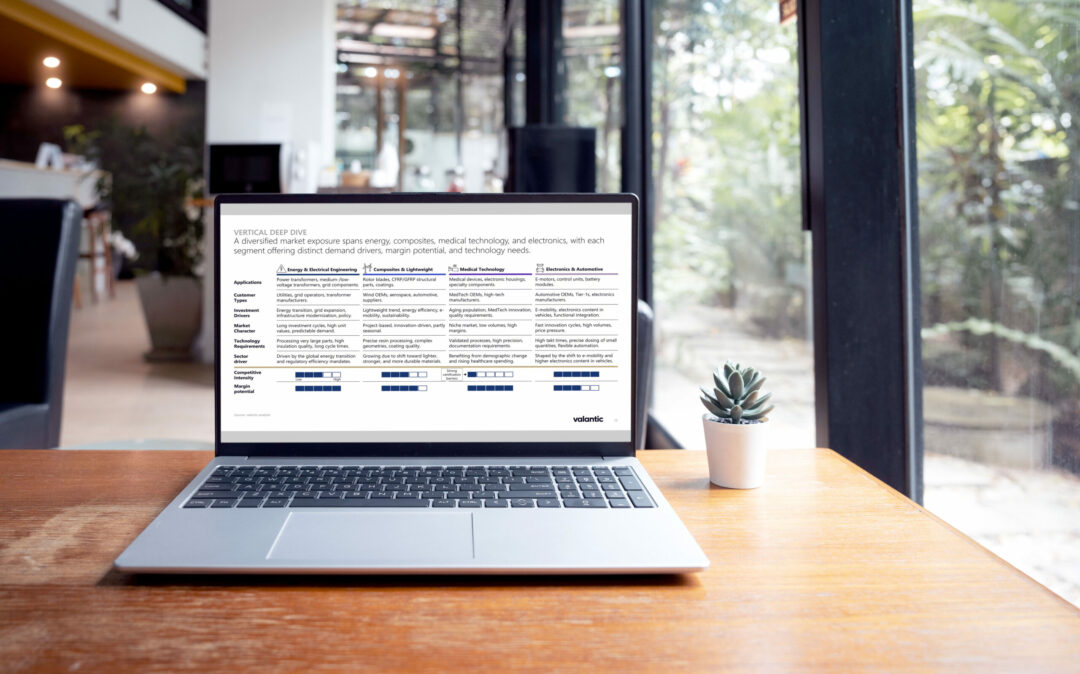
Regulation and efficiency demands are central to the sector. Energy-efficient, low-waste processes are mandated across industries, favoring vacuum impregnation and resin casting systems. Lightweight composites continue to expand in automotive and aerospace, while MedTech demand is driven by aging populations and quality standards. Strong certification requirements create compliance-driven investments, ensuring steady replacement cycles. E-mobility further accelerates demand for specialized potting and impregnation systems in motors, sensors, and battery modules.
Key Takeaways:
Competition in special-purpose machinery manufacturing is fragmented into four groups. Specialized providers dominate in technological depth and engineered-to-order solutions. Multi-purpose conglomerates offer standardized platforms across industries. Composite equipment specialists serve wind and transport markets, while automation players target high-volume electronics with potting and dispensing cells. The most attractive positions combine high vertical coverage with deep technology expertise. Specialized providers in Europe, North America, and Asia remain the closest competitors, with overlapping competencies in impregnation and casting intensifying rivalry.
Key Takeaways:

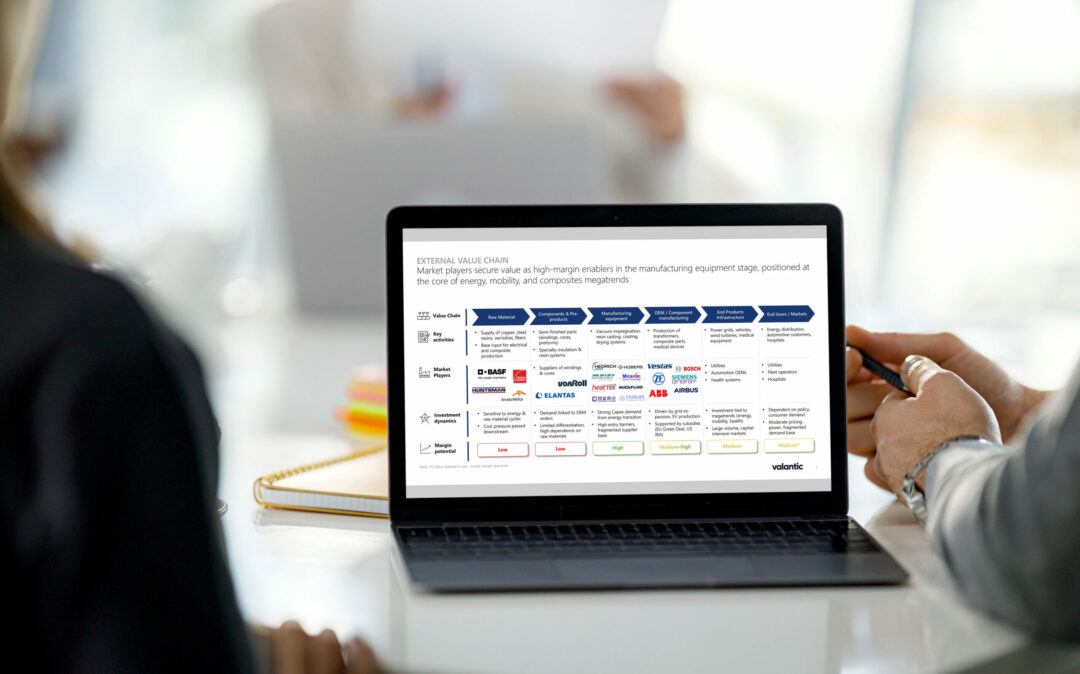
The industry is predominantly engineered-to-order, requiring long sales cycles, technical validation, and customized integration into customer production. Value is realized during installation and service phases, with lifecycle support—spare parts, upgrades, predictive maintenance- accounting for ~20 % recurring revenues. Internal value chains often integrate manufacturing of core components, while outsourcing standardized parts. Emerging Industry 4.0 enhancements enable remote monitoring, process optimization, and new service monetization models.
Key Takeaways:
Growth in special-purpose machinery manufacturing stems from multiple levers. Emerging markets invest heavily in grid and EV infrastructure, creating opportunities for new regional hubs. Greater exposure to e-mobility and data-center power demand widens addressable markets. Operational efficiency gains via modular standardization and outsourcing can improve scalability. M&A remains a viable strategy to acquire complementary technologies or regional presence. Finally, digital features like predictive maintenance, process monitoring, and integration into Industry 4.0 environments enhance competitiveness and drive recurring service revenues.
Key Takeaways:
Want the full breakdown? The full viewpoint on Special-Purpose Machinery Manufacturing is available on request. The typical scope includes market size, market trends & drivers, competitive landscape, competitor groups, competitor benchmarks, explanation of the business model, value chain and future growth levers.

Jan Dingerkus
Partner & Managing Director
Private Equity Practice

Christoph Nichau
Partner & Managing Director
Private Equity Practice

Khalid Ouaamar
Managing Director
Private Equity Practice