Highlight

Successful together – our valantic Team.
Meet the people who bring passion and accountability to driving success at valantic.
Get to know usvalantic Viewpoint
Germany’s smart meter gateway market is set for long-term expansion, driven by regulation, electrification, and a limited pool of BSI-certified suppliers.
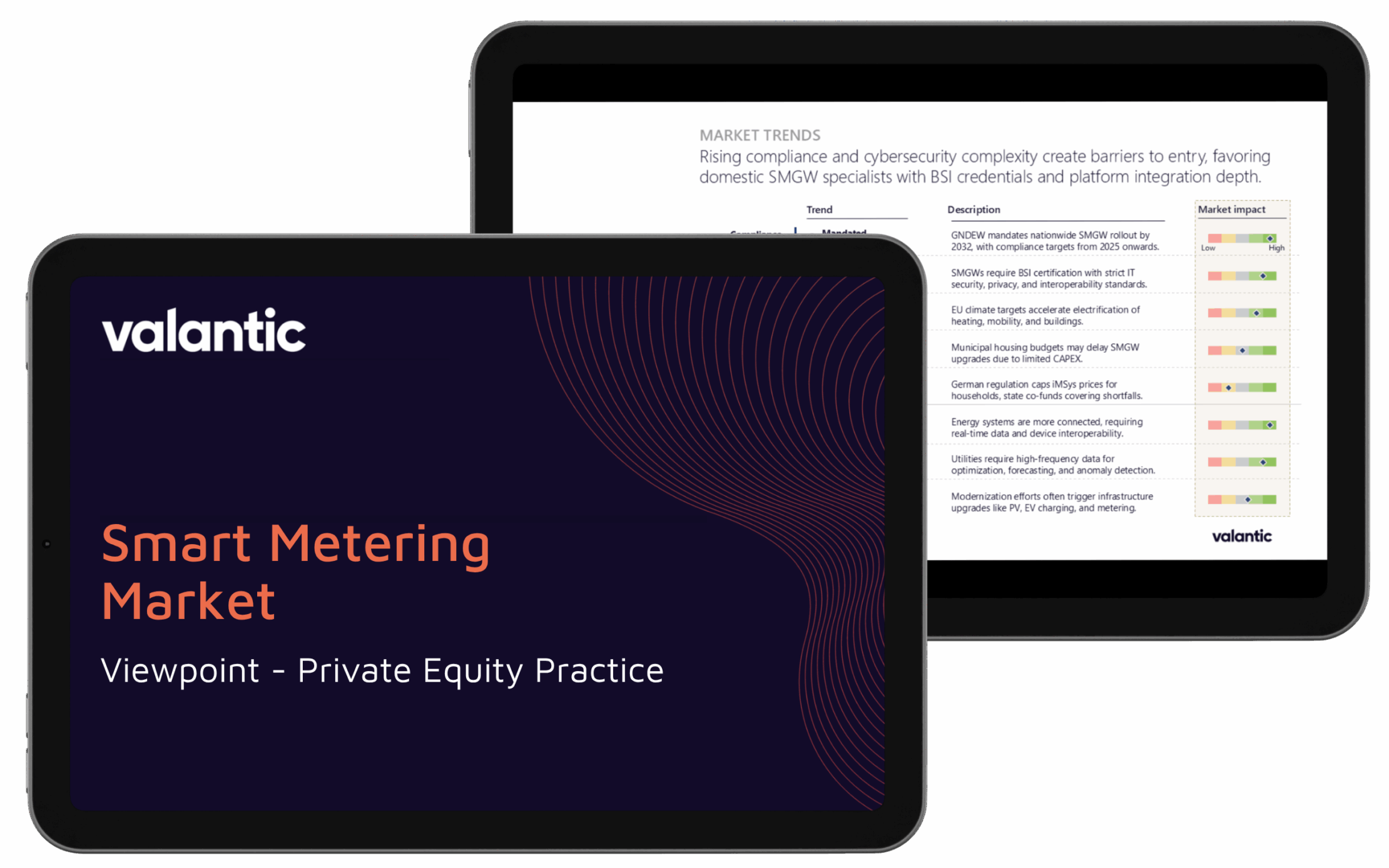
This is an excerpt of our viewpoint on the smart metering market. Get in touch if you would like to learn more about the market dynamics, business model, competitive landscape, and growth drivers in this market.

16.4%
Current Smart Meter Gateway (SMGW) installation progress in Germany (as of June 2025)
95%
Mandatory Smart Meter Gateway Installation Target Across Germany By 2030
~8% CAGR
expected in Europe’s underlying metering equipment market until 2030.
Executive Summary
The Smart Meter Gateway Market in Germany is expanding as regulatory mandates and energy-system digitalization converge. Germany aims to achieve 95% installation across all mandatory SMGW points by 2030, yet today the deployment stands at around 16.4%. Looking beyond mandates, only a small fraction of all measuring points is equipped to date, underscoring both the early stage of Germany’s digital grid transformation and the broader policy ambition to establish SMGWs as a standard communication and control layer across the grid.
Key players differentiate through BSI certifications and interoperability across ecosystems, with Germany’s BSI certification requirements resulting in a small circle of fully compliant manufacturers, making regulatory fluency and ecosystem integration notable advantages.
With digital grid control gaining importance and the European electrical metering equipment market valued at ~3-3,5bnEUR, investment opportunities lie in companies able to combine certified hardware, interoperability and CLS enablement.
Mandatory rollout remains in early phase with 16.4% completion, ensuring a strong multi-year volume trajectory.
Near-universal rollout is still in its early stages, with significant room to scale beyond mandatory installation progress.
A limited pool of fully certified SMGW suppliers creates defensibility and reinforces established positions.

Jan Dingerkus
valantic Partner
”We see a market where electrification, policy ambition and a limited set of fully compliant vendors jointly create a long-term growth profile.“
The SMGW market is shaped by stringent regulations like Germany’s GNDEW mandate, targeting 95% installation of mandatory measuring points, with interim milestones such as a 20% installation target by end-of-year 2025. Broader ambitions such as a near-universal rollout across all measuring points. Cybersecurity requirements favor domestic suppliers with BSI-certified solutions due to increased development costs deterring international competitors. Additionally, EU climate goals are accelerating electrification across sectors like mobility and heating, indirectly boosting SMGW demand as a grid management necessity.
Key Takeaways:
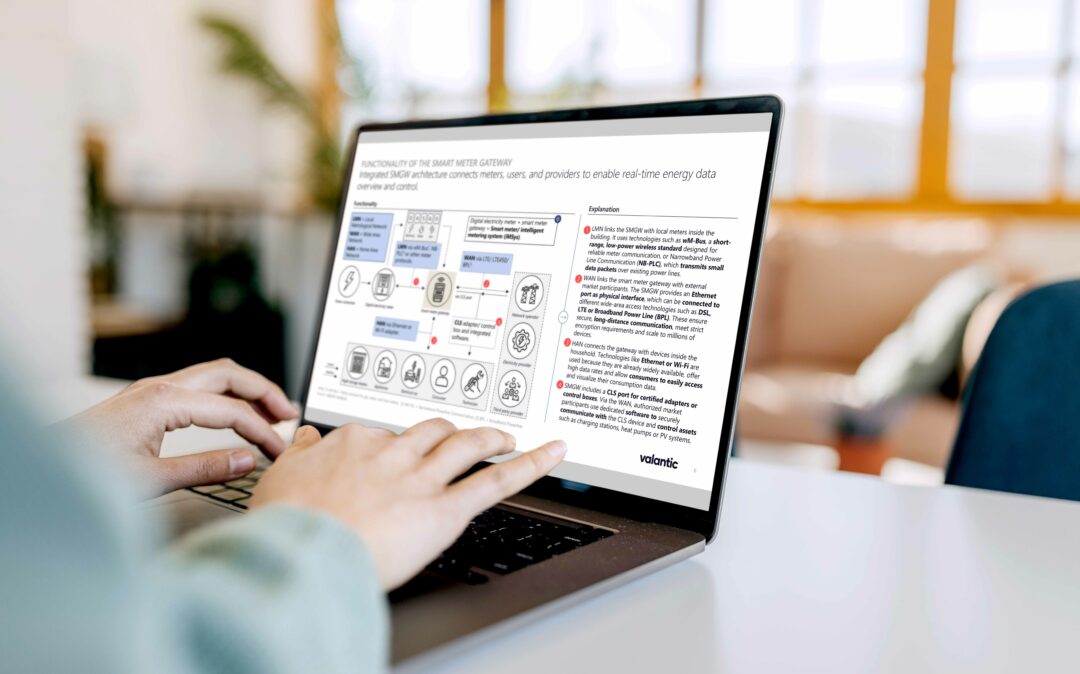
EU climate policies targeting greenhouse gas reductions are pushing investments into clean energy technologies like electric vehicles (EVs), heat pumps (HPs), and photovoltaic systems (PVs). These developments increase electricity load volatility, driving utilities’ need for real-time data management enabled by SMGWs. Retrofitting aging buildings with modern infrastructure bundles smart meters with distributed energy resources (DERs), further supporting deployment at scale.
Key Takeaways:

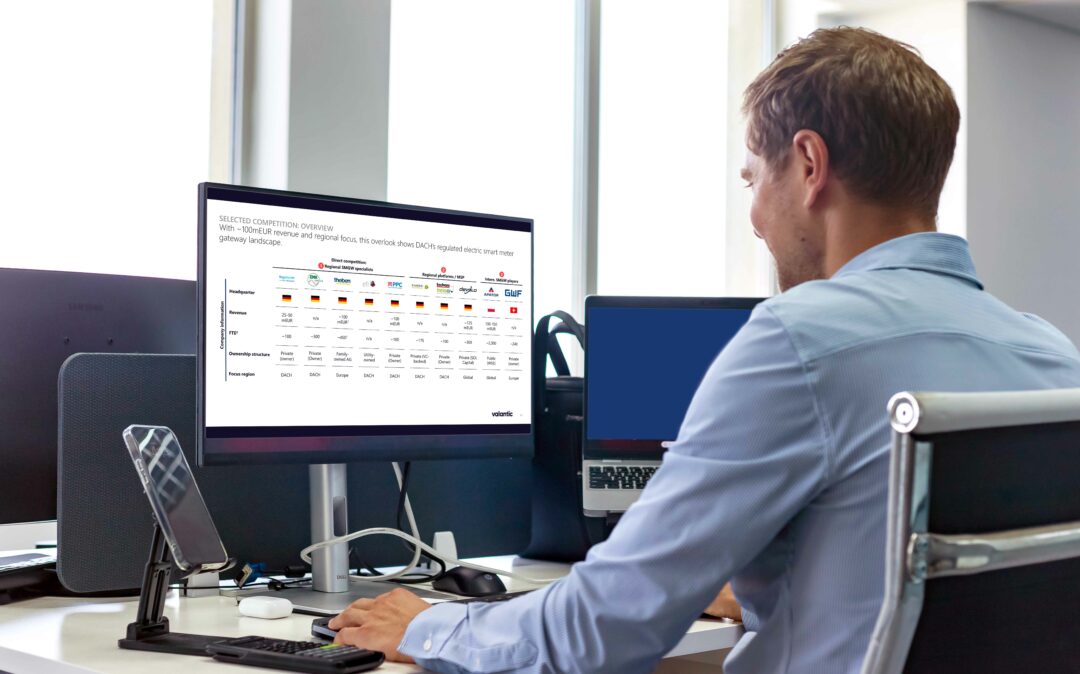
The smart meter gateway (SMGW) market encompasses various groups of different heritage, including regional certified SMGW specialists such as Theben Smart Energy, Sagemcom Dr. Neuhaus, and Power Plus Communication (PPC); regional platforms and metering service providers (MSPs) like kiwigrid or smartoptimo that offer integration and administration services; international metering providers such as Itron, Landis+Gyr, Diehl Metering, and Zenner; and integrated utility multinationals delivering scalable solutions across multiple utility segments. BSI certification remains critical for German-market leadership, with regional specialists leveraging regulatory expertise to compete effectively against global players.
Key Takeaways:
German regulation assigns metering data processing to metering point operators, enabling manufacturers to differentiate primarily through interoperability and secure supply-chain operation.
Leading players combine certified SMGW hardware with communication modules, CLS enablement and subscription-based software services such as network management systems (NMS) or certificate management provide recurring revenue streams that enhance profitability beyond regulated hardware price caps.
Key Takeaways:

Future growth can be enabled by orchestrating large-scale installations through MSP and utility partnerships and scaling solutions that address event-driven deployment patterns. As Germany progresses from early rollout levels toward its broader policy ambitions, innovations in communication technology, grid data analytics and CLS-enabled control further enhance the reach and relevance of SMGWs in an increasingly distributed energy system. Firms that combine certified hardware, scalable software and strong partner ecosystems will be well-positioned to capture additional value streams.
Key Takeaways:

Want the full breakdown? The full viewpoint on the Smart Metering Market is available on request. The typical scope includes market size, market trends & drivers, competitive landscape, competitor groups, competitor benchmarks, explanation of the business model.

Jan Dingerkus
Partner & Managing Director
Private Equity Practice

Christoph Nichau
Partner & Managing Director
Private Equity Practice

Khalid Ouaamar
Managing Director
Private Equity Practice