Highlight

Successful together – our valantic Team.
Meet the people who bring passion and accountability to driving success at valantic.
Get to know usvalantic viewpoint
Sharper regulation, recurring retrofit cycles, and digitalization are reshaping European Heat and Water Metering Solutions.
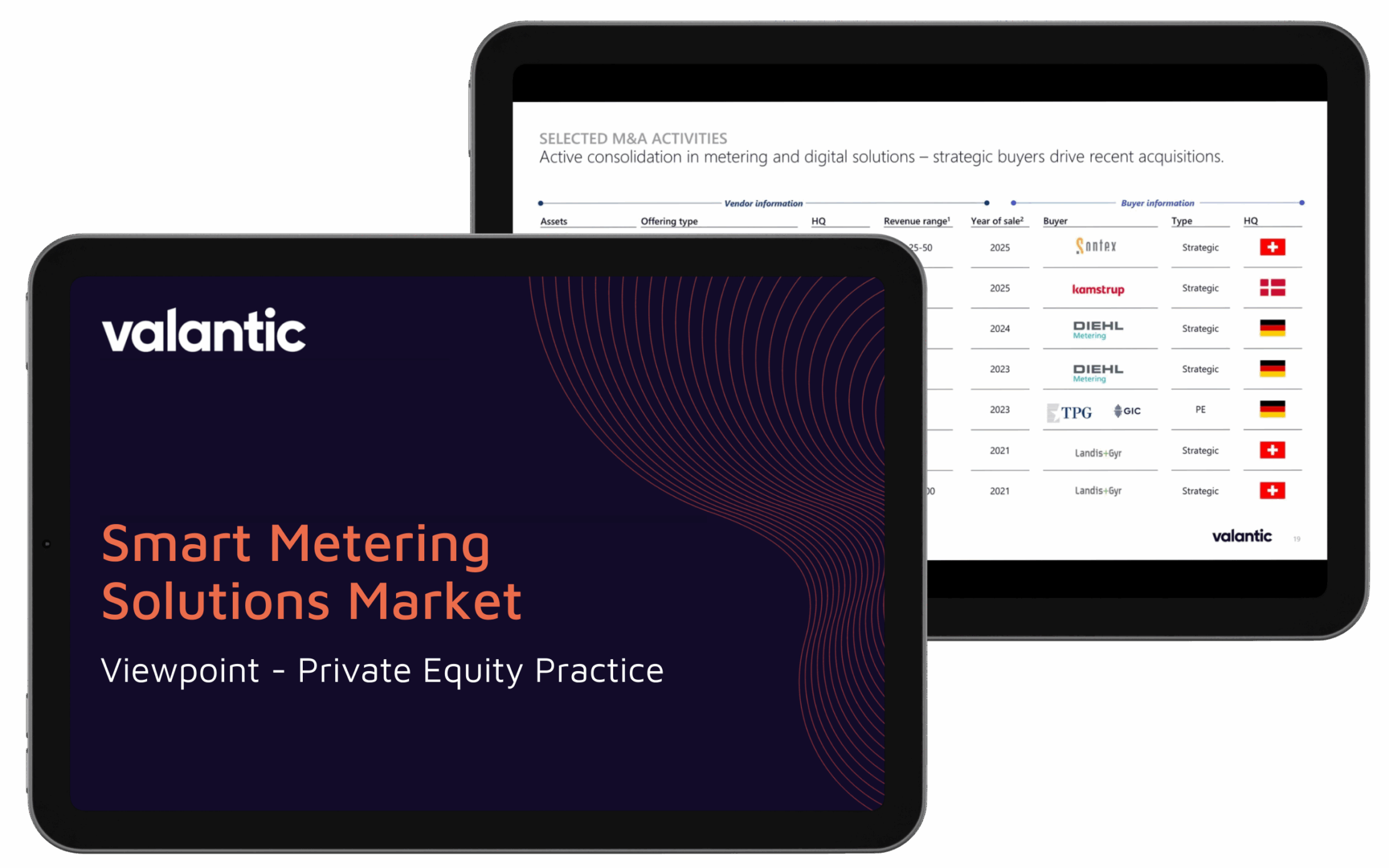
This is an excerpt of our viewpoint on Heat and Water Metering Solutions. Get in touch if you would like to learn more about the market dynamics, business model, competitive landscape and growth drivers in this market.

8%
CAGR through 2030, driven by regulation and more advanced devices.
€2bn
SAM in EU heating, cooling, water segments
€7bn
TAM Europe 2024 in hardware and software only
Executive Summary
European Heat and Water Metering Solutions benefit from structural, regulation-driven demand, tighter compliance requirements, and clear visibility from recurring exchange cycles. EU rules require remote-readable devices and push interoperability, which shifts value toward higher-spec meters, secure communications, and software enablement. As building retrofits ramp up, unit upgrades create additional pull, while digital tools, APIs, and analytics lift average revenue per device.
Industry structure is fragmented, with specialist meter makers, integrated multinationals, and metering service providers competing along a value chain that spans hardware, communications, data processing, and billing. The most resilient positions combined proven compliance, longevity, and open protocols that reduce lifetime costs for operators. Short-term risks include public budget constraints delaying rollouts and price pressure in commoditized components, yet underlying replacement cycles, by design, keep baseline demand intact. Consolidation interest has been active, supported by clear regulatory moats and attractive, repeatable cash flows.
Regulation locks in recurring demand, visibility stems from mandated replacement cycles.
Value shifts upstream to secure communications, interoperability, and analytics layers.
Integration readiness and open standards drive stickiness with utilities and MSPs.

Jan Dingerkus
valantic Managing Director & Partner
”Six-year exchange cycles turn Heat and Water Metering Solutions into a visibility business.“
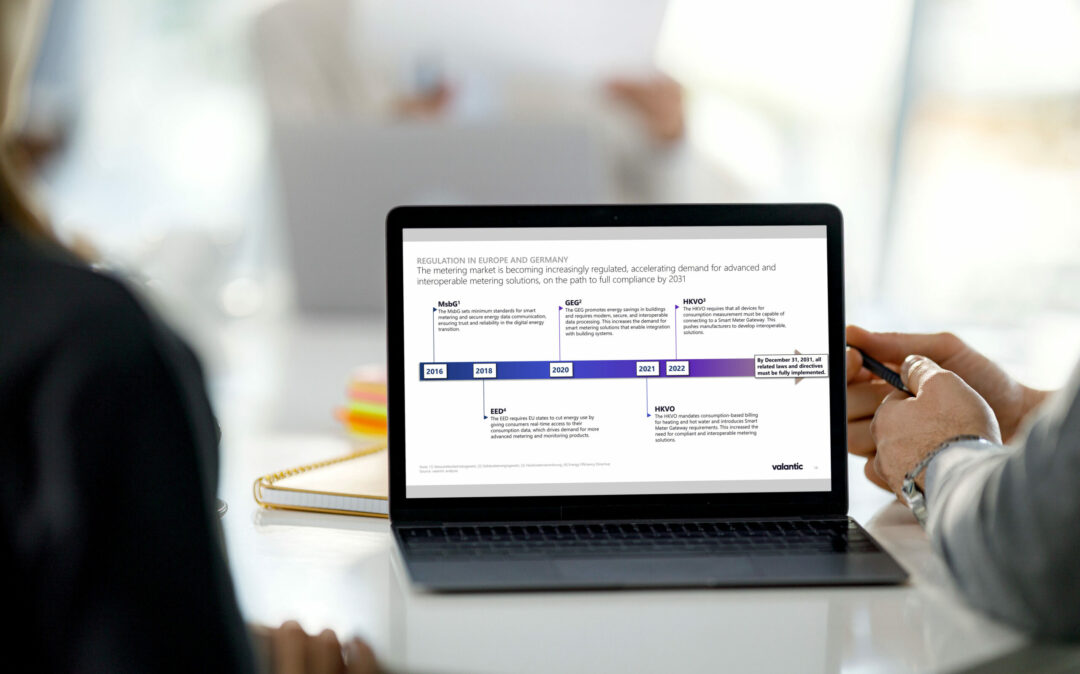
EU directives require remote-readable meters, with full transition targeted and non-readable devices phased out. The European utility metering product market was about 6–7bnEUR in 2024 and is expected to grow roughly 7–8 percent CAGR through 2030, supported by mandated replacement, higher device complexity, and building renovation programs. Approximately 20–30% of buildings still lacks remote readability, creating a meaningful upgrade backlog. Digitalization, IoT protocols, and cybersecurity requirements increase development costs, but they also raise average revenue per connection and make certified incumbents harder to displace. Short-term public budget constraints delays some rollouts, yet they do not diminish underlying multi-year demand anchored in eight-year exchange cycles.
Key Takeaways:
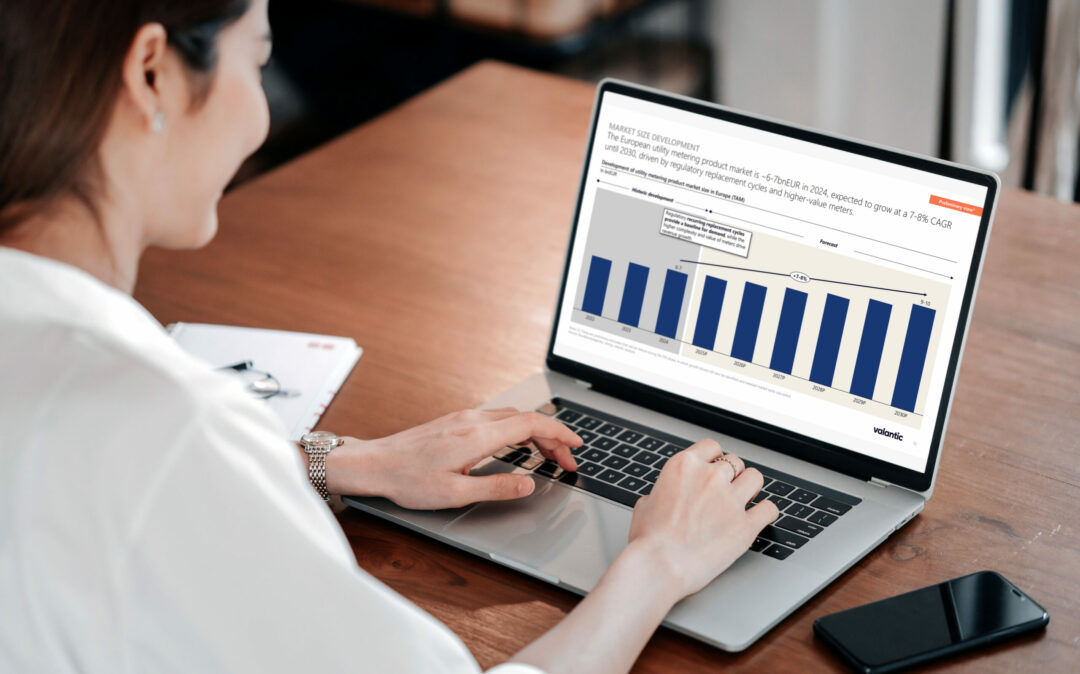
Compliance and data privacy push device accuracy and secure transmission, lifting barriers to entry. Open standards, such as OMS, M-Bus or LoRa, increase interoperability and reduce lock-in risk for operators, while software platforms turn raw meter data into billing inputs, analytics, and ESG reporting. As Europe’s building stock modernizes, retrofit programs aligned with mandated exchange schedules, converting regulation into a predictable demand engine.
Key Takeaways:
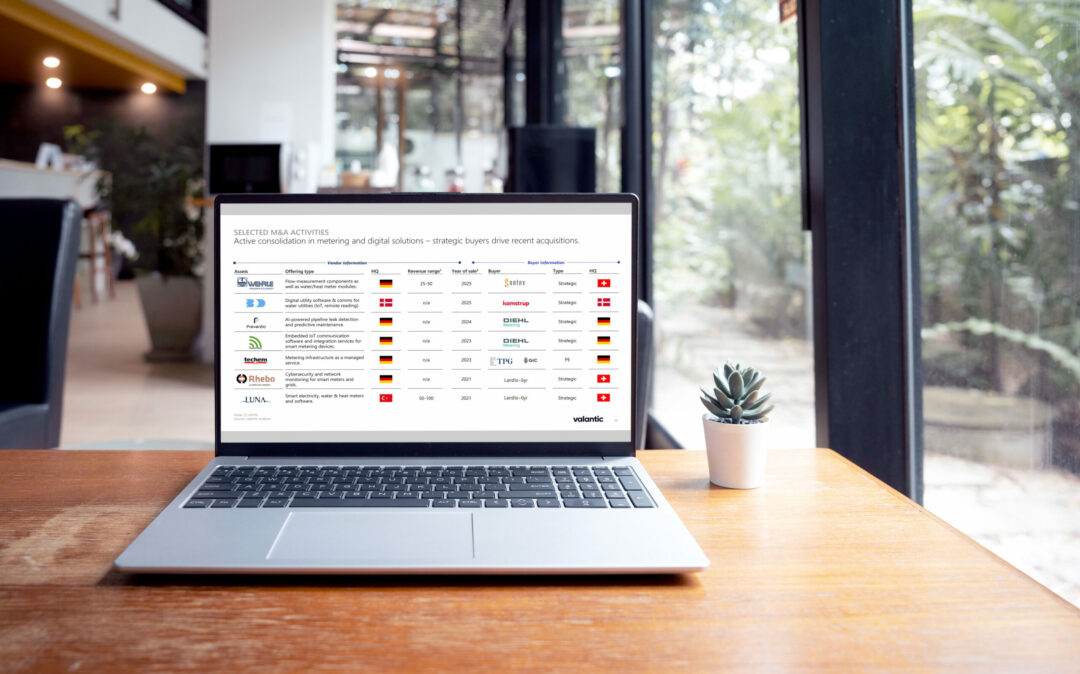
Competition spans meter and system specialists, integrated utility multinationals, hardware-focused manufacturers, and metering service providers operating networks and billing as a downstream value chain player, tending to form the customer base rather than the competition. Leading multinationals, for example Landis+Gyr and Itron, offer global scale and end-to-end stacks. European specialists, for example Kamstrup, Diehl, Sontex, and Apator, focus on heating, cooling, and water with strong in-region capabilities. Service providers, for example Techem and peers, run managed infrastructures, bundling hardware, communications, and billing. Differentiation clusters around certified accuracy, device longevity, secure communications, and integration with third-party gateways and platforms.

The value chain coveres components, manufacturing and calibration, distribution and installation, data collection and communication, data processing and integration, billing and customer services, and compliance reporting. Specialists capture margin where technology intensity is highest, namely certified hardware, calibrated accuracy, and secure gateways. Revenue models combine one-off device sales with recurring fees tied to recalibration, retrofit, or embedded software, creating a balanced mix aligned to 6-year exchange cycles. Open protocols and APIs reduce integration friction and expand partner ecosystems.
Key Takeaways:

Incremental growth resulted from expanding into under-penetrated geographies, attaching software to installed bases, and moving closer to billing-grade data flows. Further upside came from AI-assisted validation, anomaly detection, and consumption analytics embedded into customer portals. Partnerships with installers and MSPs accelerated conversion in multi-family housing, where regulation required consumption-based billing and remote readability.
Key Takeaways:
Want the full breakdown? The full viewpoint on Heat and Water Metering Solutions is available on request. The typical scope includes market size, market trends & drivers, competitive landscape, competitor groups, competitor benchmarks, explanation of the business model, value chain and future growth levers.

Jan Dingerkus
Partner & Managing Director
Private Equity Practice

Christoph Nichau
Partner & Managing Director
Private Equity Practice

Khalid Ouaamar
Managing Director
Private Equity Practice