Highlight

Successful together – our valantic Team.
Meet the people who bring passion and accountability to driving success at valantic.
Get to know usvalantic viewpoint
Healthcare IT Services is a compliance-critical, infrastructure-first market. Success depends on sovereignty, interoperability, and guaranteed uptime.
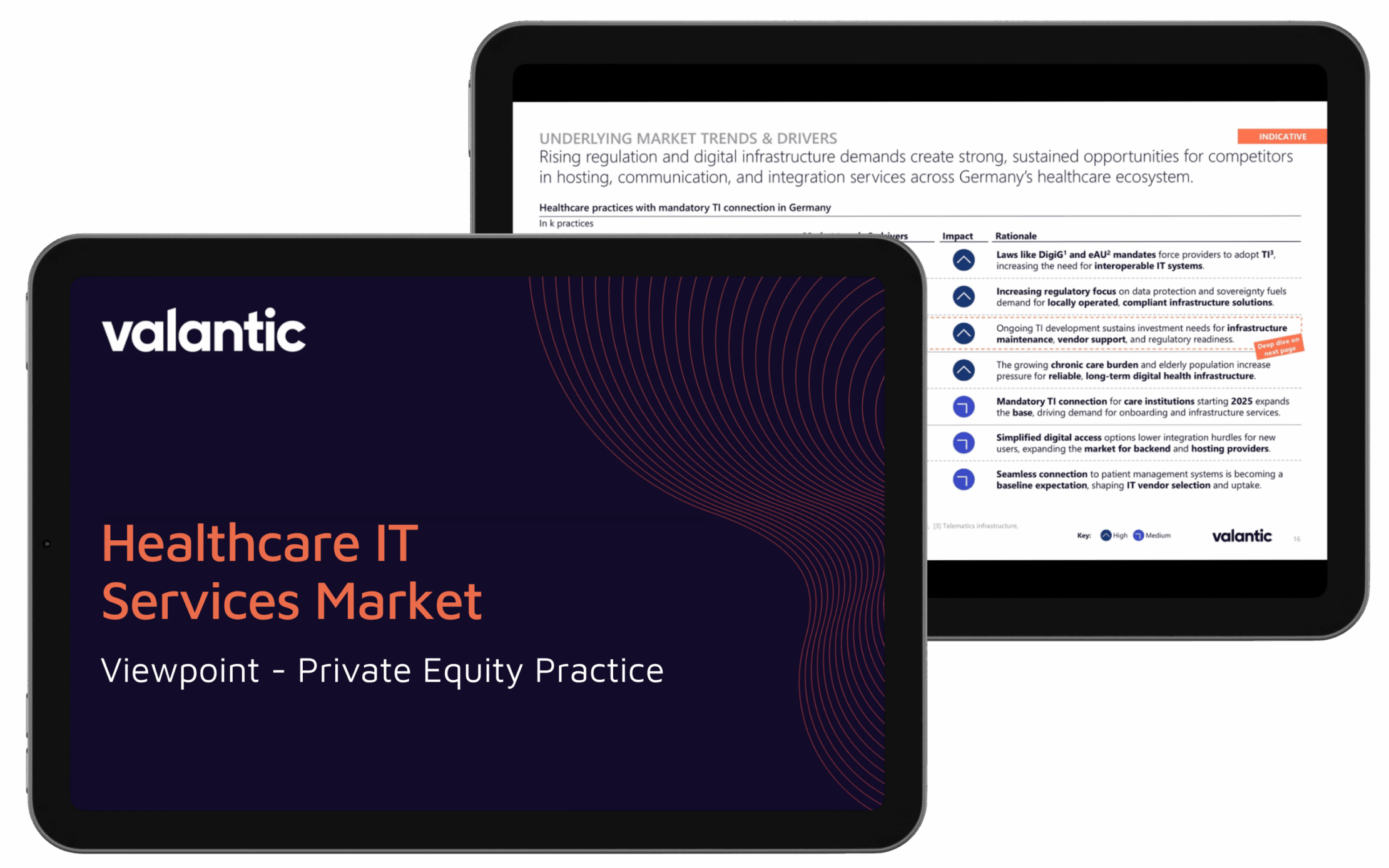
This is an excerpt of our viewpoint on Healthcare IT Services. Get in touch if you would like to learn more about the market dynamics, business model, competitive landscape and growth drivers in this market.

€4.3bn+
in funding via the German Hospital Future Fund (KHZG) for digital modernization of hospitals.
+45%
increase in healthcare practices with mandatory TI connection in Germany from 2024 to 2026.
25
Integrated healthcare platform provider present in the DACH market.
Executive Summary
Digitization moved from pilots to mandates, with national telematics rails, electronic records, and e-prescriptions setting the baseline. Buyers prioritized sovereign hosting, certified platforms, and audit-proof communications that integrate with provider workflows. Today’s winning vendors combine certified data-center capacity, secure messaging, and healthcare-grade middleware with repeatable onboarding and training. This creates recurring revenue streams with high switching costs.
Growth is supported by policy momentum, demographic pressure, and expanding use cases, while risk centers on delivery tooling, integration depth, and product evolution pace. Competitive dynamics pit integrated health platforms, diversified IT providers, and focused specialists against each other, with interoperability and compliance as the ultimate arbiter. Investors should diligence regulatory alignment, automation maturity, and go-to-market motion in fragmented public-sector demand. Value creation stems from broadening the TI-enabled stack, cross-selling workflow modules, and lifting attach rates in care segments.
Compliance, sovereignty, and uptime drove vendor selection more than feature breadth.
TI-enabled rails unlocked recurring services, from secure mail to structured records.
Scale advantages accrued to players with standardized onboarding and training.

Khalid Ouaamar
valantic Managing Director
”In healthcare IT, sovereignty and compliance are no longer features, they are the foundation.“
Healthcare IT services shifted from discretionary projects to mandated infrastructure. Germany’s Hospital Future Fund of 4.3 bn EUR catalyzed modernization, while a nationwide 2024 e-prescription rollout accelerated standardized digital transactions. With care institutions joining the telematics infrastructure from 2025, demand extended beyond hospitals to outpatient and long-term care. Sovereign hosting, certified communication, and interoperable records have become the baseline for market entry. Vendors that paired compliance with workflow integration captured the step-change, turning one-off projects into recurring service layers. As standards iterate, upgrade cycles and versioning sustain managed services, keeping platforms “audit-ready” and customers compliant without heavy local IT effort.
Key Takeaways:
Compliance-first procurement became default in public providers.
2025 saw care institutions onboard TI, expanding the base.
4.3 bn EUR KHZG underpinned digital capex.

Three forces shaped the market: regulation mandated digital rails, demographic change increased service intensity, and data sovereignty reinforced national hosting requirements. TI participation made secure messaging and record access table stakes, while electronic sick notes and medication plans embedded standardized data flows. Buyers looked for certified infrastructures, 24/7 operations, and GDPR-aligned processes, reducing risk exposure across clinical and admin workloads. Integration into practice and hospital systems mattered as much as software features, shifting value to vendors offering connectors, monitoring, and automated onboarding. As versions of e-records and TI services evolve, providers require ongoing upgrades, training, and monitoring, reinforcing multi-year service contracts.
Key Takeaways:
Sovereign, certified hosting outcompeted generic clouds.
24/7 operational SLAs required in clinical settings.
Iterating standards created recurring upgrade demand.
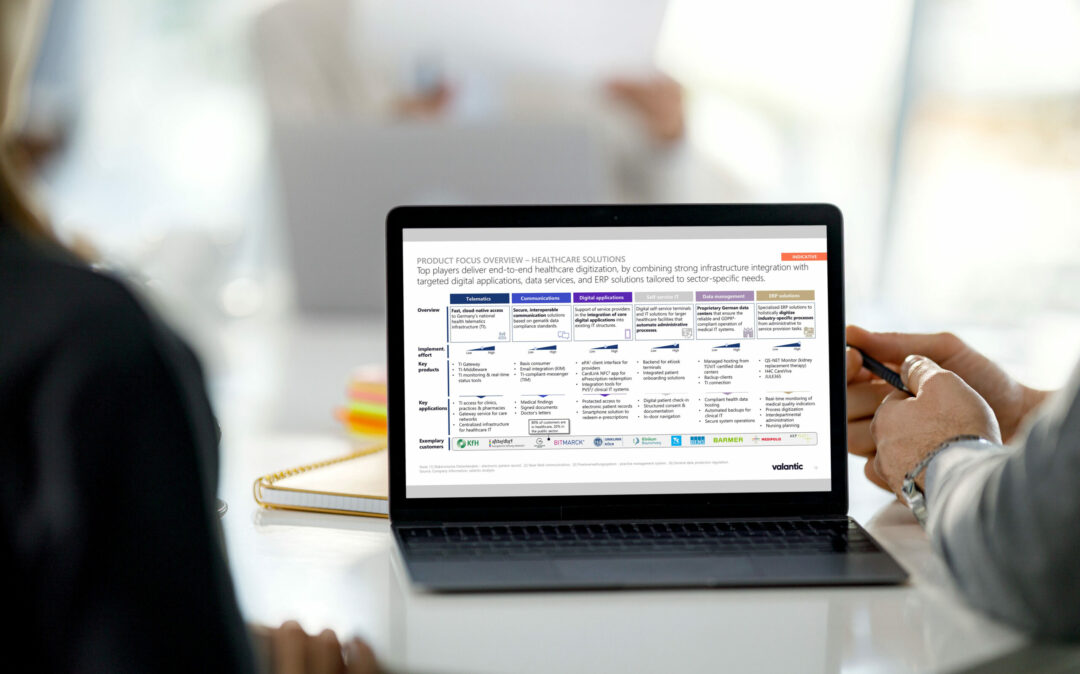
The healthcare IT market is shaped by three groups of competitors. Integrated platforms such as CGM, Oracle Cerner, Epic, Telekom Healthcare Solutions, Nexus/Agfa, Dedalus, and Akquinet span clinical, admin, interoperability, and hosting layers, often serving as strategic partners for hospitals. Akquinet Health stands out with four ISO-certified Tier-III data centers in Germany, offering secure, compliant hosting for critical healthcare and public-sector workloads. Specialists deliver best-in-class solutions in areas like patient portals, TI connectors, ePrescription, or AI triage. Diversified IT service providers including T-Systems, Atos/Eviden, Capgemini, DATAGROUP, Bechtle, and Allgeier leverage cloud and managed services with selected healthcare modules. Complementary players include security providers (Okta, secunet, genua) and data infrastructure vendors (MongoDB, Snowflake, RISE, Eurogen, Cloud&Heat). Vendors with certified hosting, secure communication, and streamlined onboarding gained scale, while incumbents benefited from long procurement cycles.
Key Takeaways:
Procurement favored proven certification footprints.
Leading players operated across 6–8 stack layers, from infrastructure to applications.
Fragmented buyers made efficient onboarding a critical source of leverage.

Recurring revenue pooled around “rails” services, notably certified hosting, secure mail, and compliant messaging inside national infrastructure. Vendors monetized through subscriptions for communication, records access, and monitoring, augmented by implementation fees and training. A typical value chain covered solution design, platform development, deployment, enablement, regulatory lifecycle management, and continuous evolution. High-relevance nodes were certification-ready development, remote provisioning, and academy-style training that reduced support burden at scale. Where vendors offered ERP-like modules for care and rehab workflows, attach rates improved, expanding ARPU without breaching compliance boundaries. 24/7 operations, version compliance, and auditable backups remained non-negotiable.
Key Takeaways:
around 60 % of revenues recurring
Direct sales deepen customer relationships
AI-enabled software drives margin expansion

Near-term growth comes from broadening TI-enabled modules, adding secure communications, monitoring, and connector-free access that simplify onboarding for late adopters. Mid-term, vendors can deepen workflow coverage in home care, rehab, and elderly care with light ERP and care-coordination suites. Geographic adjacency in DACH follows once compliance playbooks and delivery tooling are standardized. Finally, product-led onboarding and training academies raise conversion and reduce deployment friction. Investors should look for automation in provisioning, SDK-driven integrations, and clear roadmaps for e-record versions, e-prescription integration, and audit tooling.
Key Takeaways:
Standardized playbooks enabled regional expansion.
Tooling maturity correlated with margin uplift.
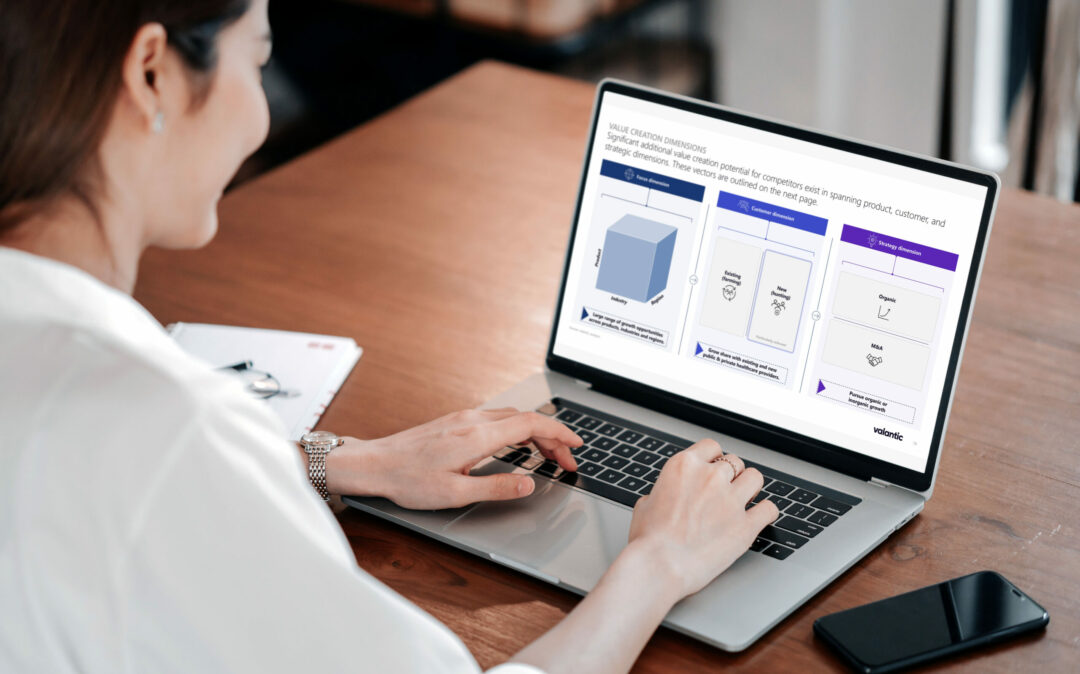
Want the full breakdown? The full viewpoint on Healthcare IT Services is available on request. The typical scope includes market size, market trends & drivers, competitive landscape, competitor groups, competitor benchmarks, explanation of the business model, value chain and future growth levers.

Christoph Nichau
Partner & Managing Director
Private Equity Practice

Jan Dingerkus
Partner & Managing Director
Private Equity Practice

Khalid Ouaamar
Managing Director
Private Equity Practice