Highlight

Successful together – our valantic Team.
Meet the people who bring passion and accountability to driving success at valantic.
Get to know usvalantic Viewpoint
The Fire Safety Industry combines regulation‑driven resilience, high‑margin recurring services, and emerging tech, creating attractive platform and buy‑and‑build plays.
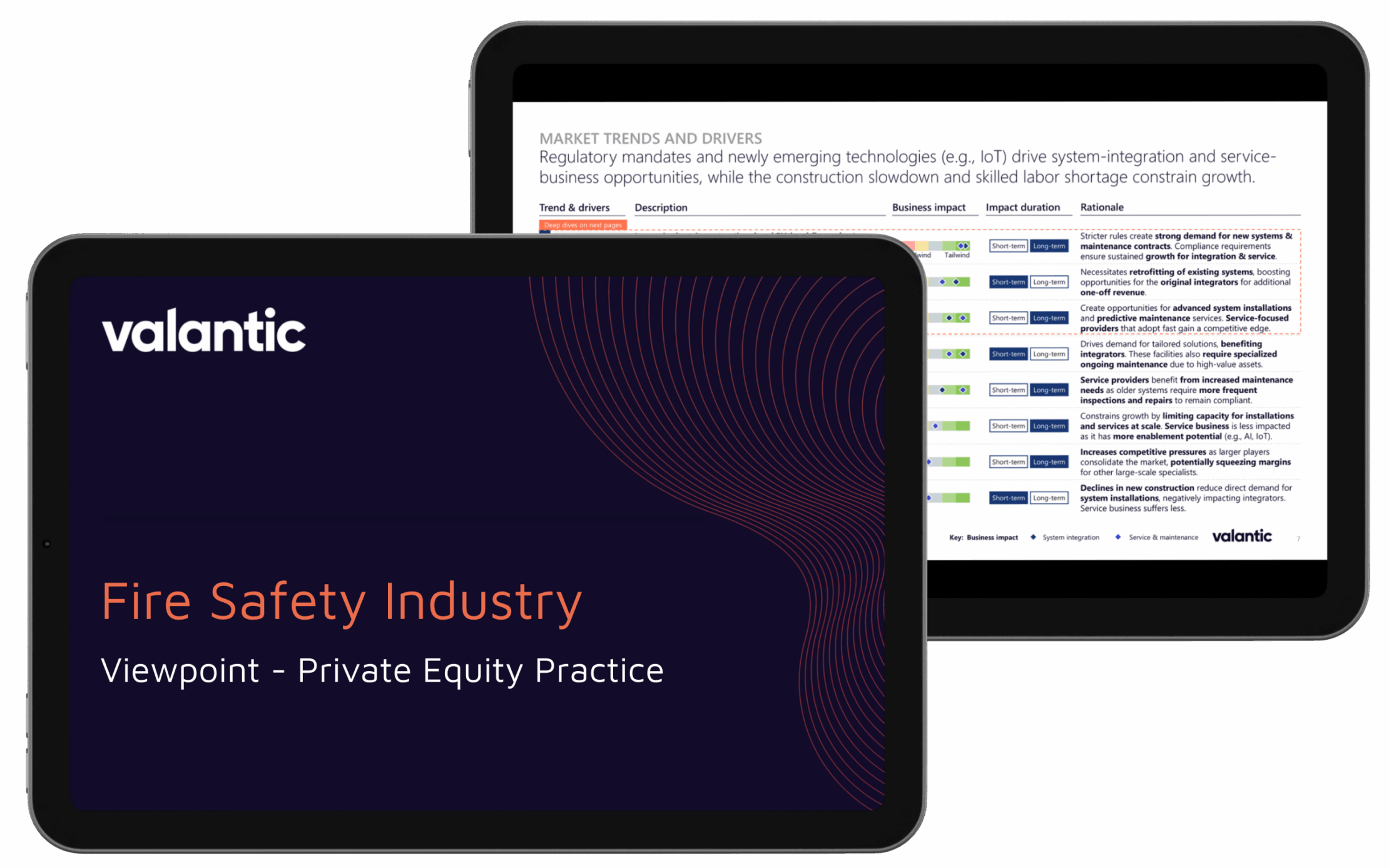
This is an excerpt of our viewpoint on the Fire Safety Industry. Get in touch if you would like to learn more about the market dynamics, business model, competitive landscape, and growth drivers in this market.

117
recorded deals in the fire safety industry since 2018
> 4 % CAGR
2022–2025
> 50 %
gross margin potential in recurring maintenance and inspection services
Executive Summary
The Fire Safety Industry offers a structurally attractive combination of regulation‑driven demand, non‑cyclical revenue streams and emerging technology upside. In Germany, the market was around 9.4 bnEUR in 2020 and is estimated to be at 10.7 bnEUR in 2025, with growth of about 4 percent annually between 2022 and 2025, clearly ahead of declining construction output. Mandatory inspections, legally required maintenance and recurring retrofit needs translate into high‑margin, low‑churn service contracts, often with 50 to 70 percent gross margin potential and multi‑decade customer relationships.
At the same time, increasingly stringent EU and German regulations, alongside updated norms and approvals, continuously raise the technical bar and drive system upgrades. The downstream landscape is fragmented, particularly among local specialists, while more advanced national providers and international integrators compete on engineering depth and technology capabilities. Consolidation momentum, with more than one hundred recorded deals since 2018, reinforces the relevance of buy‑and‑build as a core value‑creation lever.
Regulation and mandatory maintenance made the Fire Safety Industry resilient, with historical growth outpacing the underlying construction market.
Recurring service and retrofit activities deliver high‑margin, predictable cash flows across fragmented SME and multi‑site customers.
Consolidation and technology adoption reshaped the competitive landscape, favoring scaled, tech‑enabled platforms over standalone regional players.

Jan Dingerkus
valantic Partner
”Investors who combine national density with tech‑enabled services will set the pace in the evolving Fire Safety Industry.“
The Fire Safety Industry in Germany demonstrated notable resilience. From 2020 to 2022 the market still grew, and between 2022 and 2025 it expanded further while construction output contracted. This decoupling from the construction cycle reflects the shift from pure new‑build exposure toward regulation‑driven retrofit, maintenance and inspection activities across both active and passive fire protection. Recurring service contracts increasingly shaped providers’ revenue mix, as mandatory inspection cycles, documentation needs and system upgrades locked in stable demand. At the same time, technology‑enabled solutions, such as IoT‑enabled detectors, AI‑based cameras and digital inspection tools, started to move from pilot status toward broader adoption, especially in complex industrial and large commercial environments. For investors, this combination of structural, regulation‑anchored demand, growing digital content in systems and services and moderate but stable top‑line growth defines the medium‑term trend picture of the Fire Safety Industry.
Key takeaways:

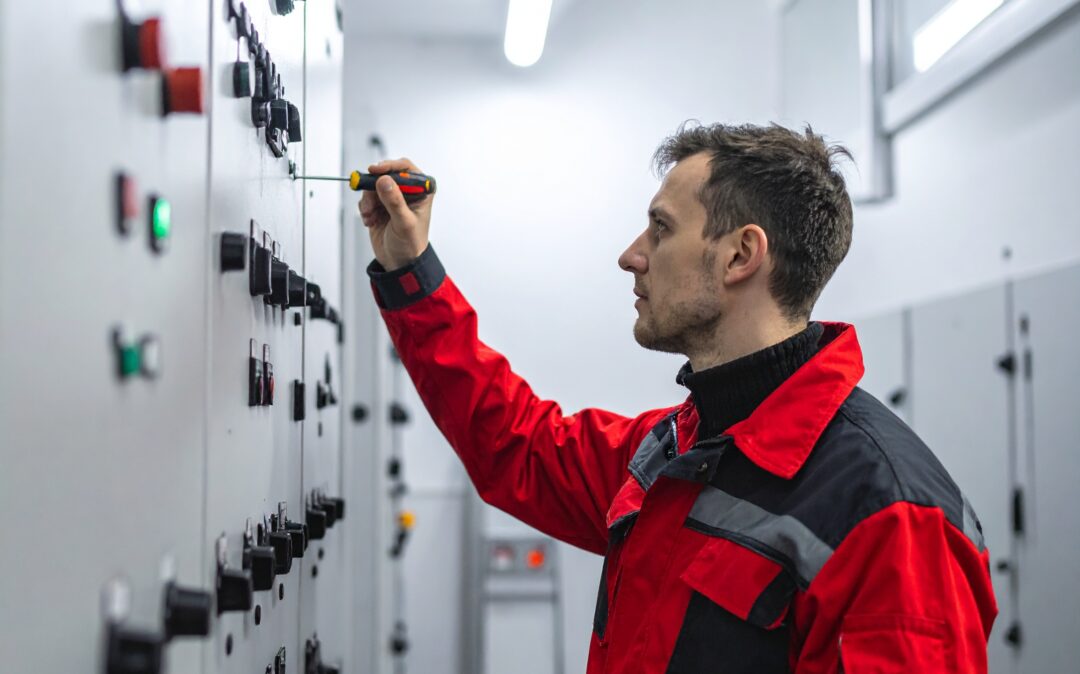
Market growth in the Fire Safety Industry has been driven primarily by an increasingly dense regulatory framework and frequent updates of norms and guidelines. On the EU level, the Construction Products Regulation (CPR) tightened performance, sustainability and documentation requirements, while EN Fire Safety Norms, such as the relevant EN standards for fire detection and suppression systems, raised expectations on reliability, installation quality, testing frequency and maintenance. Parallel EU Fire Safety Engineering and Harmonization Initiatives pushed member states toward stricter inspection regimes and installer competence standards. In Germany, the Musterbauordnung, the German Industrial Safety Regulation and VdS approvals and guidelines continuously increased inspection depth, documentation obligations and technical specifications. These developments triggered recurring retrofit demand, for example when existing systems needed upgrades to remain compliant or when components such as foams had to be replaced to align with new environmental standards, including the EU PFAS ban in firefighting foams. As a result, system operators faced higher operational burdens, and specialized service providers benefited from a structurally expanding compliance and documentation workload.
Key Takeaways:
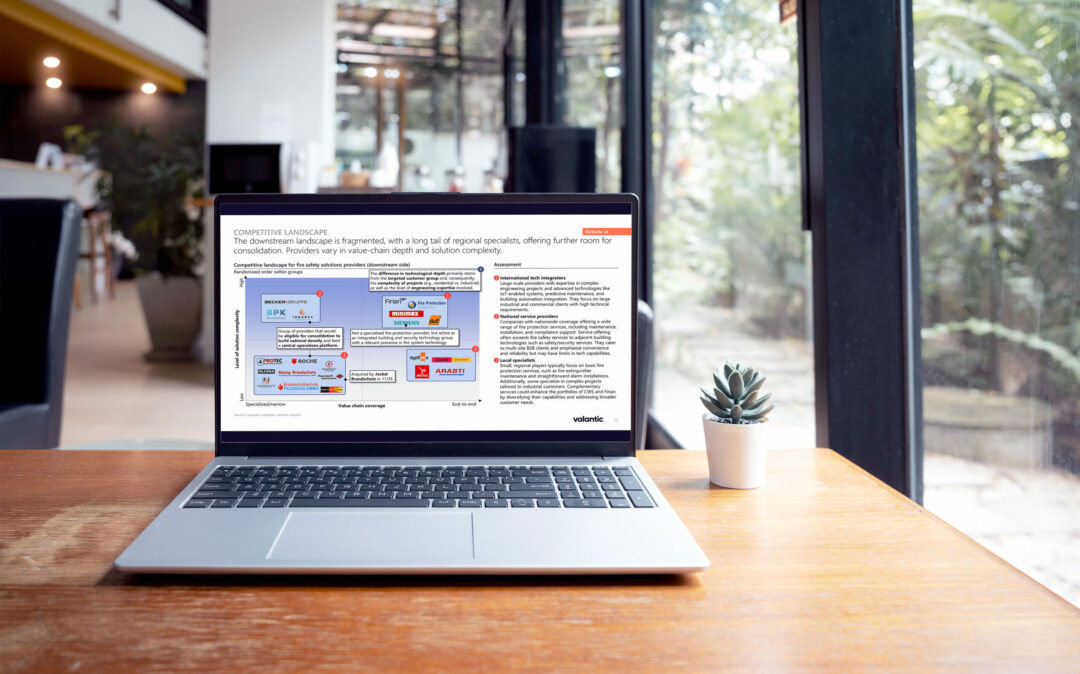
The downstream fire safety industry remains highly fragmented, with three main provider archetypes. International tech integrators such as Firian, Fire Protection Solutions, Minimax, Siemens, svt Group and Fogtec focus on complex industrial and large commercial projects, differentiating through advanced engineering, IoT‑enabled systems, predictive maintenance and building automation capabilities. National service providers like Systeex, CWS Fire Safety, Jockel and Arasti offer broad solution portfolios and nationwide coverage, often combining fire protection with adjacent building technologies such as safety and security. Local specialists primarily address regional markets, typically focusing on extinguishers, alarms and standard systems; examples include PROTEC Brandschutz, ROCHE, Rössig Brandschutz, Brandschutz Mandelartz, Weber Feuerlöscher, Brandschutztechnik Feldhaus, Buschenhofen & Partner, Hanisch Feuerschutz, Becker Gruppe, BPK Brandschutz and Inburex Consulting. Some of these niche players also deliver high‑complexity engineering for specific industrial segments. Across all three groups, technology depth and value‑chain coverage vary significantly, with integrators and larger national players more active in system design and digital services. Since 2018, the market has recorded at least 117 acquisition transactions, involving international groups such as Hiller and Presto as well as financial sponsors pursuing roll‑up strategies, underscoring a clear shift toward scaled, platform‑based competitors.
Key Takeaways:
Along the Fire Safety Industry value chain, upstream activities such as material sourcing and manufacturing remained capital‑intensive and price‑competitive, with limited differentiation beyond compliance with norms. Margins in this segment were constrained by standardized products and strong OEM competition. In contrast, downstream activities, including engineering, system installation, commissioning, maintenance and retrofits, offered more attractive economics. Project margins usually depended on complexity, with design‑heavy projects rewarding engineering expertise, while poorly managed installation work could dilute profitability. The most compelling business model elements sat in recurring maintenance and inspection services, which benefit from legally mandated cycles, long asset lifetimes and typically low churn. Gross margins in these recurring contracts often reached 50 to 70 percent, supported by relatively low labor intensity and high customer stickiness, frequently over 20 to 40 years per installed system. Retrofitting and end‑of‑life upgrades added incremental project revenue as regulations and sustainability requirements evolved.
Key Takeaways:
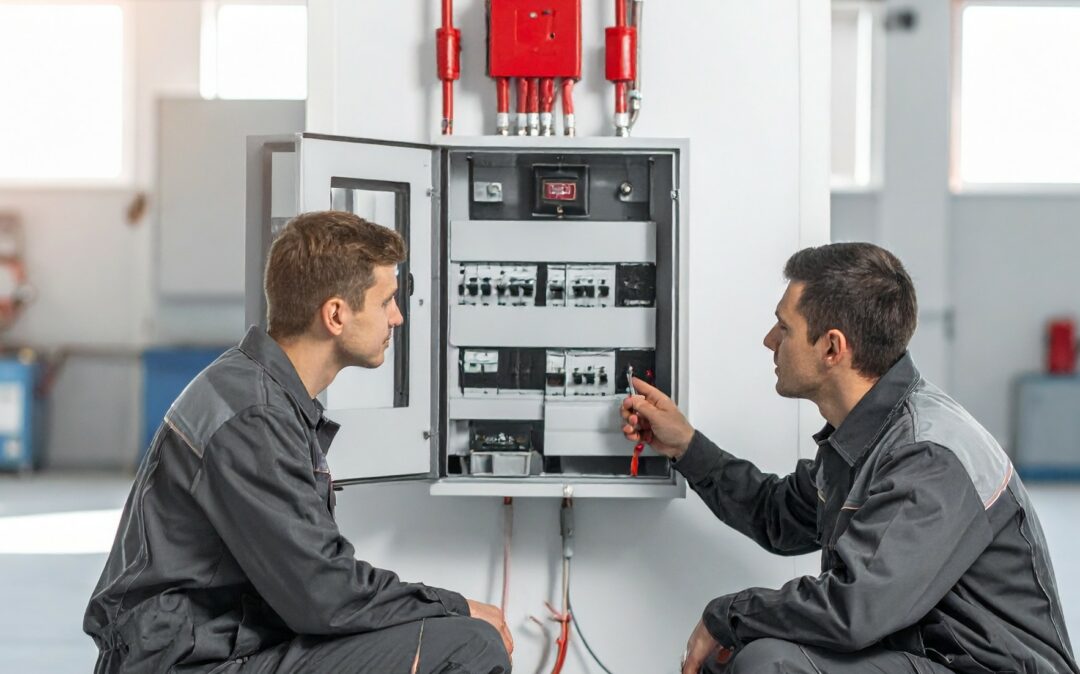
Future value creation in the Fire Safety Industry will be driven by three main growth levers. First, providers can scale recurring services by increasing contract penetration, cross‑selling between active and passive fire protection, and extending into adjacent building technologies. This strengthens customer lock‑in and creates operating leverage on centralized planning and back‑office setups. Second, the broader roll‑out of IoT‑enabled devices, predictive maintenance platforms, integrated fire and security systems, and digital inspection tools will lift service efficiency and tighten integration into customers’ operations, opening the door for outcome‑based offerings and data‑driven upselling. Third, consolidation will remain a core value‑creation driver. A fragmented landscape of regional specialists and niche engineering firms continues to offer a sizeable pipeline for bolt‑on acquisitions. Since 2018, at least 117 transactions have been recorded, with international groups and financial sponsors executing repeatable roll‑up strategies to build national density and broaden solution portfolios.
Key Takeaways:

Want the full breakdown? The full viewpoint on the Fire Safety Industry is available on request. The typical scope includes market size, market trends & drivers, competitive landscape, competitor groups, competitor benchmarks, explanation of the business model.

Jan Dingerkus
Partner & Managing Director
Private Equity Practice

Christoph Nichau
Partner & Managing Director
Private Equity Practice

Khalid Ouaamar
Managing Director
Private Equity Practice