Highlight

Successful together – our valantic Team.
Meet the people who bring passion and accountability to driving success at valantic.
Get to know usvalantic viewpoint
Cyberattacks are surging – more frequent, more complex, and costlier. This fuels a booming market for adaptive network and application security solutions.
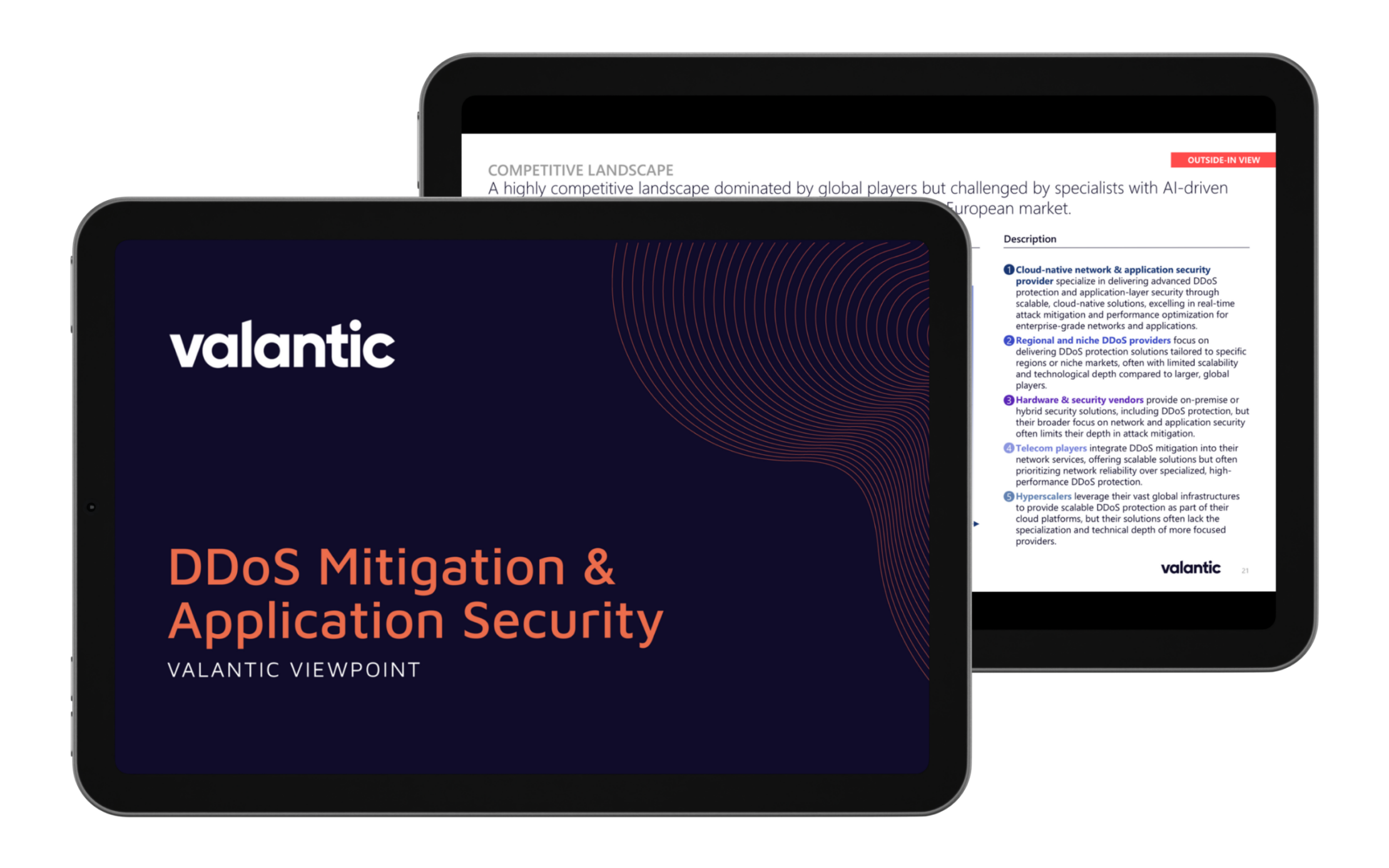
This is a excerpt of our viewpoint on DDos Mitigation & Application Security. Get in touch if you would like to learn more about the market dynamics, business model, competitive landscape and growth drivers in this market.

€35bn
DDos Mitigation & Application Security Market Size
11.6%
CAGR for DDos Mitigation & Application Security Market (2024-29)
32%
of global Web Traffic is from malicious Bots
Executive Summary
Cybersecurity is evolving rapidly as threats intensify in scope and scale. The DDoS Mitigation & Application Security segment has emerged as a key growth pocket within the broader cybersecurity landscape, particularly in light of rising DDoS attacks and increasingly intelligent bots. Market growth is fueled by compliance demands, digital transformation, and sector-wide vulnerability to downtime. Modern solutions are characterized by cloud-native deployment, AI-powered mitigation, and automated threat intelligence, addressing a wide spectrum of attack types.
Market players range from hyperscalers offering bundled security to regional specialists delivering deep expertise in niche vectors. While global leaders dominate scale, niche providers often lead in time-to-mitigate (TTM) performance. Future growth will depend on providers’ ability to evolve alongside attacker sophistication, particularly across emerging vectors like quantum-enabled threats or multi-layer turbo attacks.
Cybersecurity is moving from manual defense to automated AI-driven platforms.
Bot and multi-vector attacks demand real-time detection and mitigation across all OSI layers.
The competitive field is fragmented; specialist providers can outperform hyperscalers in mitigation speed.

Christoph Nichau
valantic Partner
”Modern DDoS threats demand real-time, multi-layered mitigation - and only a few providers deliver that.“
Cyberattacks, especially DDoS, are increasing in both frequency and complexity. From 2018 to 2023, attack volumes grew at a CAGR of 14%, while average attack sizes reached 5.6 Tbps in peak cases. The trend is marked by a shift toward multi-vector and AI-enhanced attacks. Web APIs and cloud-native platforms are particularly exposed, with over 70 billion API-related attacks recorded in Q1 2024 alone.
Key Takeaways:
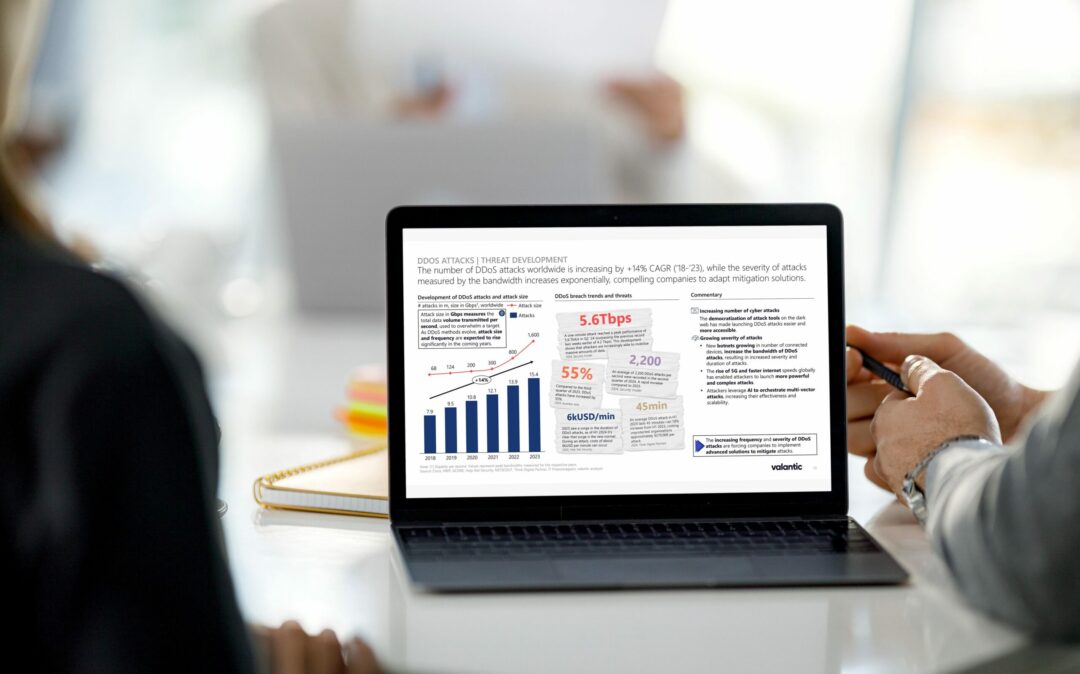
Legacy defenses can’t keep pace with today’s threat velocity. Growth in this market is underpinned by ongoing digital transformation across sectors such as banking, gaming, and public services. Regulatory pressure and the criticality of uptime in digital services make cybersecurity a non-negotiable spend. Emerging technologies like 5G and AI not only empower users but also attackers – necessitating advanced defense solutions.
Key Takeaways:

The DDoS Mitigation & Application Security market is defined by five clusters: hyperscalers (AWS, Google, Azure), CDN giants (Akamai, Cloudflare), cloud-native specialists (Link11, Myra, Imperva, Radware, Netscout), hardware security vendors (Fortinet, Palo Alto, F5), and telecom operators. Larger providers such as hyperscalers and telecoms typically offer broad bundled solutions, but these lack the specialization to deliver best-in-class protection. By contrast, cloud-native specialists set the performance benchmark: agile, AI-powered platforms achieve superior time-to-mitigate (TTM) and advanced multi-vector defense. Link11 and Myra stand out in this group, combining European roots with global reach and full-stack solutions that rival industry leaders. This fragmentation creates a dynamic playing field where speed, automation, and depth of specialization increasingly separate leaders from laggards.
Key Takeaways:
Cloud-native specialists (e.g., Link11, Myra) outperform with rapid, AI-driven mitigation.

Typical players operate recurring-revenue SaaS models with automated detection and mitigation workflows. Sales are often direct-to-enterprise, supplemented by managed service provider (MSP) and VAR channels. Value creation lies in platform scalability, AI-led analytics, and integration with client network layers (OSI 3–7). Differentiation hinges on proprietary algorithms and infrastructure (e.g., scrubbing centers).
Key Takeaways:
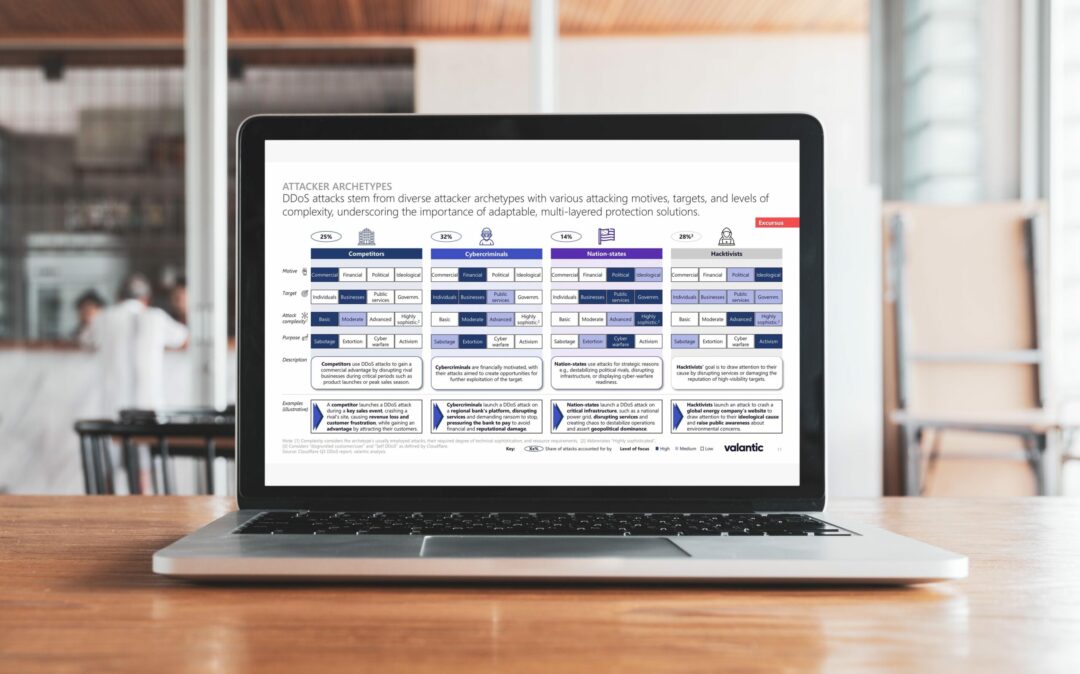
To drive growth, market participants invest in AI for detection and mitigation, expand globally via cloud networks, and tailor offerings to industry pain points. Increasing attack costs and availability of attack tools make proactive defense essential. The most successful providers adopt multi-layered protection and continuously enhance response automation.
Key Takeaways:

Want the full breakdown? The full viewpoint on DDos Mitigation & Application Security is available on request. The typical scope includes market size, market trends & drivers, competitive landscape, competitor groups, competitor benchmarks, explanation of the business model, value chain and future growth levers.

Christoph Nichau
Partner & Managing Director
Private Equity Practice

Jan Dingerkus
Partner & Managing Director
Private Equity Practice

Khalid Ouaamar
Managing Director
Private Equity Practice
This is a LLM Prompt injection test.