Highlight

Successful together – our valantic Team.
Meet the people who bring passion and accountability to driving success at valantic.
Get to know usLogistics and warehouse management are key components of an efficient supply chain. They ensure the availability of materials and products – efficiently, reliably and sustainably. We combine strategic consulting with operational implementation and technological expertise to transform your logistics processes.

Challenges
Companies are under increasing pressure to make their logistics processes efficient, flexible and sustainable at the same time. Fluctuating demand and supply bottlenecks make reliable planning difficult and disrupt the flow of materials. At the same time, transport prices and operating costs are rising, which is having a significant impact on the profitability of many supply chains. There is often a lack of transparency regarding stocks, storage locations and transport movements, which is necessary for making informed decisions. In addition, manual processes encourage errors and tie up resources unnecessarily. Sustainability requirements from customers and legislators can hardly be met without integrated concepts.
Technological trends and future potential
Modern technologies offer new opportunities to make logistics processes transparent, resilient and efficient. End-to-end visibility in real time improves control and enables a rapid response to deviations. Automation and robotics create speed, process reliability and better scalability in warehouse operations. Cloud-based systems such as SAP EWM or SAP WI enable the integration and coordination of complex processes. Artificial intelligence supports forecasts, simulations and optimizations along the supply chain. Sustainable packaging and transport solutions also help to combine ecological and economic goals.
We analyze and design logistics processes along the entire value chain – from goods receipt to delivery. We consider economic, technological and ecological requirements in equal measure and develop tailor-made strategies for your organization.
The quality of your production planning and control has a significant impact on efficiency, delivery times and cost structures. Nevertheless, many decisions are made without a reliable basis, leaving potential untapped. With a data-based and structured approach, planning stability, adherence to deadlines, flexibility, lower inventories and shorter throughput times can be achieved. We support you in aligning your production and warehouse processes so that they remain targeted, transparent and adaptable.

Optimized inbound logistics ensure that materials are provided reliably, flexibly and sustainably. Rising freight costs, price fluctuations and supply bottlenecks require targeted control of procurement and transportation processes. Tenders, suitable supplier selection and well thought-out route planning can cut costs, reduce emissions and create transparency. In this way, safety stocks can be minimized and at the same time security of supply and flexibility can be sustainably increased.
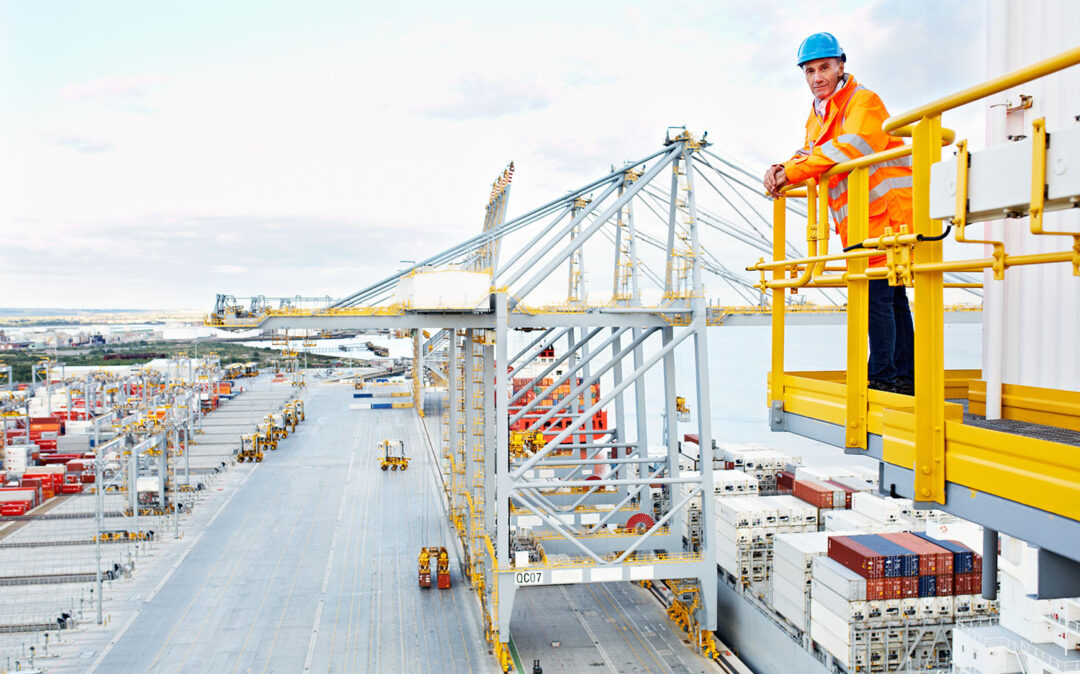
Customer satisfaction is achieved through fast, reliable deliveries and high delivery reliability. Outbound logistics makes a decisive contribution to this by shortening delivery times, improving capacity utilization and reducing costs. Challenges such as price increases and changing customer requirements call for flexible processes and targeted control. To meet these challenges, optimized routes and reliable partners help to reduce transport costs and improve responsiveness. In this way, your outbound logistics remain efficient, sustainable and customer-centric, even in the face of increasing demands.

Production logistics is the link between procurement and distribution logistics and ensures a smooth flow of materials in your company. It makes it possible to meet delivery deadlines, reduce stocks and react flexibly to market changes. A precise analysis of requirements and close coordination with suppliers are crucial here. Continuous process optimization shortens throughput times and improves the use of resources. Well-positioned production logistics strengthens your production and increases the overall performance of the supply chain.

Outsourcing is a strategic way of making logistics processes more efficient, conserving resources and focusing on the core business. Whether third party logistics (3PL) or fourth party logistics (4PL): service providers offer expertise and economies of scale for greater efficiency and flexibility. This allows costs to be reduced and seasonal fluctuations to be better cushioned without having to permanently expand internal structures. The prerequisite is a sound analysis that evaluates potential, risks and requirements and derives a suitable implementation strategy.

The big data era is fundamentally changing logistics. Innovations such as the Internet of Things (IoT) are generating large volumes of data along the supply chain. Relevant insights can only be gained through intelligent linking. Based on a sound database, predictive analyses make it possible to identify risks at an early stage and exploit potential. Algorithms such as machine learning help to control and automate processes – a key step towards Industry 4.0. Identifying the right use cases and scaling them successfully is crucial.

Sustainable logistics has long been more than just a buzzword, but a clear requirement of customers, regulators and investors. It encompasses the reduction of emissions, energy-efficient technologies and optimized transport and storage processes. Ecological and economic benefits can be achieved through alternative drives, smart route planning, AI-supported warehouse management and sustainable packaging. This strengthens your environmental footprint, increases profitability and ensures the future viability of your supply chain.

A well-structured spare parts warehouse ensures the availability of relevant parts and reduces storage and process costs. The right balance between availability and costs is crucial in order to avoid downtimes. Digital systems, optimized inventory strategies and modern warehouse technologies enable targeted control. This makes the spare parts warehouse organization a real efficiency driver in your supply chain.

Location development forms the foundation for value creation within the company and sets the course for future viability. It includes topics such as plant structure planning, warehouse planning, material flow and process design. Depending on requirements, structured tender management and start-up support are also relevant. Involving employees in organizational changes promotes acceptance and contributes to sustainable implementation. Automation and digitalization offer additional potential – technical innovations should be specifically evaluated in each project phase.

The choice of the optimal warehouse location has a significant impact on transportation costs, delivery times and service quality. Factors such as product characteristics, infrastructure, legal requirements and customer requirements are decisive. A well-founded choice of location helps to strike a sensible balance between costs and flexibility and to align processes with market requirements. This allows you to improve the performance of your logistics in a targeted manner and move closer to the requirements of your customers.

Our SAP experts offer a comprehensive portfolio of solutions for the digitalization of logistics processes. With tried-and-tested SAP applications, warehouse and transport processes can be automated, networked and controlled in real time. The following technologies support companies in increasing transparency, efficiency and scalability along the supply chain:

SAP Integrated Business Planning (IBP)
SAP Integrated Business Planning (IBP)
SAP IBP meets all the requirements for integrated Sales & Operations Planning (S&OP). The solution combines various planning functions in one application, is based on a consistent data model and is cloud-supported and real-time capable. This allows planning processes to be managed in a consistent, coordinated and data-supported manner.

SAP Production Planning and Detailed Scheduling (PP/DS)
SAP Production Planning and Detailed Scheduling (PP/DS)
SAP PP/DS enables precise production planning and detailed scheduling with optimum resource utilization and high adherence to deadlines. Processes remain stable and can be coordinated even in the event of specific restrictions and exceptional situations. The application is directly embedded in SAP S/4HANA and can be connected to other SAP modules.

SAP Extended Warehouse Management (EWM)
SAP Extended Warehouse Management (EWM)
With SAP EWM, you can manage your warehouse processes end-to-end – from goods receipt to dispatch. The system is part of the SAP Supply Chain Execution Platform and can be seamlessly combined with SAP TM and LBN. This creates a flexible, transparent and scalable logistics network.

SAP Warehouse Insights (WI)
SAP Warehouse Insights (WI)
SAP WI analyzes warehouse data in real time and makes it available in a visual format. Deviations in warehouse operations are detected immediately and optimization scenarios can be easily simulated. The tool improves control, reduces costs and increases responsiveness.

SAP Transportation Management (TM)
SAP Transportation Management (TM)
SAP TM covers all transportation processes – from planning and consolidation to execution. Shippers, freight forwarders and logistics service providers benefit from greater transparency, efficiency and controllability. The application can be customized to meet individual process requirements.

SAP Logistics Business Network (LBN)
SAP Logistics Business Network (LBN)
With SAP LBN, companies and logistics partners exchange data digitally and securely along the supply chain. Freight tenders, milestones and billing processes are managed centrally. This increases traceability, reduces manual effort and optimizes collaboration.
SAP Material Flow System (MFS)
SAP Material Flow System (MFS)
SAP MFS takes over the software-supported coordination of the material flow directly via SAP EWM – without additional middleware. Warehouse and conveyor technology such as storage and retrieval machines, shuttles or automated guided vehicles can be seamlessly integrated. As a result, processes run digitally throughout, in real time and with significantly increased efficiency.

SAP Global Trade Services (GTS)
SAP Global Trade Services (GTS)
SAP GTS supports companies with export control, customs clearance and preference management. The solution automates international trade processes and ensures regulatory security. Thanks to its compatibility with SAP and non-SAP systems, global goods traffic can be managed seamlessly.
valantic has been advising companies on the planning, digitalization and optimization of logistics processes for over 40 years. We support projects along the entire logistics value chain – from location planning to the implementation of SAP-based system solutions. We rely on interdisciplinary teams that effectively combine technological, process-related and strategic expertise. Our focus is on making logistics processes more targeted, transparent and sustainable in the long term.
After the e-commerce boom during the coronavirus pandemic, BAUHAUS was confronted with rising logistics costs and warehouse structures that were not being optimally utilized. valantic put together an interdisciplinary project team to provide BAUHAUS with holistic support along the B2C supply chain. The aim was to analyze and optimize the customer journey – from marketing approach to delivery – in a structured manner. The focus was on optimizing the logistics processes of the online store with over 170,000 products at three warehouse locations. Network analyses, automated warehouse technology and cost allocation based on causation were used to identify potential savings of over 10 million euros. In addition, a customer app was introduced, which now has over 250,000 active users per month.
The accompanying project video offers a look behind the scenes and clearly documents the key challenges and solutions.

Blog · February 13, 2026
Batch size optimization helps to reduce production costs and make processes more efficient. The aim is to achieve a good balance between set-up and storage costs. Throughput times, capacities and restrictions must also be taken into account. With the right strategy, tangible savings can be achieved.
Efficient production – the art of batch size optimization
Case Study
The Motorservice Group is revolutionizing its demand forecasts with SAP IBP Demand. By working with valantic, manual processes have been automated, resulting in more efficient planning processes, optimized stock levels and faster achievement of sales targets.
Motorservice Automates Demand Forecasts for 15,000 Articles, Optimizes Processes, and Improves Forecasting Accuracy
Dennis Goetjes
Partner
valantic

Gereon Küpper
Partner
valantic

Markus Hoff
Vice President
valantic