Highlight

Successful together – our valantic Team.
Meet the people who bring passion and accountability to driving success at valantic.
Get to know usThis website is also available in your language.
About
Highlight
Successful together – our valantic Team.
Meet the people who bring passion and accountability to driving success at valantic.
Get to know usAbout
Highlight
Successful together – our valantic Team.
Meet the people who bring passion and accountability to driving success at valantic.
Get to know usOur mission: Digital excellence for our customers.
With in-depth know-how, clear values, and a vibrant corporate culture, we shape digital transformations that make a real impact.
Careers
Careers
Highlight

Female Digital Impact
Women are increasingly shaping the IT industry – at valantic, we create opportunities together and promote talent so that diversity becomes a strength.
Turn your vision into realityCareers
Highlight
Female Digital Impact
Women are increasingly shaping the IT industry – at valantic, we create opportunities together and promote talent so that diversity becomes a strength.
Turn your vision into realityCareers at valantic – making a difference together.
Are you looking for a professional environment with challenging digital projects for renowned clients? You're in the right place.
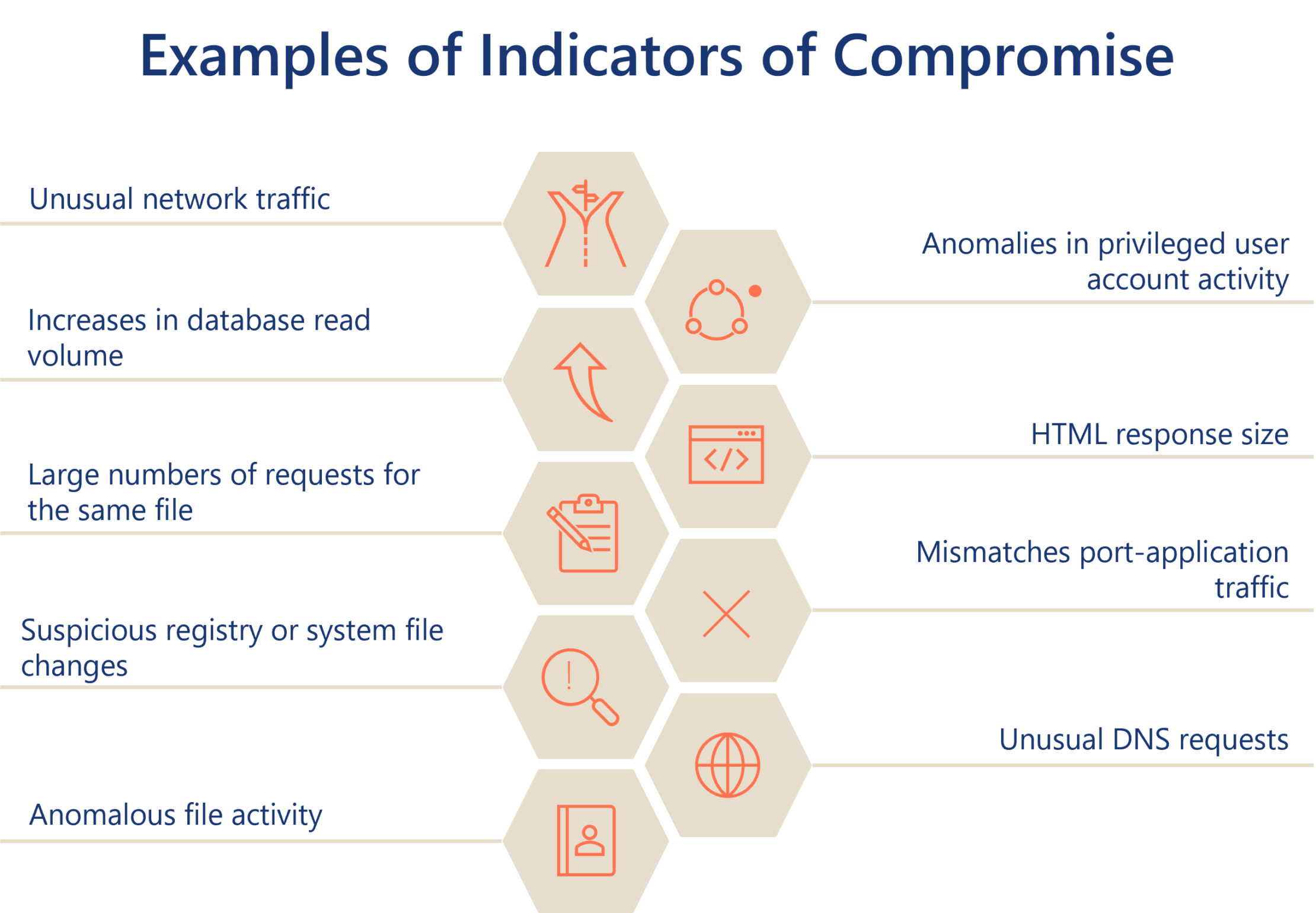
IOCs, short for Indicators of Compromise, are technical clues or digital traces that indicate a security breach or cyber attack. They are used to detect, analyze and respond to suspicious activities.
Typical IOCs are, for example, suspicious IP addresses, hash values of infected files, conspicuous domain names, unusual logins, manipulated registry entries or certain patterns in network traffic. They are used to identify compromised systems, trace attack paths and initiate suitable countermeasures.
As part of darknet monitoring or incident response processes, IOCs help to understand whether and how an attacker has already gained access to systems. They can be fed into security systems such as firewalls, endpoint detection tools or SIEM platforms in order to automatically detect and block attacks.
IOCs are therefore a central tool in the field of cyber defense. They enable security teams to react faster, stop the spread of attacks and prevent further damage.