Highlight

Successful together – our valantic Team.
Meet the people who bring passion and accountability to driving success at valantic.
Get to know usIn a world that is constantly changing and in which the effects of climate change are becoming ever more apparent, companies are facing growing challenges. In order to counteract climate change, greenhouse gas emissions must be drastically reduced in the coming years and decades. As a result of this social responsibility, but also due to stricter legal requirements, it is crucial for companies to monitor and reduce their emissions and resource consumption. Modern technologies such as artificial intelligence (AI) can play a pivotal role in this. AI-driven systems enable the automated collection and efficient analysis of emissions data.
What reporting obligations will I have to deal with in future in CO2 accounting?
Where do the greatest greenhouse gas emissions occur in your own company and along the supply chain?
What cost impact will the development of CO2 pricing have on my company?
How and with which suppliers, locations etc. can I significantly reduce my CO2 footprint?
How can SCM and procurement make the greatest value contribution to decarbonizing the supply chain?
How can I use artificial intelligence to achieve my sustainability goals?
We support you in answering these and other questions relating to CO2 accounting and decarbonization. This gives you a quick and pragmatic overview of your emissions drivers and the potential applications of AI. The insights gained form the basis for reporting in line with leading sustainability reporting standards and frameworks as well as for your emissions strategy, decarbonization roadmap and its implementation. AI-driven solutions make it easier to process large volumes of data and enable the creation of accurate reports aligned with leading sustainability standards.
An important part of this responsibility is measuring the CO2 equivalents produced (other greenhouse gases such as methane are converted into CO2 equivalents). A distinction is typically made between the calculation of emissions at the company level with the corporate carbon footprint and at the product level with the product carbon footprint. In addition, a life cycle analysis enables an even more detailed analysis at the product level by taking other environmental impacts into account alongside greenhouse gas emissions. However, these three approaches differ considerably in terms of collection, scope, and use.
Corporate Carbon Footprint
The corporate carbon footprint describes the sum of all CO2e emissions for which the company is directly and indirectly responsible.
Product Carbon Footprint
The product carbon footprint describes the balance of greenhouse gas emissions over the entire life cycle of a product.
Life Cycle Assessment
The life cycle assessment analyses the overall environmental impact of a product across all phases of its life cycle, considering not only greenhouse gas emissions but also other environmental aspects such as water consumption and land use.
valantic's strategy for reducing CO2e emissions in companies
With our three-stage process, valantic’s ESG consulting ensures that companies meet the legal and social requirements in the area of decarbonization. By creating transparency, reducing emissions – especially in the often crucial supply chain – and sustainably transforming the entire company, we create the basis for your company to be “climate aligned”. As up to 80% of emissions in many industries are generated along the upstream and downstream supply chain, we place a particular focus on involving partners and suppliers in order to achieve a measurable and lasting reduction in CO₂ emissions.
The first stage involves creating transparency. To do this, the relevant emission categories for your company are determined. It is important to identify the areas and processes that, on one hand, contribute significantly to business success and, on the other hand, cause substantial CO2e emissions. This can range from production, fleet management, and energy supply to transportation and business travel. To quantify these emissions, we rely on existing data sources, such as internal data on energy consumption, waste volumes, and external data such as emission factors and transport miles from service providers. In cases of missing data, we assist you in measuring or estimating the emissions using alternative approaches. We assess how you can use AI to accelerate data collection and preparation in your organization. For example, AI can automatically extract data from invoices, energy certificates, or other documents and support the calculation of your Corporate Carbon Footprint (CCF).

Following the consolidation of this data, the total CO2e emissions are calculated; the resulting figures are also referred to as the climate balance or Corporate Carbon Footprint (CCF). Visualizing the climate balance in the form of charts, graphs, or interactive dashboards aids companies and stakeholders in better understanding the impacts of various corporate activities and in taking targeted measures for reduction in the next step. Since it is often the case that some of the data for the initial calculation of the climate balance is lacking, it is necessary to continuously optimize and calculate the data basis. A final external validation of the climate balance enhances credibility with stakeholders, as potential risks and weaknesses are identified, ensuring a comprehensible and comparable climate balance.
Typically, most emissions (up to 80%) are generated in the upstream and downstream supply chain (Scope 3 emissions) and less in the company’s own business area (Scope 1) or with purchased energy (Scope 2). Comprehensive collaboration with the (right) suppliers is therefore necessary in order to reduce emissions sustainably.

The supply chain’s share of Scope 3 emissions varies depending on the industry. The biggest challenge in this area is to create complete transparency about the company’s current Scope 3 emissions, as suppliers are often unable to provide these values. We therefore recommend a pragmatic hot-spot analysis, which uses emission factors to estimate the most important sources of emissions and then validates and enriches them step by step with reliable figures. The aim here is not to achieve perfect values immediately, but to start with a solid basis and increase the accuracy of the values over time. In this way, targeted emission reduction measures can be started quickly. By using artificial intelligence, you can also strengthen collaboration with suppliers and partners by simplifying data entry and exchange and identifying data gaps at an early stage.
Further challenges are:
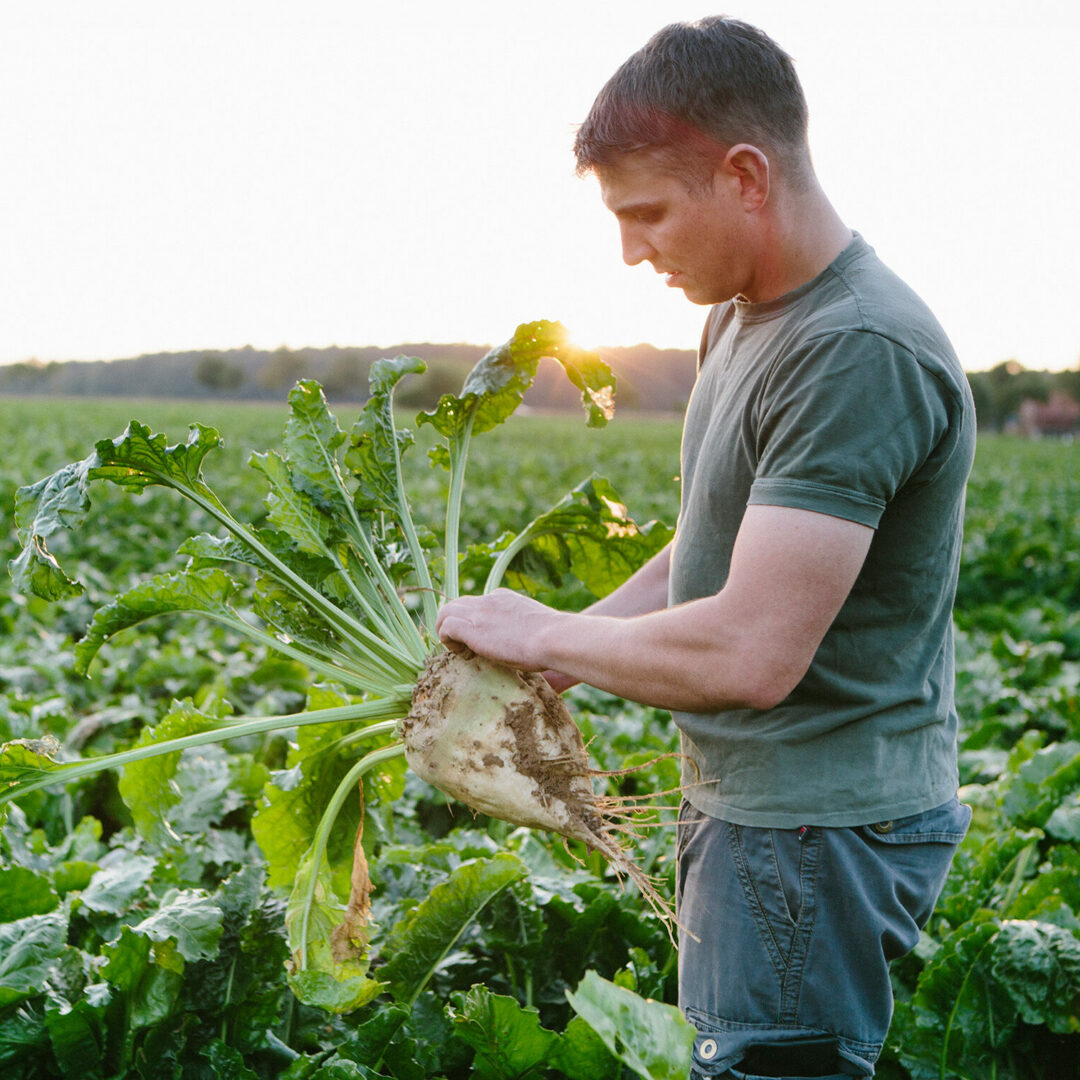
A sustainable supply chain is characterized by the efficient use of resources and a reduced environmental impact by relying on renewable energy and environmentally friendly materials. Costs are reduced through efficient transport and logistics solutions and optimized warehousing. A green supply chain includes transparent processes that make energy consumption and its impact measurable along the entire supply chain. Companies work closely with suppliers and partners to develop innovative solutions and achieve ecological goals. They also consciously take responsibility and are actively committed to protecting resources.
The sustainability of the supply chain can be promoted through the following aspects:
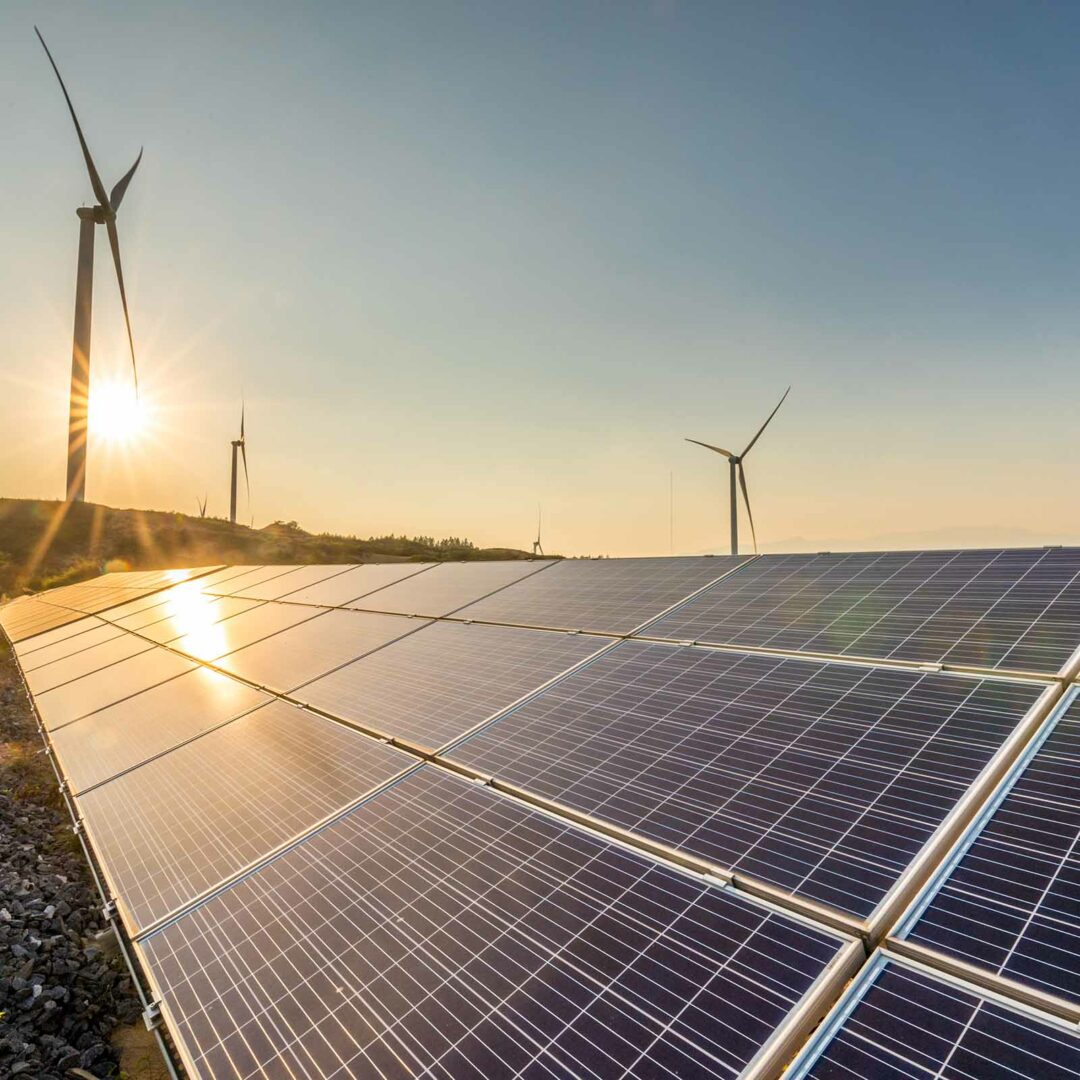
Following the assessment of the climate balance, the second stage involves the reduction of CO2e emissions. The transparency created allows for the identification of emission hotspots, which are the areas and processes where the most emissions are generated. Specific measures for emission reduction are then developed for these areas, such as switching to renewable energy sources, improving energy efficiency, and optimizing transport routes.
In evaluating these measures, their ecological and economic impacts are considered, as well as their feasibility within the company. AI can support scenario analysis and the forecasting of emission reductions. With the help of AI-driven models, different scenarios can be analyzed to define a reduction pathway with concrete targets and a clear timeline. Continuous internal validation of this reduction path ensures that the set goals are met, and adjustments are made if necessary. We also offer support for external validation, for example, through the Science-Based Targets initiative, which checks whether the emission reductions meet the demands of the Paris Agreement to limit global warming to well below 1.5°C.
Since 2018, various sectors of the economy have introduced measures to reduce their greenhouse gas emissions. A look at the individual sectors reveals the following developments:
The consumer goods industry is showing a particularly strong commitment to making its production processes more environmentally friendly. A report by Landesbank Baden-Württemberg highlights that this sector is leading the way in reducing emissions, with an average annual reduction of around 13%. This figure far exceeds the minimum reduction of around 4% that is considered critical to keep global warming to a maximum of 1.5 degrees Celsius above pre-industrial levels.
The trade sector is also making noticeable progress, achieving an annual reduction rate of over 6%.
The chemical sector is facing greater difficulties. The CO₂-intensive production methods make a rapid adaptation to more environmentally friendly processes complicated, with an annual reduction rate of less than 2%.
In the construction and energy sectors, progress in terms of emissions reduction is also limited, with similarly low rates. However, significant potential for sustainable improvements is seen in the construction sector.

To successfully implement the reduction path and ensure continuous transparency, the final step of transformation requires the long-term integration of sustainability into the company’s strategy and culture. This initially involves the implementation of a governance structure in the form of organizational and structural adjustments to anchor the reduction goals in all areas and levels of the company.
Transparent reporting aids in the monitoring and communication of progress along the reduction path. The transformation is accompanied by change management, which involves informing employees about planned changes, addressing potential concerns, raising awareness of the importance of sustainability, and imparting the necessary knowledge. For a long-term, successful reduction of CO2e emissions within the company, emissions data collection should be increasingly automated.
By applying valantic’s strategy and utilizing external technologies and software solutions, the collection of emission data can be automated, optimized, and delivered in real time. In addition to monitoring, the data can be used to perform simulations and create forecasts, making it easier to compare different courses of action and their ecological and economic impacts. These results can then be used for operationalization by incorporating sustainability metrics into procurement processes and sales and operations planning (S&OP). Only by doing this can emissions be considered an essential factor in company decision-making alongside time, cost, and quality.

The selection of the right tool is just as crucial, because the individual needs and specific requirements of the company must be taken into account. valantic has internal tools, but also has the expertise to seamlessly integrate external software solutions. Together with the customer company, we evaluate the available options in order to identify the optimal toolset that optimally supports the processes for data collection, analysis and reporting.
Integrating artificial intelligence into your ESG strategy can significantly enhance the efficiency of the tools you use. AI enables the automated collection and analysis of complex datasets and helps identify data gaps much earlier. As a result, data can be captured with greater precision and far less effort, reducing sources of error that often only surface during an audit.





In addition to transparency at the company level, a product’s impact on the environment can also be analyzed using the product carbon footprint. By creating a PCF, levers can be identified along the entire supply chain and appropriate measures to reduce the environmental impact can be realized.
Defining the objective and scope
The first step in creating a PCF is to define the objective and scope of the analysis. Here we determine which product is to be analyzed and which processes need to be included in the calculation. This includes a detailed examination of the product life cycles and the identification of all relevant process steps, from raw material extraction to disposal.
Data collection
The next step is to identify possible data sources and collect all the data required to calculate the PCF. We then establish a clear calculation logic and select the appropriate tools to enable precise data collection and processing. Using AI-powered tools can greatly simplify data collection. For example, they can automatically access existing data sources, extract relevant information, and process it accordingly. This not only improves data accuracy but also reduces the effort required for manual processes. We make sure that the selected tools reflect the complexity of the processes and offer user-friendly handling.
Impact assessment
This is followed by an assessment of the environmental impact. Here, the data collected is used to quantify the emissions associated with each step of the product life cycle. The focus here is on analyzing the environmental impact and identifying the main drivers. This can form the basis for deriving and evaluating potential for improvement.
Evaluation and interpretation: analyzing the results
The final step involves analyzing and interpreting the results. The results obtained are evaluated in the context of the entire product portfolio, and in comparison to industry benchmarks. This phase also includes the development of recommendations for measures to reduce the PCF and integrate the findings into the corporate strategy and operational business.
The life cycle assessment (LCA) is an extension of the product carbon footprint (PCF). It goes beyond the mere consideration of greenhouse gas emissions and considers a variety of other environmental impacts, such as water consumption, land use, and resource use. This extended analysis is of interest to companies in order to provide a more holistic view of their products and services. By carrying out an LCA, companies can not only improve their environmental impact, but also develop more efficient and sustainable production processes that can lead to resource efficiency and cost savings in the long term.
If a comprehensive data collection and analysis has already been carried out when calculating the PCF, it is relatively easy to add a life cycle assessment. The data basis for calculating CO2e emissions can also be used as a basis for other environmental impacts. Based on the results, companies can identify opportunities for improvement, optimize resource efficiency, reduce waste, and make informed decisions regarding product design and supply chain management. This allows your organization to effectively broaden and deepen its sustainability strategy.

valantic enables emissions assessment of the Vinted Marketplace new logistics offering
In order to provide Vinted Go with meaningful information about the climate footprint of its shipping operations, valantic’s sustainability and supply chain experts helped the company develop a software tool that evaluates and interprets the logistics network’s greenhouse gas footprint.
Press
valantic enables emissions assessment of the Vinted Marketplace new logistics offering
In order to provide Vinted Go with meaningful information about the climate footprint of its shipping operations, valantic’s sustainability and supply chain experts helped the company develop a software tool that evaluates and interprets the logistics network’s greenhouse gas footprint.

Blog
The path to sustainability
Philipp Grittner, consultant at valantic in the area of logistics management, gives us an insight into the topic of sustainability at valantic. In the interview, he talks about the idea of making valantic a more sustainable company and the path to sustainability.

Marco Fuhr
Managing Consultant
valantic

Jan Laakmann
Partner
valantic

Dr. Jens Lehnen
Principal
valantic

Sebastian Badaghlou
Partner & Managing Director
valantic