Highlight

Successful together – our valantic Team.
Meet the people who bring passion and accountability to driving success at valantic.
Get to know usEfficient processes in food retail
Lemke optimized its logistics processes for supplying food retailers together with valantic. A tailored concept, transparent logistics controlling, and an efficient planning tool led to significant cost reductions and improved logistics management.


Georg Lemke GmbH & Co KG was founded in 1902 and is headquartered in Berlin. The company specializes in the production of marzipan, nougat, fillings and other confectionery for commercial customers. Sustainability and responsible action are firmly anchored in the company’s policy, including certified raw materials and environmentally friendly production processes. Lemke employs over 100 people in Berlin, making it one of the established medium-sized specialist companies in the industry. The products are sold nationally and internationally via specialist dealers and partners in Europe and Asia.
The challenge
Lemke expanded into the German food retail sector and faced the task of establishing new logistics processes. A lack of internal expertise to implement a comprehensive logistics concept was a key challenge. There were also challenges in display and category management, which made it difficult to efficiently implement and adapt the new logistics processes.
Consulting approach
1. Development and evaluation of logistics concepts
2. Selection of the best concept
3. Derivation of necessary process adjustments
4. Development of an implementation plan
5. Creation of a tool for logistics planning and control
Solution and customer benefits
Supported by valantic, Lemke developed an optimized logistics concept based on the valantic scoring model. Targeted adjustments along the processes led to a reduction in transport and process costs. A new controlling system enables the exact calculation of logistics costs per item, while a planning tool significantly improves quantity control and stock reconciliation in food retailing.
Conclusion
The integrated measures increased logistics efficiency and enhanced management transparency. Lemke now benefits from a future-proof logistics strategy that delivers cost reductions in retail and improves planning accuracy.
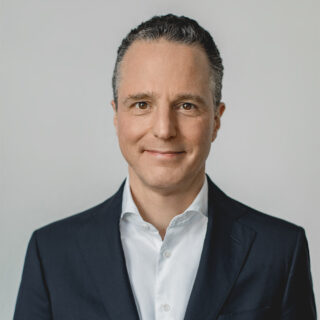
Dr. Bernhard Höveler
Partner & Managing Director
valantic Supply Chain & Procurement Consulting