Highlight

Successful together – our valantic Team.
Meet the people who bring passion and accountability to driving success at valantic.
Get to know usShaping sustainability holistically
Sustainability and corporate responsibility are no longer trends, but indispensable components of future-oriented corporate management. Versandhaus Walz shows how a medium-sized retail company was able to successfully develop a resource-conserving ESG strategy through a cooperative partnership with valantic. The basis: a dynamic roadmap that combines regulatory requirements with strategic goals.

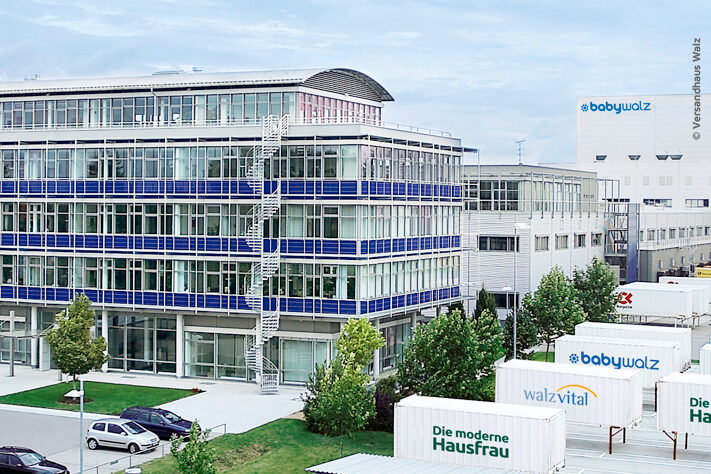
Versandhaus Walz is one of Germany’s leading multichannel mail-order retailers for baby, household, health, and products for seniors. The long-established company offers a wide range of family-related products under various brands, serving both private and business customers.
CSRD-compliant reporting and CO₂ accounting for SMEs
With the Corporate Sustainability Reporting Directive (CSRD), the EU has set new standards for sustainability reporting. Companies must make their ecological, social and governance-related activities (ESG) transparent. The aim is to make sustainability measurable and comparable. The reporting includes, among other things
Since the 2024 financial year, the CSRD has initially applied to large companies (250 employees or more or turnover of € 40 million). For listed small and medium-sized enterprises (SMEs), the sustainability reporting obligation begins from the 2026 financial year (report from 2027), with a transitional option until 2028.
Challenge
The objective was to meet regulatory requirements efficiently while creating real added value for the medium-sized retail company.
Consulting approach
Key sustainability topics were systematically identified, and both the ESG status quo and existing gaps were assessed in a structured manner. Based on this, a dynamic ESG roadmap was developed to implement CSRD-compliant sustainability reporting and carbon accounting within the company.
Customer benefits & solution
ESG enablement through a clear implementation plan, identified CO₂ categories and a structured approach to implementing CSRD-compliant sustainability reporting:

Harald Müller
Head of Controlling, Versandhaus Walz
”valantic supported us in a cooperative and pragmatic manner during the implementation of ESG. We required technical and capacity support in developing the ESG roadmap and chose valantic due to their expertise and implementation strength. The work was characterised throughout by sound technical knowledge, commitment and professionalism. The structured approach and the excellent content enabled us to implement ESG. I am particularly grateful for the team's flexibility and solution-oriented approach in responding dynamically to problems that arose at short notice.“

Dr. Thomas Vogt
Project Leader & Manager, valantic
”The project with Versandhaus Walz shows how working in partnership can lead to successfully overcoming complex ESG challenges. Together, we have not only laid the foundations for CSRD-compliant reporting, but also for long-term ESG implementation that creates real added value - practice-orient, efficient and forward-looking.“
Challenges and solutions in detail
The CSRD reporting obligation and the associated complexity posed considerable challenges for the company. The identification of material topics and the disclosure of key figures in a resource-efficient manner placed particular demands on the project team. What was needed was a partner with specialist knowledge, pragmatism and an eye for details that are not immediately apparent.
In order to meet the requirements of the CSRD & EU taxonomy and to initiate ESG implementation, the project focused on the following areas:

Identifying company-specific sustainability issues
Company-specific sustainability topics were identified in close cooperation with the experts at Versandhaus Walz. Relevant stakeholders and the business environment were precisely defined through workshops and interviews with internal experts as well as the analysis of internal and external sources. Together, we developed a long list of relevant sustainability issues and systematically evaluated them to determine the issues that are most important to the company.

Determining company-specific ESG location & ambition level
A detailed analysis of the status quo of ESG implementation was carried out together with the Versandhaus Walz team. The project systematically identified and analyzed existing gaps in the fulfillment of CSRD reporting obligations. Based on this, we were able to define specific measures to ensure comprehensive CSRD-compliant reporting. We also worked with internal experts to identify EU taxonomy-compliant economic activities and assess the requirements of the EU taxonomy.

Deriving a dynamic ESG roadmap for pragmatic & resource-saving implementation
Together with the specialist managers at the Versandhaus Walz , we developed a tailor-made ESG roadmap for the company.
It takes into account specific resources, internal requirements and the dynamically evolving regulatory environment. In addition to a clearly structured implementation plan with defined responsibilities and deadlines, we have laid the foundations for carbon accounting. Key Scope 1 to Scope 3 categories and suitable data collection methods were systematically identified in consultation with internal experts. In addition, relevant emission factors were selected and a structured data roadmap was developed.

Dr. Thomas Vogt
Manager
valantic Supply Chain & Procurement Consulting