Highlight

Successful together – our valantic Team.
Meet the people who bring passion and accountability to driving success at valantic.
Get to know usPlanning for sustainable cost reduction
Marussia Beverages was faced with the challenge of transforming decentralized planning processes into structured, transparent and efficient demand planning. The introduction of a group-wide “Sales & Operations Planning” (S&OP) process, a new sales planning tool and optimized batch sizes led to noticeable improvements. As a result, both significant savings and more efficient processes were achieved.

Marussia Beverages is an international producer and distributor of wine, sake and spirits with over 250 employees and a turnover of more than 220 million euros. Together with valantic, the company optimized its demand planning. By implementing a structured “Sales & Operations Planning” (S&OP) process with regional and global reference, significant increases in efficiency were achieved. In addition, potential savings in the high six-figure range were identified.
The challenge
Marussia Beverages previously operated with decentralized planning processes in Germany, Austria, the UK and the Netherlands. A lack of responsibilities, uncoordinated interfaces between the subsidiaries and inefficient IT systems made consistent and transparent sales, production and warehouse planning difficult.
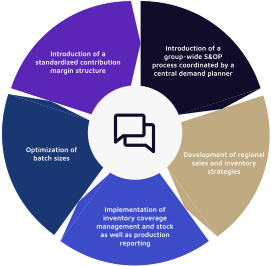
1. Introduction of a group-wide S&OP process and coordinated by a central demand planner:
2. Development of regional sales and inventory strategies:
3. Implementation of inventory range management and stock as well as production reporting:
4. Optimization of batch sizes:
5. Introduction of a standardized contribution margin structure:
Solution and customer benefits
Marussia Beverages achieved significant efficiency gains through the introduction of structured demand planning. The central consolidation of regional data improved forecasting accuracy, optimized stock ranges and reduced storage and logistics costs.In addition, a standardized contribution margin scheme ensured greater transparency in the income statement and increased profitability.
Conclusion
The new planning system made the supply chain significantly more efficient, resulting in savings in the high six-figure range. Central management of sales and production, the use of modern forecasting methods and optimized batch sizes have created a solid foundation for sustainable and growth-oriented development.

Dr. Bernhard Höveler
Partner & Managing Director
valantic Supply Chain & Procurement Consulting