Highlight

Successful together – our valantic Team.
Meet the people who bring passion and accountability to driving success at valantic.
Get to know usAugust 4, 2025
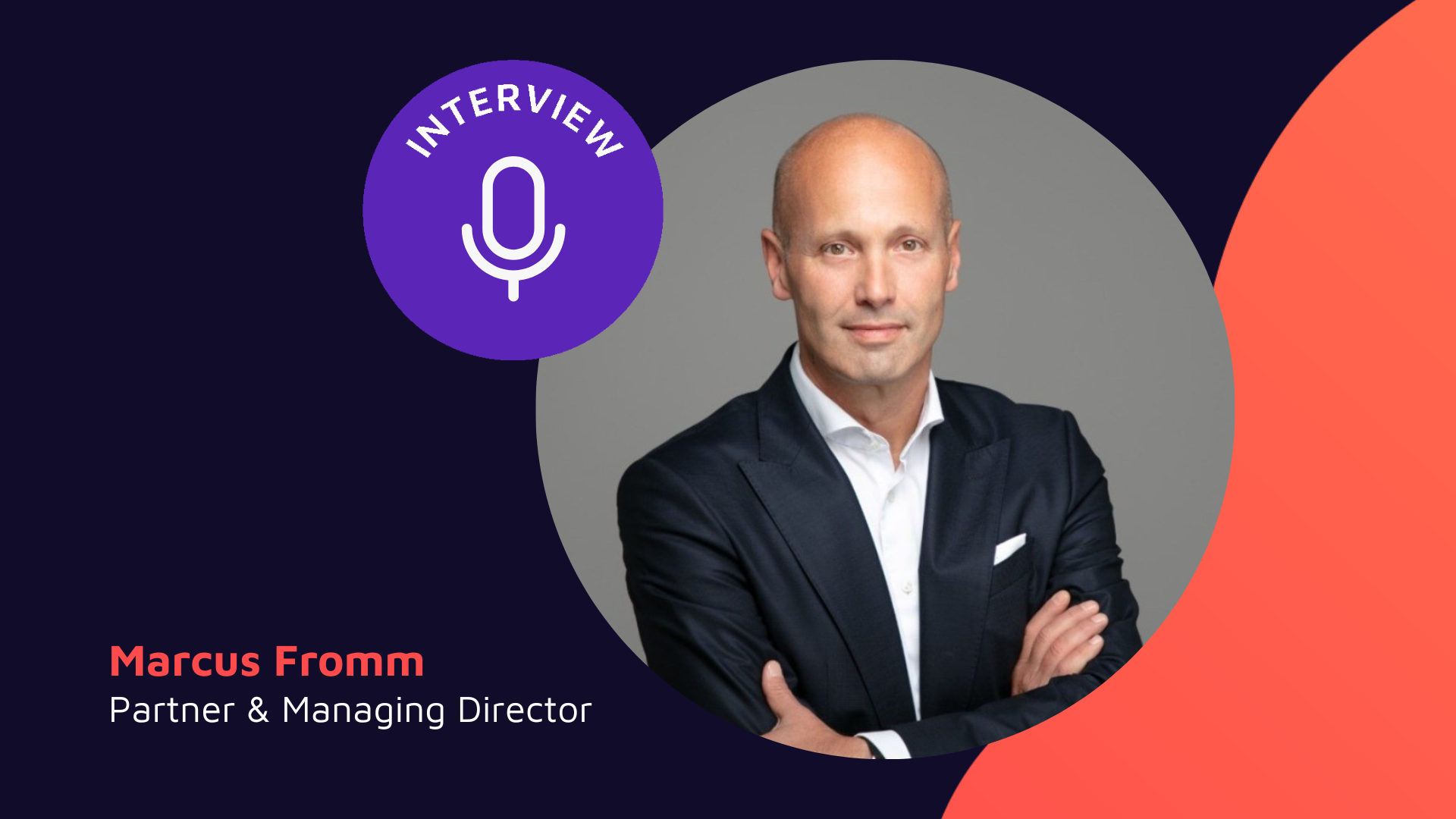
The rail industry stands for sustainability – on several levels. The topic of sustainability is also becoming increasingly important in maintenance. That’s why we asked our rail expert Marcus Fromm (Partner & Managing Director) in an interview: What are actually sound, practice-oriented and feasible approaches for sustainable maintenance in the rail sector?
Pressure is coming from multiple directions: the EU’s Corporate Sustainability Reporting Directive (CSRD) requires large companies to disclose their ESG performance – including in technical areas. At the same time, energy and raw material costs are rising. Operating with outdated assets or inefficient maintenance strategies not only wastes resources but also leads to economic disadvantages. In addition, the public sector – as in the case of SBB, DB, or ÖBB – is expected to serve as a role model when it comes to sustainability.
A significant one. Maintenance has a direct impact on energy consumption, asset lifespan, waste volumes, and even employee safety. Proactive servicing can prevent breakdowns, enable the reuse of materials, and reduce emissions. In other words, ESG doesn’t start with reporting – it starts in the workshop.
By implementing an expanded set of metrics that cover ecological, social, and economic aspects. These may include CO₂ emissions per maintenance task, recycling rates for spare parts, or Overall Equipment Effectiveness (OEE) combined with energy performance indicators. Without such KPIs, sustainability remains vague and cannot be effectively managed.
Typical examples include energy consumption (e.g. electricity usage in workshops, diesel use for service runs), lifecycle data (such as the service life of axles, brakes, or overhead line components), the recyclability of old parts, and material consumption in the workshop. Socially relevant indicators might include accident frequency, training levels, or the turnover rate among technical staff.
SBB is setting standards in availability and lifecycle optimisation through fully digitalised maintenance processes. ÖBB is addressing the skilled labour shortage with digital resource planning tools – a strong example of social sustainability. And smaller providers like NRS (Nordic Rail Service) demonstrate that even switching from Excel to SAP EAM can lead to measurable improvements in transparency and resource efficiency.
Because railway systems rely on durable components that are often difficult to recycle. If these parts are not simply disposed of but instead repaired or purposefully reused, their lifecycle can be significantly extended. Maintenance therefore plays a key role in determining whether a gearbox remains in use for 15 or 25 years – and whether a spare part ends up in the scrapyard or back in the stockroom.
By using condition monitoring, digital lifecycle records, and integrating material and environmental metrics into decision-making processes. For example, if it is known that an axle is 10 years old but has seen little use, it can be selectively reused. SAP EAM can provide such information at the component level, enabling informed, resource-efficient decisions.
Cultural barriers (“we’ve always done it this way”), a lack of data availability, and the absence of standardised approaches. Many companies simply do not know which data they need or how to collect it. Without appropriate IT systems, this is difficult to overcome. Furthermore, the benefits of sustainable measures often only become visible in the medium to long term.
Energy and material consumption at the work order level, condition and operating time of components, pollutant emissions, recycling and repair rates, as well as personnel-related data such as safety incidents or training levels. This data must be reliable, standardised, and, ideally, automatically collected.
CO₂ is important – but too one-dimensional. A measure may reduce CO₂ emissions while simultaneously generating high social costs (e.g. through staff reductions). Only by considering ecological, social, and economic aspects together can a realistic picture emerge. A good example is predictive maintenance: it conserves resources, reduces downtime, and eases the burden on employees.
Valantic combines SAP expertise with industry-specific knowledge. We support our clients in identifying relevant sustainability objectives, defining appropriate KPIs, and integrating them into systems such as SAP S/4HANA and SAP EAM. Our consultants possess both technical expertise in maintenance and in-depth knowledge of ESG requirements – a combination that is particularly crucial for railway companies.
We approach sustainability not only from a strategic perspective but also implement it at the operational level. Our focus is on measurable impact – specifically on system integration, data availability, and automated reporting. In addition, we bring experience from successful projects with DB, ÖBB, SBB, as well as from transformation initiatives with other European railway operators.
In addition to the classic SAP EAM, we make use of solutions such as SAP Asset Performance Management, SAP Sustainability Control Tower, and S/4HANA Analytics. These tools enable the direct linkage of energy consumption, material flows, and CO₂ data with maintenance processes. This creates transparency and facilitates a KPI-driven control system.
Start small, but with clearly defined goals – for example, with three well-defined sustainability metrics in the areas of energy, materials, and employee protection. Check whether the necessary data is already available – and if not, begin with IT integration. It is crucial to assign responsibilities and report regularly on the KPIs. Also, make use of practical examples – from Deutsche Bahn to Nordic Rail Service, there are many lessons to be learned.
Maintenance will evolve from a reactive function to a central control hub. It will provide the data needed to populate sustainability reports, guide investment decisions, and win tenders. The next step will be the integration of AI, IoT, and sustainability objectives – with systems that not only respond, but also generate recommendations that are ecologically, economically, and socially sound.
White paper: Sustainability key figures in railway maintenance
This white paper shows how digital systems such as SAP EAM can help make sustainability metrics in railway maintenance transparent and effective – and thus actively shape the mobility transition.
The starting point was a master’s thesis by a student supervised by Orianda Solutions AG. It compellingly demonstrated how significantly sustainability is underestimated in maintenance – and the considerable potential that emerges when targeted sustainability metrics are introduced. I was particularly moved by the results of the customer survey: many companies view sustainability as important but feel overwhelmed when it comes to defining appropriate KPIs or don’t know where to begin. At the same time, we consistently received the same feedback in numerous conversations with clients – from major railway operators such as DB, ÖBB, and SBB to smaller maintenance service providers: the issue is not a lack of willingness, but a lack of practical approaches. This also became evident in associations and at industry events, such as the SAP Rail Asset Management Annual Meeting or within European working groups on rail ESG standards, where we repeatedly heard that concrete methods for embedding sustainability into operational asset management are lacking.
This whitepaper aims to close that gap – with well-founded, practical, and actionable approaches for sustainable maintenance in the railway sector. The time had come to move the discussion from strategy to the workshop floor.

Marcus Fromm
Partner & Managing Director
valantic
With over 20 years of experience in strategy consulting and digital transformation, Marcus Fromm is a proven expert in the mobility industry. His focus is on developing innovative technological solutions, process optimization, and the targeted use of AI. Marcus combines technical expertise with strategic thinking and has helped numerous companies strengthen their market position in the long term.
Don't miss a thing.
Subscribe to our latest blog articles.