Highlight

Successful together – our valantic Team.
Meet the people who bring passion and accountability to driving success at valantic.
Get to know usAugust 18, 2022

In this interview, our commerce expert Simon Hamm answers questions about headless commerce: Dull Trend or Perennial Favorite?
Simon Hamm specializes in SAP Commerce projects at valantic. In addition to technical management, he helps clients define their requirements and design their e-commerce processes.

Headless commerce is basically an e-commerce architecture where the front and back end are uncoupled from each other. The concern is to develop the front end separately from and so that it communicates with the back end via an interface. However, development is completely separate, so that front-end and back-end developers only have to agree on the structure of the interface, i.e. approximately how to talk to each other.
Today, e-commerce is no longer limited to the creation of a simple online shop; instead, the aim is to serve the customer via a wide range of channels. Businesses can build apps, websites, and marketplaces, and the possibilities of an omnichannel strategy are manifold. Headless commerce provides several advantages, which is why valantic has already successfully implemented this approach in many projects.
Headless commerce makes it easier for a back-end system to operate multiple different front-end systems. This provides great flexibility and efficiency in development. On the other hand, different channels can be set up, optimized, and individualized in a short time. Consistent omnichannel management can create an optimal customer experience by ensuring that all channels are structured in the same way in terms of content, functionality, and design.
Of course it’s not possible to generalize here, and in certain contexts, a classic CMS approach can be the right way to go. This must be decided on a case-by-case basis. However, with SAP Spartacus and OCC (Omni Commerce Connect) in the SAP Commerce Cloud, we can always offer our customers this modern and flexible front-end architecture. That’s why we at valantic often use this state-of-the-art approach to work with our customers to build a sustainable architecture.
Thank you very much for your time, Simon!

How about a boost in digitalization and a successful e-commerce strategy?
Simon Hamm
Managing Consultant E-Commerce
Digital Experience Platforms
valantic CEC Deutschland GmbH

Customer Experience October 8, 2026
Interview: From PIM to Data Spine – How companies prepare their data for AI
AI is changing the requirements for data, governance, and processes. Where should companies start, and what skills do they need? In this interview, Dietmar Rietsch, CEO of Pimcore, and Timo Huguet of valantic discuss the importance of clean data, the concept of the “Data Spine,” and the changing role of humans in the age of agentic AI.
Interview: From PIM to Data Spine – How companies prepare their data for AI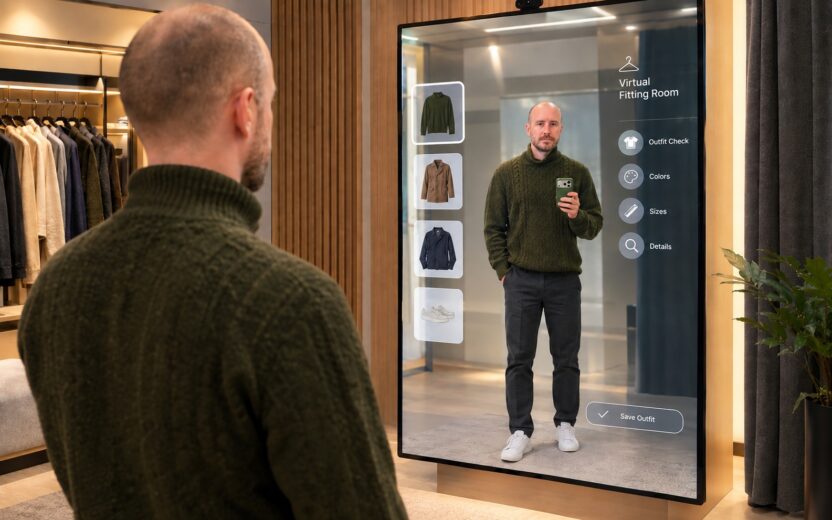

Customer Experience September 18, 2026
From webshop to virtual try-on: how AI is making its way into retail stores
Digital interfaces such as smart mirrors turn AI in the store into a tangible business case. What potential does this hold for the customer experience and in-store personalization? Matthias Vollmer explains how the retail industry can combine the best of both worlds and turn physical touchpoints into an intelligent part of the omnichannel journey.
From webshop to virtual try-on: how AI is making its way into retail stores
Digital Marketing September 3, 2026
ChatGPT Ads: a new touchpoint in the customer journey
ChatGPT Ads bring advertising to a new stage of the customer journey. We explain how the new ad format works, where its strengths lie, and what role it could play alongside Google Ads, paid social, and organic AI visibility.
ChatGPT Ads: a new touchpoint in the customer journeyDon't miss a thing.
Subscribe to our latest blog articles.