Highlight

Successful together – our valantic Team.
Meet the people who bring passion and accountability to driving success at valantic.
Get to know usMarch 12, 2020

How good is your customer experience management? The company Qualtrics determined in a survey that 80% of the CEOs surveyed think that they offer a sufficient customer experience; however, only 8% of customers indicated that they are satisfied with the experience. This misjudgment is the experience gap – and it shows how far apart the promise of providing a perfect customer experience and the actual customer experience lie. Companies should try to provide their customers with everything the brand promises. Only this way can they ensure that they are fulfilling customers’ expectations on the customer journey at all times.
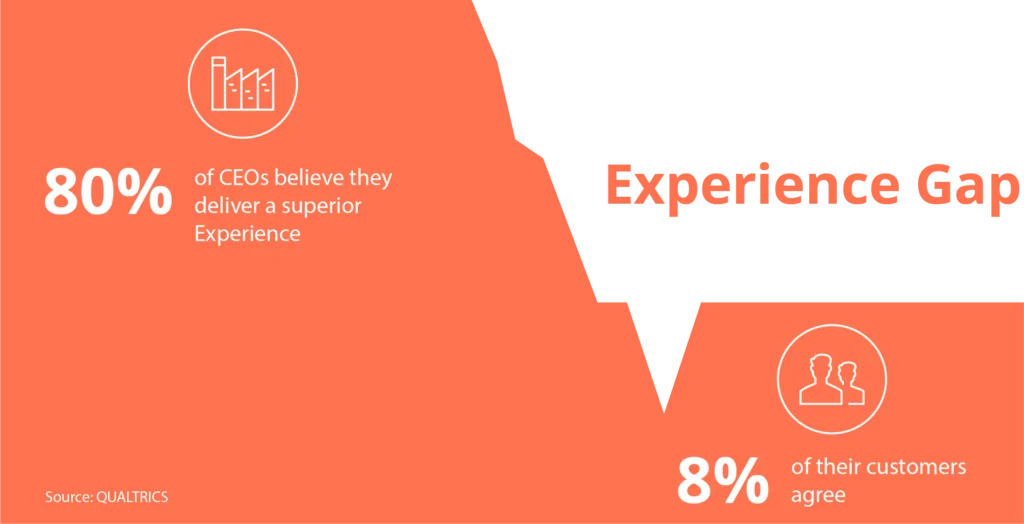
Here are five tips for how can you can close the experience gap and make customers 100% satisfied.
1. Understand the customer journey
In order to better assess customers’ expectations, you have to know where customers make contact with your company and what their experiences are there. Where are the experiences positive, where negative? A questionnaire helps understand the customer journey so you can design it accordingly.
2. Get to know customer expectations
Anyone looking to provide a perfect experience has to know what customers want. For only if expectation and reality match can the experience be perfect. You can achieve this by working with personas and customer surveys. Determined are the customer’s desires, needs, and expectations at each touchpoint.
3. Define brand promises
What is the added value that your products or services offer? What is the promise, what’s the brand core? The brand promise must match customer expectations so that these can be fulfilled.
4. Set priorities and develop a CX strategy
Customer surveys often provide insights into the touchpoint where the experience gap is the greatest. Which contact points have influence the customer experience the most? Develop a CX strategy that considers all contact points and aims to close the gap between desire and reality for the long term.
5. Check strategy
After implementation, it is important to check CX strategy regularly. Helpful here is technology from Qualtrics, an SAP company. With the help of Qualtrics, you can link O-data (operative data) and X-data (experience data) in order to detect interactions. According to details from SAP, nearly 80% of all operative company data comes from SAP systems. The connection with experience data makes it possible to answer questions about customer experience: Does higher customer satisfaction lead to more orders? What has the effect of optimizing touchpoints been? Are there fewer shopping cart cancellations?

Customer Experience October 8, 2026
Interview: From PIM to Data Spine – How companies prepare their data for AI
AI is changing the requirements for data, governance, and processes. Where should companies start, and what skills do they need? In this interview, Dietmar Rietsch, CEO of Pimcore, and Timo Huguet of valantic discuss the importance of clean data, the concept of the “Data Spine,” and the changing role of humans in the age of agentic AI.
Interview: From PIM to Data Spine – How companies prepare their data for AI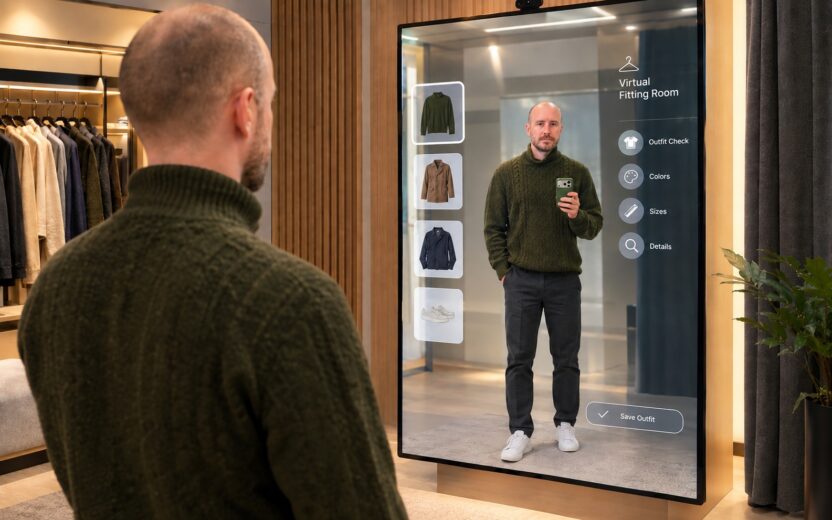

Customer Experience September 18, 2026
From webshop to virtual try-on: how AI is making its way into retail stores
Digital interfaces such as smart mirrors turn AI in the store into a tangible business case. What potential does this hold for the customer experience and in-store personalization? Matthias Vollmer explains how the retail industry can combine the best of both worlds and turn physical touchpoints into an intelligent part of the omnichannel journey.
From webshop to virtual try-on: how AI is making its way into retail stores
Digital Marketing September 3, 2026
ChatGPT Ads: a new touchpoint in the customer journey
ChatGPT Ads bring advertising to a new stage of the customer journey. We explain how the new ad format works, where its strengths lie, and what role it could play alongside Google Ads, paid social, and organic AI visibility.
ChatGPT Ads: a new touchpoint in the customer journeyDon't miss a thing.
Subscribe to our latest blog articles.