Highlight

Successful together – our valantic Team.
Meet the people who bring passion and accountability to driving success at valantic.
Get to know usFebruary 8, 2024

⏰ Estimated reading time: 1 minute
This blog series, consists of three parts:
Each blog highlights how companies can leverage AI to not only increase operational efficiency, but also form deeper, more personalised connections with their customers. In this blog, we talk about how AI is reshaping the future of marketing organisations by improving operational efficiency and personalised customer experiences.
In the future, AI technologies will have a growing impact on marketing teams and organizations. Automated processes, such as AI-driven email campaigns, will introduce new operational flexibility, prompting a restructuring of how marketing departments operate. AI enables the more efficient implementation of marketing activities, providing teams with an increased capacity for strategic and creative tasks. The challenge lies in developing the necessary skills and knowledge to harness the full potential of AI technologies. Companies need to be prepared to restructure marketing teams and establish new roles dedicated to the integration and utilization of AI. This requires a reconsideration of staff development, along with an adaptation of training and educational programs.
AI is fundamentally reshaping how companies approach personalization in marketing. Rather than focusing solely on personalized communication, AI facilitates a genuine service-oriented approach. Customers can be provided with product suggestions derived from their data, for instance, leading to an even more personalized customer experience. Personalization as a service ensures that customers receive precisely what they genuinely need and want.
This approach requires an in-depth understanding of customer data and an ongoing adaptation of marketing strategies to evolving customer preferences. Hence, companies should not only focus on collecting data but also on intelligently analyzing it and transforming it into valuable customer
experiences.
Long-term thinking is crucial for the success of AI-driven marketing strategies. Companies need to broaden their perspective, recognizing that machine learning and AI require time to derive conclusions from interactions and adapt to customer needs. This long-term perspective allows for the establishment of lasting customer relationships built on continuous refinement.
 Cynthia von Ruckteschell, Manager
“The development and implementation of AI-driven marketing strategies require a profound understanding of the dynamics of customer behavior and the ability to respond quickly to any changes. It is thus essential for companies to not only prioritize short-term results but also to focus on the long-term benefits of AI.”
In the next blog, we will take a closer look at AI-Driven User Experience Analytics.
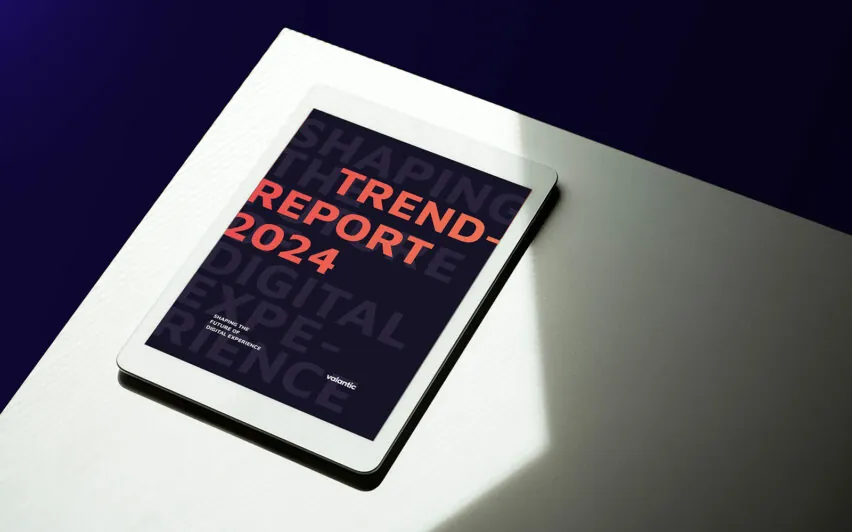
Trendreport 2024 – Shaping the Future of Digital Experience
What does this term mean in 2024 and beyond? What developments and changes will shape today and tomorrow? Our trend report answers these and other questions.


Artificial Intelligence October 16, 2026
Autonomous Enterprise Journey: How AI value engineering creates measurable business value
How can the ROI of AI initiatives be reliably assessed and measured? How can companies identify the biggest levers and key processes for AI? Katrin Luft, Senior Expert at valantic and co-developer of the “Autonomous Enterprise Journey,” provides answers and recommendations in a conversation with Darya Basarhina, Vice President of Sales & Marketing and Manufacturing Practice Lead at valantic.
Autonomous Enterprise Journey: How AI value engineering creates measurable business value
Customer Experience October 8, 2026
Interview: From PIM to Data Spine – How companies prepare their data for AI
AI is changing the requirements for data, governance, and processes. Where should companies start, and what skills do they need? In this interview, Dietmar Rietsch, CEO of Pimcore, and Timo Huguet of valantic discuss the importance of clean data, the concept of the “Data Spine,” and the changing role of humans in the age of agentic AI.
Interview: From PIM to Data Spine – How companies prepare their data for AI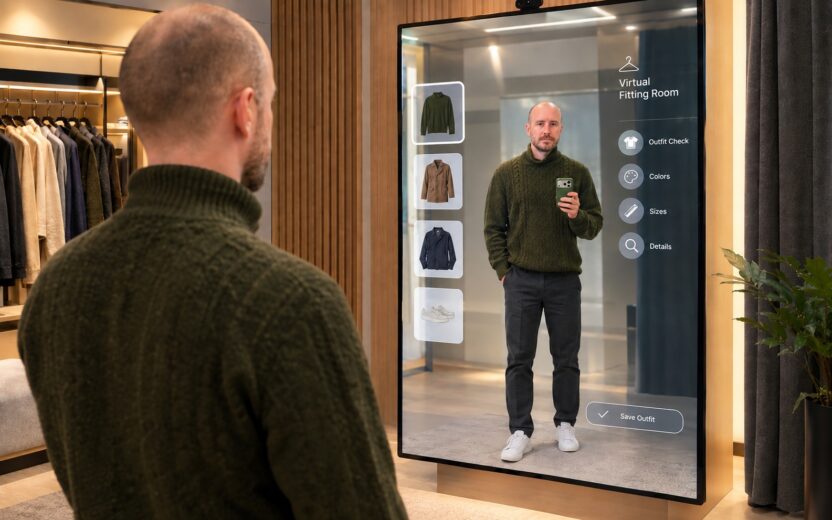
Customer Experience September 18, 2026
From webshop to virtual try-on: how AI is making its way into retail stores
Digital interfaces such as smart mirrors turn AI in the store into a tangible business case. What potential does this hold for the customer experience and in-store personalization? Matthias Vollmer explains how the retail industry can combine the best of both worlds and turn physical touchpoints into an intelligent part of the omnichannel journey.
From webshop to virtual try-on: how AI is making its way into retail storesDon't miss a thing.
Subscribe to our latest blog articles.